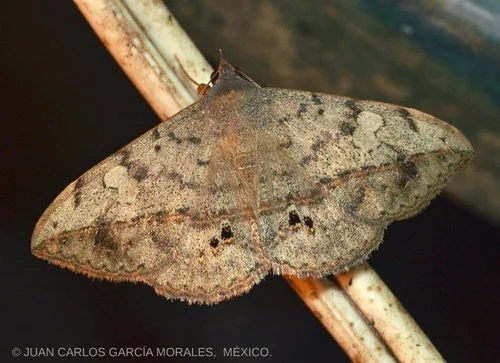
Field Identification
If leaves look shredded overnight or fruit has fresh chew holes, velvetbean caterpillar may be feeding right now. These larvae can eat fast and strip a healthy plant in a short window. Young stages are easy to miss, then damage suddenly explodes as they grow. Catch them early to avoid severe defoliation and contaminated harvests.
Check leaf undersides, growing tips, and stem junctions for eggs, frass pellets, and feeding scars. Larvae vary in color, but most have a soft segmented body and blend into foliage. Look at dusk or early morning when many species feed more actively. Fresh chewing plus live larvae or droppings on lower leaves confirms an active caterpillar outbreak.
Not sure what you have? Use the symptom diagnosis tool →
How to Deal With It
Organic Control Methods
Anticarsia gemmatalis nucleopolyhedrovirus (AgNPV) is the most important natural control of velvetbean caterpillar -- it crashes large outbreaks naturally when populations are dense. Collapsing, black-colored, hanging larvae are NPV-infected. Leave infected larvae on plants -- they liquefy and the virus spreads to healthy larvae feeding nearby. AgNPV is commercially available in Brazil and increasingly elsewhere as a biological insecticide. Braconid and ichneumonid wasps parasitize larvae. Support all beneficials with dill, fennel, and diverse flowering plants at field edges.
Velvetbean caterpillar is a migratory pest -- populations arrive from southern areas and build through multiple generations on beans and legumes in summer and fall. Young larvae feed in groups on leaf undersides before dispersing as they grow. Scout leaf undersides weekly during pod fill -- egg masses and early instar groups are easy to find and destroy before populations explode. Monitor with blacklight traps for adult moth activity to time intensive scouting.
Maintain diverse floral resources at bed and field edges to support the parasitoid wasp community that tracks velvetbean caterpillar outbreaks. Destroy crop residues after harvest. For garden-scale plantings, hand-picking egg masses and young larval groups is the most cost-effective control. Avoid planting late-season double-cropped beans directly adjacent to finishing infested crops -- caterpillars move between plantings.
Hand-pick egg masses and young larval clusters from leaf undersides -- at garden scale this eliminates populations before they disperse. Eggs are laid in masses on leaf undersides and young larvae feed in tight groups making early removal efficient. At large scale, biology is more reliable than mechanical controls.
Bt kurstaki or aizawai on small larvae is highly effective -- apply in the evening coating leaf undersides where larvae feed. Spinosad where thresholds justify intervention and beneficials have been considered. AgNPV where commercially available is the most ecologically sound spray option -- it spreads through the population naturally after application. Neem oil deters egg-laying and disrupts larval development.
Let Nature Handle It
Natural Enemies
- Anticarsia gemmatalis nucleopolyhedrovirus
- Braconid wasps
- Predatory bugs
Threat Map