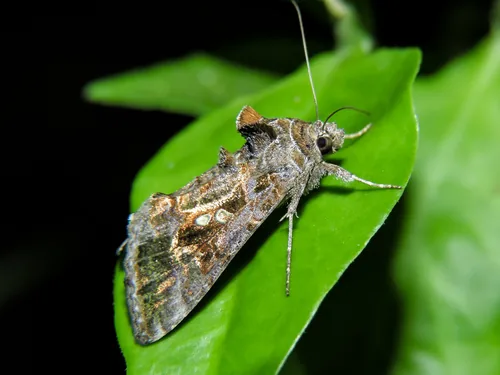
Field Identification
If leaves look shredded overnight or fruit has fresh chew holes, soybean looper may be feeding right now. These larvae can eat fast and strip a healthy plant in a short window. Young stages are easy to miss, then damage suddenly explodes as they grow. Catch them early to avoid severe defoliation and contaminated harvests.
Check leaf undersides, growing tips, and stem junctions for eggs, frass pellets, and feeding scars. Larvae vary in color, but most have a soft segmented body and blend into foliage. Look at dusk or early morning when many species feed more actively. Fresh chewing plus live larvae or droppings on lower leaves confirms an active caterpillar outbreak.
Not sure what you have? Use the symptom diagnosis tool →
How to Deal With It
Organic Control Methods
Braconid and ichneumonid parasitoid wasps and tachinid flies parasitize soybean looper larvae -- they are already present and provide significant suppression in diverse plantings. Entomopathogenic fungi (Beauveria bassiana, Nomuraea rileyi) naturally crash soybean looper outbreaks during humid periods -- collapsing white-covered larvae are fungal-infected and beneficial to leave in place as the infection spreads to healthy larvae. Plant dill, fennel, and sweet alyssum at bed and field edges to support parasitoid wasp populations. Avoid broad-spectrum sprays that collapse the beneficial insect community.
Soybean looper is a migratory moth that flies north from tropical overwintering areas -- pressure varies dramatically by year depending on migration patterns. Loopers make a distinctive looping motion when they walk -- the easiest field identification. They feed on leaf undersides leaving irregular holes. Scout the undersides of leaflets weekly during pod fill when damage is most economically significant. Early plantings often escape the worst late-season pressure.
Diverse crop rotations and border plantings of flowering plants support parasitoid populations that track looper outbreaks. Destroy crop residues after harvest to eliminate pupation sites. In home gardens, hand-picking on small plantings is effective -- check leaf undersides at dusk when larvae are active. Intercropping beans with aromatic herbs and diverse companions slows looper spread through the planting.
Row covers on high-value vegetable bean crops before canopy closure exclude egg-laying moths. Hand-pick larvae from undersides of leaves on small garden plantings -- feasible and effective. Check at dusk when larvae are feeding rather than sheltering. Blacklight traps monitor adult moth flight.
Bt kurstaki on small larvae (under half-inch) is the most targeted and effective spray -- apply in the evening coating leaf undersides thoroughly where larvae feed. Reapply every 5-7 days. Spinosad for larger larvae where Bt timing was missed -- apply at dusk to minimize bee exposure. Neem oil deters egg-laying and disrupts larval molting. Good canopy penetration is critical for all sprays on dense legume plantings.
Let Nature Handle It
Natural Enemies
- Braconid wasps
- Tachinid flies
- Entomopathogenic fungi
Threat Map