Field Identification
If plants are wilting, notching at the edges, or fruit and roots show hidden feeding damage, pea weevil may be the cause. Adults chew above ground while larvae often feed out of sight inside soil, stems, or fruit. Damage builds quietly, then plants crash fast when roots are heavily hit. Act early so a small weevil problem does not become a season-long infestation.
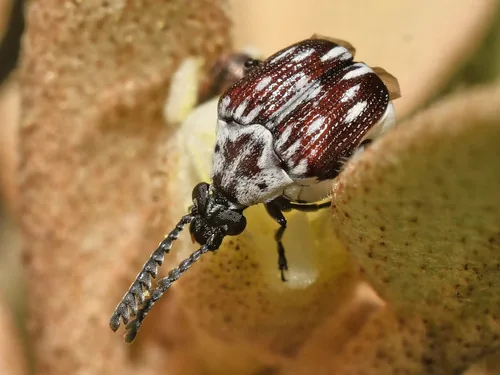
Look for small beetles with a hard body and a distinct snout, usually active at dawn, dusk, or night. Check for crescent-shaped leaf notches, punctures in fruit, or tiny entry holes near stems. In soil or damaged tissue, larvae are often pale, legless, and curved in a C-shape. Fresh chew marks plus snout beetles or C-shaped grubs confirm active weevil pressure.
Not sure what you have? Use the symptom diagnosis tool →
How to Deal With It
Organic Control Methods
Parasitic wasps in the Braconidae and Pteromalidae families attack pea weevil larvae inside pods and emerging adults -- they are present in most areas and provide suppression in undisturbed systems. Generalist ground beetles and birds consume adults at rest. Support beneficial insects with diverse flowering plants at plot edges. The most important biological management is planting early to escape peak adult migration -- pea weevil adults migrate to flowering peas from overwintering sites and early crops finish pod fill before peak pressure.
Pea weevil adults are small mottled brown beetles that migrate to pea fields during flowering and lay eggs on pods -- larvae tunnel into developing seeds and feed inside the pod, invisible until harvest. The first sign is small round exit holes in dried seed where adults emerged. Infested seed may look normal but contains larvae or has reduced germination. Plant as early as possible -- early crops complete pod fill before peak adult migration from overwintering sites in woodland edges.
Rotate peas away from previous year sites by at least 100 yards -- adults emerge from soil near previous crops and walk to find hosts. Destroy crop residues and harvest all pods promptly before full dry-down in high-pressure years. Do not save seed from suspect pods. Freeze saved seed at 0F (-18C) for 4 days to kill larvae inside -- effective for home seed saving. Wide crop rotation and avoiding consecutive pea plantings on the same site are the most reliable long-term management.
Vacuum or sweep adults from field edges at dawn when they are sluggish and concentrated before dispersing into the planting. Row covers until pod set exclude adult migration -- remove for pollination then replace. Harvest pods promptly before full dry-down to remove larvae before adults emerge into soil to overwinter.
Pyrethrin or spinosad applied to pod surfaces during peak adult migration and egg-laying provides protection -- coverage must reach all pod surfaces where adults walk before laying eggs. Apply in the evening to minimize bee exposure during peak pollinator activity. Repeat every 7 days during flowering. Kaolin clay on pods and foliage deters adult landing and egg-laying. No spray reaches larvae already inside pods -- all treatments must be applied before egg-laying.
Let Nature Handle It
Natural Enemies
- Parasitic Wasps (Braconidae)
- Parasitic Wasps (Pteromalidae)
- Predatory Beetles
- Birds
Threat Map