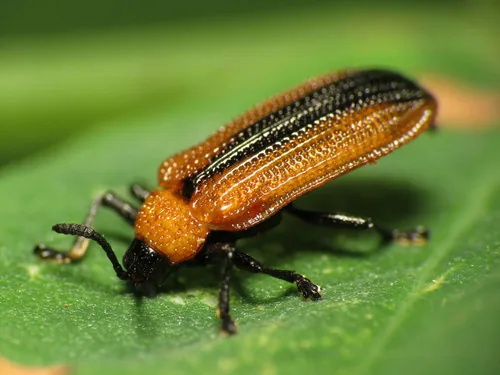
Field Identification
If new growth is curling, yellowing, sticky, or chewed, locust leaf miner may already be on the plant. This pest often builds quietly, then damage appears all at once. Feeding stress weakens growth, reduces yield, and opens the door to secondary disease. Early cleanup is much easier than fighting a full population surge later.
Inspect the newest growth first: leaf undersides, flower buds, stem joints, and tender tips where pests gather. Look for body shape, color, eggs, cast skins, honeydew, webbing, or fresh puncture marks. A hand lens and a white paper tap test help reveal small life stages. Matching visible pests with fresh plant damage confirms active infestation.
Not sure what you have? Use the symptom diagnosis tool →
How to Deal With It
Organic Control Methods
Parasitic wasps attack locust leaf miner larvae inside mines -- preserve them by avoiding calendar spray programs and only treating when damage genuinely threatens tree health. Songbirds pick adult beetles from low canopies actively. Diverse understory plantings with minimal pesticide use allow parasitoid wasp communities to build up over seasons. Healthy black locust trees refoliate after miner damage without lasting harm -- established trees tolerate this pest well and biological control is more sustainable than repeated sprays.
Locust leaf miner causes distinctive blotch mines in black locust leaves -- brown papery blotches where larvae fed between leaf surfaces, often covering most of the leaf by late summer. Adults are small orange and black beetles that scar leaves before larvae hatch. Scout at first full leaf expansion after bloom -- that is when adults lay eggs and early treatment is most effective. Do not confuse miner injury with herbicide drift -- mines are bounded blotches with distinct margins, not the irregular bleaching of herbicide damage.
Accept cosmetic damage on established timber and wildlife plantings -- trees refoliate and the damage is primarily aesthetic. For nursery stock where appearance matters, remove and destroy mined foliage before adults emerge. Maintain tree vigor with proper irrigation and mulch -- stressed trees suffer more from defoliation than healthy ones.
For nursery liners and young trees, shear and destroy mined foliage before adults emerge to prevent the next generation. Not practical on large trees. Remove fallen mined leaves in autumn to reduce overwintering adults in leaf litter near valuable plantings.
Neem oil or spinosad applied when adults first scar leaves (before egg hatch) is the most effective spray timing -- adults must be targeted before larvae enter leaf tissue where no spray reaches them. Apply in the evening to minimize non-target impact. Horticultural oil can smother young larvae in early mines if applied immediately at egg hatch before larvae penetrate deeper. For established landscape trees, spray programs are rarely justified -- biological control and tree vigor are more appropriate investments.
Let Nature Handle It
Natural Enemies
- Parasitic Wasps
- Songbirds
Threat Map