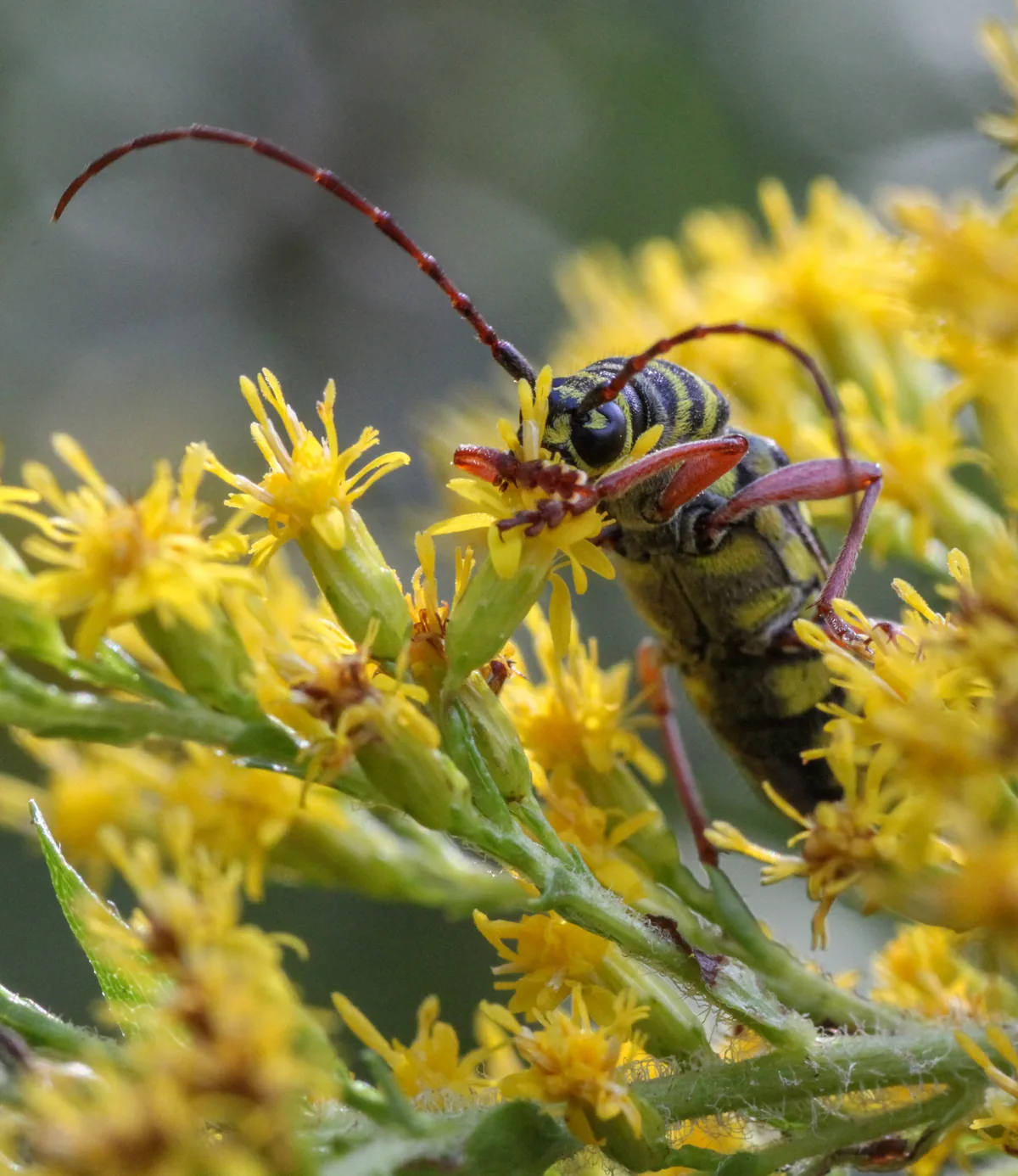
Field Identification
If new growth is curling, yellowing, sticky, or chewed, locust borer may already be on the plant. This pest often builds quietly, then damage appears all at once. Feeding stress weakens growth, reduces yield, and opens the door to secondary disease. Early cleanup is much easier than fighting a full population surge later.
Inspect the newest growth first: leaf undersides, flower buds, stem joints, and tender tips where pests gather. Look for body shape, color, eggs, cast skins, honeydew, webbing, or fresh puncture marks. A hand lens and a white paper tap test help reveal small life stages. Matching visible pests with fresh plant damage confirms active infestation.
Not sure what you have? Use the symptom diagnosis tool →
How to Deal With It
Organic Control Methods
Woodpeckers are the most effective natural control of locust borer larvae -- their excavating holes in black locust trunks indicate both active infestation and active predation. Parasitoid wasps attack smaller cerambycid larvae. Maintain diverse habitat supporting insectivorous birds and woodpeckers near locust plantings. Healthy vigorous black locust trees with adequate moisture and nutrients resist borer attack significantly better than stressed trees -- plant health is the most important biological defense. Mulch and avoid compaction around root zones.
Locust borer adults are striking yellow and black long-horned beetles that feed on goldenrod flowers in late summer before laying eggs in black locust bark. The first sign of infestation is sawdust-like frass at the base of the tree and in bark crevices. Adult beetles emerge in August and September -- this is the window for any preventive treatment. Stressed and wounded trees attract far more egg-laying females than vigorous trees. Avoid wounding trunks and maintain tree vigor with consistent irrigation and organic mulch.
Keep black locust trees vigorous with proper irrigation, organic mulch (not volcano mulch against the trunk), and minimal soil compaction -- stressed trees are dramatically more susceptible. Do not plant black locust as a specimen tree where limb failure could damage property -- heavy borer infestations weaken structural integrity. Prune and remove badly infested deadwood before adult emergence in August to prevent new generations. Diversify plantings rather than large pure stands of black locust.
Remove and chip badly infested trunks and major limbs before adult emergence in August -- larvae inside complete development and emerge unless the wood is destroyed. Avoid wounding trunks with equipment -- fresh wounds attract egg-laying females immediately. Wire probing into fresh galleries kills larvae mechanically on accessible young trees.
Neem oil or kaolin clay applied to trunk bark during adult activity (August through September) deters female beetles from laying eggs in bark. Applications must be on bark surfaces before adults arrive -- no spray reaches larvae inside galleries. Pyrethrin on trunks at adult emergence provides some knockdown of adults before egg-laying but degrades rapidly. No spray substitutes for keeping trees healthy and removing severely infested wood.
Let Nature Handle It
Natural Enemies
- Woodpeckers
- Parasitic Wasps (Cerambycidae associates)
Threat Map