Field Identification
If new growth is curling, yellowing, sticky, or chewed, kudzu bug may already be on the plant. This pest often builds quietly, then damage appears all at once. Feeding stress weakens growth, reduces yield, and opens the door to secondary disease. Early cleanup is much easier than fighting a full population surge later.
Inspect the newest growth first: leaf undersides, flower buds, stem joints, and tender tips where pests gather. Look for body shape, color, eggs, cast skins, honeydew, webbing, or fresh puncture marks. A hand lens and a white paper tap test help reveal small life stages. Matching visible pests with fresh plant damage confirms active infestation.
Not sure what you have? Use the symptom diagnosis tool →
How to Deal With It
Organic Control Methods
Paratelenomus saccharalis is a parasitoid wasp that has followed kudzu bug into North America and is establishing in many southeastern states -- it attacks egg masses and provides increasing biological suppression over time. Avoid broad-spectrum sprays during peak parasitism periods in spring and early summer to allow this wasp to establish and spread. Generalist predators including spiders, assassin bugs, and ground beetles eat kudzu bug nymphs. Diverse habitat with flowering plants supports these predators. Long-term management depends on this parasitoid establishing -- chemical management undermines it.
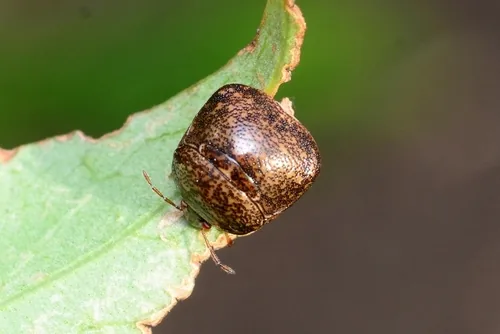
Kudzu bug is a small (4-6mm) olive-green bug that smells strongly when disturbed and leaves orange staining on skin and fabric. It aggregates on kudzu and wisteria first in spring, then moves to soybeans and other legumes. In gardens it is a nuisance pest on bean plants and sometimes on structures. Seal gaps in home exteriors in fall before adults seek overwintering sites. Remove or reduce kudzu and wisteria near gardens -- these are the primary spring breeding hosts.
Early-planted trap crops of preferred legumes at field edges concentrate kudzu bugs before they move to main crop plantings -- destroy trap crops with bugs on them when infested. Manage kudzu aggressively near gardens and farms -- it is the primary reservoir that sustains kudzu bug populations. For home gardens, physical exclusion is more practical than spray programs on ornamental legumes.
Soapy water traps placed under aggregating shrubs capture large numbers of adults. A shop vacuum removes dense aggregations on porches and structures -- dispose of contents immediately. Row covers on bean crops before kudzu bug migration exclude adults. Hand-pick adults into soapy water on small plantings though be aware of the staining secretion they release.
Neem oil disrupts kudzu bug feeding and reproduction -- apply to bean foliage when populations are building before pod fill. Pyrethrin provides quick knockdown on contact but degrades rapidly and should be a last resort only at dusk. Scout for parasitoid wasp activity before spraying -- mummified egg masses indicate Paratelenomus is working and chemical intervention should be delayed. No spray is necessary for most home garden situations where kudzu bug pressure is primarily a nuisance rather than a production threat.
Let Nature Handle It
Natural Enemies
- Parasitoid Wasps
- Assassin Bugs
Threat Map