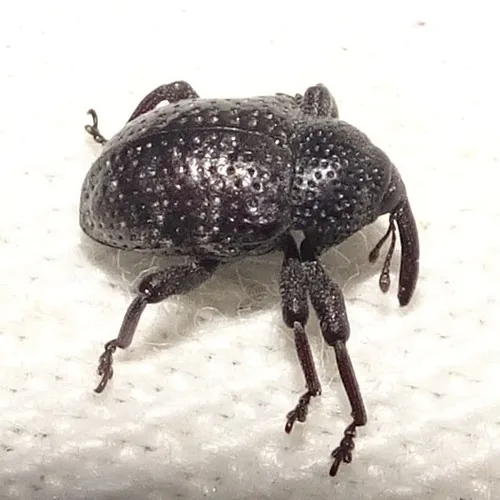
Field Identification
If new growth is curling, yellowing, sticky, or chewed, cowpea curculio may already be on the plant. This pest often builds quietly, then damage appears all at once. Feeding stress weakens growth, reduces yield, and opens the door to secondary disease. Early cleanup is much easier than fighting a full population surge later.
Inspect the newest growth first: leaf undersides, flower buds, stem joints, and tender tips where pests gather. Look for body shape, color, eggs, cast skins, honeydew, webbing, or fresh puncture marks. A hand lens and a white paper tap test help reveal small life stages. Matching visible pests with fresh plant damage confirms active infestation.
Not sure what you have? Use the symptom diagnosis tool →
How to Deal With It
Organic Control Methods
Field crickets, ants, and ground beetles eat small larvae and pupae when those stages sit near the soil surface or on spilled pods -- that window is before the grub tunnels deep into the seed. Once a larva is inside a developing pea, almost nothing can reach it without destroying the pod, so biocontrol is really about trimming next year's adults. Leave permanent mulch paths and avoid bare, baked soil so generalist predators have daytime cover. Do not expect purchased beneficials to fix an active pod infestation -- they help population pressure over seasons, not rescue a field already full of grubs in seeds.
Adults are hard-shelled weevils that fly and walk into legume patches to lay eggs on young pods -- your job is to catch that flight before pods are everywhere. Sweep-net the canopy every few days once flowers show, or watch for the first pinhole scars on young pods. Avoid planting one long trickle of cowpeas that ripens from June through frost, because that gives the pest a continuous buffet and overlapping generations. If you farm at garden scale, plant a single tight window of the same maturity group so you can harvest out and till or remove residue while numbers are still predictable.
Cowpea curculio completes part of its life cycle in crop residue and volunteer legumes, so clean harvest matters more than heroic sprays. Pick shellies and snaps on a short schedule so pods do not sit full-sized with grubs inside -- every day of delay is another day larvae finish feeding. After the last pick, pull vines and hot-compost or bury residue where soil loss is not a concern, and plow under volunteers before they flower. Rotate that bed to a non-legume family for at least one year so emerging adults meet nothing they can infest immediately. In market gardens, disk or tarp the ends of rows where pods were dropped during picking.
Floating row covers on bushy cowpeas block egg-laying adults from reaching young pods -- put covers on right after transplant or when seedlings are a few inches tall. Open covers during bloom if you need bees, then accept some risk or hand-pollinate a few flowers under cover and close them again. For small plots, pick pods every two to three days during peak pod set so fewer eggs complete development inside seeds. Shake vines over a light-colored sheet in early morning and crush any weevils you knock down before they fly. Combine covers with tight harvest timing; mechanics fail if pods stay on the plant half-formed for weeks.
Neem and pyrethrin only work when they touch active adults and very young larvae before they bore into seeds -- spray in early morning or dusk when weevils move on foliage and flower clusters. Add enough water volume to wet the canopy, especially blooms and tiny pods, because missed strips leave survivors that restart the curve. Repeat after hard rain because these materials do not linger. Do not spray open flowers during heavy bee activity; wait for a cool evening or spot-treat ends of rows. Kaolin clay on pods and stems can discourage feeding and egg-laying if you rebuild the film after rain -- think of it as whitewash armor, not a silver bullet.
Let Nature Handle It
Natural Enemies
- Field crickets
- Ants
- Ground beetles
Threat Map