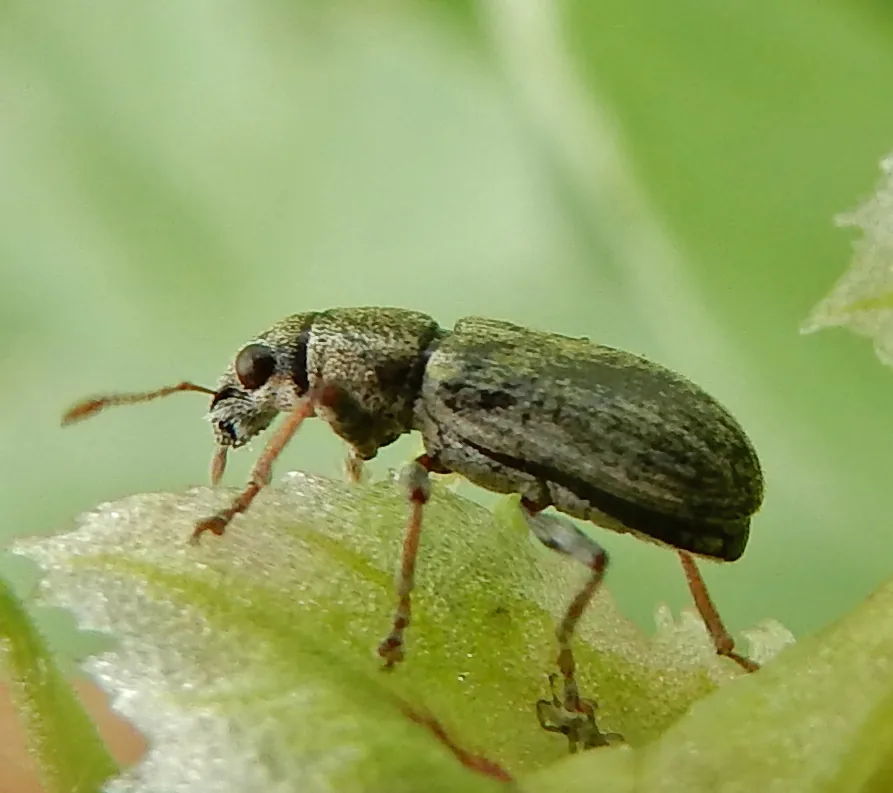
Field Identification
If plants are wilting, notching at the edges, or fruit and roots show hidden feeding damage, bean weevil may be the cause. Adults chew above ground while larvae often feed out of sight inside soil, stems, or fruit. Damage builds quietly, then plants crash fast when roots are heavily hit. Act early so a small weevil problem does not become a season-long infestation.
Look for small beetles with a hard body and a distinct snout, usually active at dawn, dusk, or night. Check for crescent-shaped leaf notches, punctures in fruit, or tiny entry holes near stems. In soil or damaged tissue, larvae are often pale, legless, and curved in a C-shape. Fresh chew marks plus snout beetles or C-shaped grubs confirm active weevil pressure.
Not sure what you have? Use the symptom diagnosis tool →
How to Deal With It
Organic Control Methods
Tiny parasitic wasps in the families Pteromalidae and Braconidae sometimes find larvae and pupae inside stored seed, especially in warm, humid climates where the wasps stay active year-round. They are not something you can reliably mail-order for a pantry, but they show up when beans sit slightly too warm with enough moisture -- leave a window for that biology before you assume every hole is a failure. Outdoors, generalist predators matter less than indoors because the real damage is usually in the jar. If you open a bin and see wasp exit holes smaller than the weevil's, that is biocontrol leaving evidence. Keep storage cool so you favor wasps over weevil speed, or use cold to stop both.
Bean weevil often rides home in dirty seed or last year's beans mixed into new -- inspect every batch and freeze suspect lots before they touch clean stock. Adults are short-lived beetles that lay eggs on beans in storage, not on green pods, so the prevention story is harvest hygiene and clean containers. Rotate field plots so overwintering adults near old bean debris do not step straight into the next legume row. Vacuum shelves, sweep bins, and sun-dry empty jars before refilling. One gravid female in a sealed jar can rebuild a full infestation in a few weeks -- treat a dusty bin like a biohazard for beans.
Harvest dry beans at full maturity but before pods shatter and scatter infested seed across the soil. Winnow outdoors, screen out fines, and discard anything that looks bored or dusty. Never pour new beans into a bin that still holds old beans or fine fragments -- webbing hides eggs. For long storage, freeze dry beans at 0°F (-18°C) for at least seven days to kill all stages inside the seed. After freezing, store in glass or metal with tight lids, not porous sacks. Label dates and use oldest stock first so nothing sits forgotten for years while pests multiply in the dark.
Hermetic storage in truly airtight buckets with oxygen absorbers, or purpose-built grain bags that seal, stops larvae from completing development because they need air like you do. Test seals -- a lid that hisses when you open it is doing work. For small seed lots you can solarize in sealed dark jars on hot days if local fire codes allow, watching that glass does not crack from rapid temperature change. Shake suspect jars and listen for faint rattling powder -- that is frass, not a maraca. Layer food-grade diatomaceous earth between beans in a dry bin so adults crawling between kernels desiccate, but keep the bin dry or DE cakes into useless mud.
Pyrethrin or spinosad on dry-down pods targets late-season adults while they still move on plants before beans go into storage -- spray only if you see beetles in the field, not as insurance. These are contact poisons with short life on leaf surfaces, so time sprays for calm evenings and repeat after rain. Indoors, do not fog your pantry with pyrethrin around food; use cold, vacuuming, and DE instead. If you must treat empty wooden bins, use labeled empty-bin products and air them out completely before refilling. Remember sprays never fix beans that already contain larvae -- fumigate with temperature and oxygen control, not more chemistry in the jar.
Let Nature Handle It
Natural Enemies
- Parasitic Wasps (Pteromalidae)
- Parasitic Wasps (Braconidae)
Threat Map