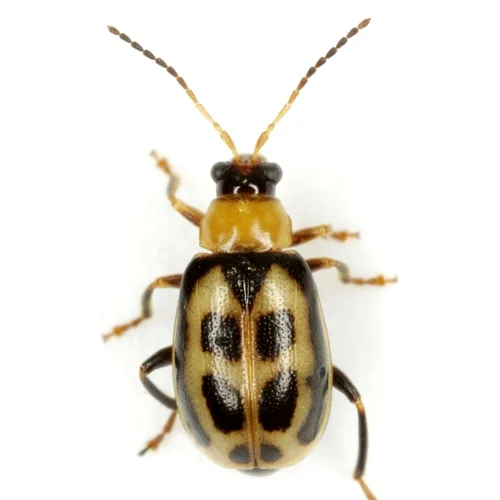
Field Identification
If new growth is curling, yellowing, sticky, or chewed, bean leaf beetle may already be on the plant. This pest often builds quietly, then damage appears all at once. Feeding stress weakens growth, reduces yield, and opens the door to secondary disease. Early cleanup is much easier than fighting a full population surge later.
Inspect the newest growth first: leaf undersides, flower buds, stem joints, and tender tips where pests gather. Look for body shape, color, eggs, cast skins, honeydew, webbing, or fresh puncture marks. A hand lens and a white paper tap test help reveal small life stages. Matching visible pests with fresh plant damage confirms active infestation.
Not sure what you have? Use the symptom diagnosis tool →
How to Deal With It
Organic Control Methods
Ground beetles, crickets, field crabs, and spiders eat adult bean leaf beetles when they drop to the ground or rest low in the canopy at night -- that is when predators get a fair shot. Birds pick adults from leaf edges in early morning when beetles are sluggish. Leave mulch and diverse ground cover between rows so beetles cannot sprint across bare plastic without meeting something hungry. Avoid broad-spectrum sprays on nearby turf or hedgerows; they flatten the predator layer and beetles rebound within a week. You cannot buy a truckload of beetle-eating wasps for this pest at garden scale -- conservation beats purchase here.
Adults overwinter in leaf litter and woody edges, then walk or fly into the first warm, isolated bean patch they smell -- very early single rows act like neon signs. Plant beans in blocks with other vegetation nearby so the first wave spreads out instead of hammering one row of cotyledons. Scout those cotyledons and first true leaves every day for a week -- shot holes that appear while plants are still tiny forecast a bad season if ignored. If regional maps show a big adult flight year, add a week of cover or kaolin on seedlings even before you see damage. Calendar planting so you are not the only beans emerging for miles; shared emergence dilutes attack.
Rotate beans with grasses, roots, or nightshades so overwintering adults meet a confusing rotation, not the same legume row every spring. Plant a perimeter trap row of highly preferred beans along the upwind edge and check it daily -- beetles stack there first and you can vacuum or shake them into soapy water. Mix varieties and maturity groups slightly so one bad week does not clip every plant at the same stage. Keep irrigation even; drought- stressed seedlings send a weaker signal but still get eaten, while overfed lush tissue can concentrate damage on fast tips. After harvest, flail or remove residue where adults like to hide near fields.
Floating row covers from emergence until first flower block migrating adults when they are searching for the youngest tissue -- that is the highest-value mechanical window. Bury edges so beetles cannot crawl under on cool nights. In early morning, hold a tray of soapy water under branches and tap canes -- adults drop when startled. For larger plantings, a shop vac with a wide nozzle and a cotton sock over the intake snarfs adults off leaves without bruising pods. Repeat every two to three days during peak flights because new adults arrive constantly. Combine shaking or vacuuming with border trap rows so you spend minutes, not hours, per bed.
Neem oil messes with feeding and egg-laying when adults chew treated leaves -- mix to label strength with a spreader-sticker and cover upper and lower surfaces. Pyrethrin knocks adults down fast but disappears in sunlight; use only when counts justify it and reapply after rain. Kaolin clay slurry on seedlings acts like gritty sunscreen -- beetles hate chewing through it -- rebuild after overhead irrigation. Spray at dusk to spare foraging bees on open bean flowers. If you spray weekly without scouting, you will burn money and kill predators -- numbers drive the calendar, not habit.
Let Nature Handle It
Natural Enemies
- Ground beetles
- Crickets
- Spiders
Threat Map