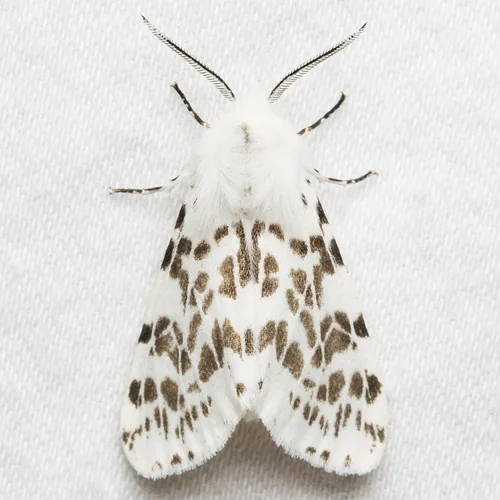
Field Identification
If leaves look shredded overnight or fruit has fresh chew holes, fall webworm may be feeding right now. These larvae can eat fast and strip a healthy plant in a short window. Young stages are easy to miss, then damage suddenly explodes as they grow. Catch them early to avoid severe defoliation and contaminated harvests.
Check leaf undersides, growing tips, and stem junctions for eggs, frass pellets, and feeding scars. Larvae vary in color, but most have a soft segmented body and blend into foliage. Look at dusk or early morning when many species feed more actively. Fresh chewing plus live larvae or droppings on lower leaves confirms an active caterpillar outbreak.
Not sure what you have? Use the symptom diagnosis tool →
How to Deal With It
Organic Control Methods
Ichneumonid and braconid parasitoid wasps and tachinid flies attack fall webworm larvae inside the web -- they are already present in most areas and provide significant suppression in undisturbed landscapes. Birds -- especially yellow-billed cuckoos and mockingbirds -- rip webs open and consume larvae actively. Maintaining diverse understory habitat and reducing broad-spectrum sprays allows these enemies to build up. Bacillus thuringiensis kurstaki (Bt) is highly targeted -- it kills caterpillars that eat treated foliage and nothing else, preserving all parasitoids working inside webs.
Fall webworm builds silken webs at branch tips from midsummer through fall -- the large gauzy tents enclosing leaves and twigs are unmistakable. A mature tree tolerates one or two webbing episodes without lasting harm -- fall webworm is largely a cosmetic problem on established landscape trees. Young trees and nursery stock are more vulnerable. The key window for control is small webs early in the season before larvae grow large and the web expands. Act when webs are softball-sized, not when they cover entire branch ends.
Accept light webbing on mature landscape trees when webs are few -- the tree will recover and the parasitoid wasps reservoired in the colony will help protect other plants. In orchards and nurseries, lower tolerance is appropriate. Remove winter egg masses from bark on young trees during dormancy to reduce the following season population. Avoid late-season nitrogen fertilization that pushes succulent new growth when moth flights peak.
Prune out accessible webs into a bucket of soapy water -- the most effective control for yard trees. Do it in early morning when larvae are clustered inside the web for warmth. Cut the supporting branch several inches below the web base. For high branches, a pole pruner reaches small webs before larvae grow large enough to disperse. Do not burn webs on the tree -- this damages bark and spreads larvae that drop to escape.
Bt kurstaki sprayed inside and around small webs targets larvae feeding on treated foliage -- penetrate the web enough to wet foliage inside. Apply in the evening when larvae are active. Spot-treat individual webs rather than blanket-spraying entire trees to protect parasitoid wasps working inside colonies. Spinosad as a follow-up for larger larvae. Neem oil on ornamentals deters adult egg-laying when applied to foliage before webs appear.
Let Nature Handle It
Natural Enemies
- Tachinid Flies (Tachinidae)
- Ichneumonid Wasps
- Braconid Wasps
- Insectivorous Birds
Threat Map