About
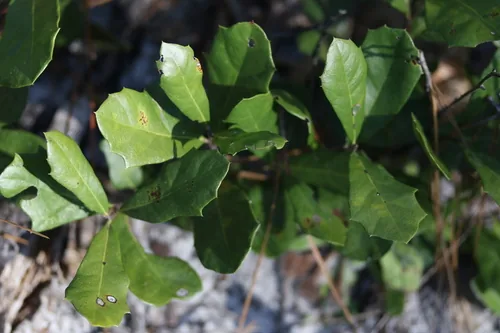
Dwarf live oak (Quercus minima) is an evergreen, rhizomatous oak that behaves like a woody ground cover, rarely rising above knee height but spreading into extensive clones in sandy pine savannas and dry oak scrub around the Gulf and Atlantic coastal plains. It is not a bonsai mistake—genetics keep it low while it still makes acorns for wildlife honest enough to bend down. Use it in restoration, fire-adapted landscaping, and food forests where you want oak ecology without shading out every understory dream. Full sun; tolerates droughty, infertile sands once established. Poor fit for heavy clay or chronically irrigated lawn islands. Needs excellent drainage; seasonal wet is tolerated briefly but constant saturation rots roots. Hardy into light freezes typical of zones 7–10 coastal interiors; extreme cold snaps damage foliage. Transplant rooted rhizome sections during cool, moist weather with minimal root disturbance. Acorns can be sown fresh; seedlings may vary in vigor and clonal tendency. Acorns mature in fall; wildlife harvest is the main yield. For restoration, collect local ecotype seed. Prune only to reduce encroachment on paths—natural spread is the point.
Permaculture Functions
- Wildlife Attractor: Quercus minima still sets acorns near ground level for quail, jays, and small mammals -- across evergreen scrub clones.
- Erosion Control: Rhizomatous runners and dense foliage armor deep sand -- on coastal ridges against sheet erosion.
- Mulcher: Small evergreen oak leaves acidify duff slowly -- feeds mycorrhizal webs under wiregrass and palmetto neighbors.
- Border Plant: Knee-high oak mats define savanna and scrub edges -- low enough to maintain the open canopy structure scrub species require.
Companion Planting
Also mentioned as companions:
- Bluestem
Not yet profiled in PermiePortal
- Prescribed fire and mowing require knowledge—treatments that work in savanna restoration can terrify suburban turf expectations
Threats & Pressure