About
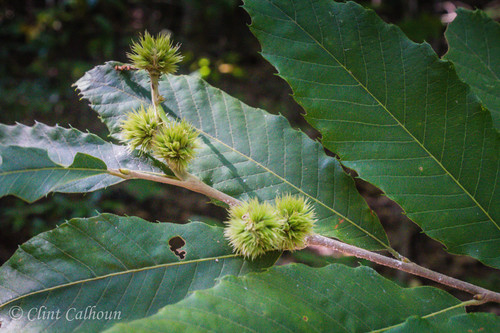
Dwarf chestnut (Castanea pumila), widely called Allegheny chinquapin, is a multi-stemmed nut shrub of dry to mesic woodlands and savannas in eastern North America, producing small, sweet nuts in spiny burs on older wood. It is not a toy orchard chestnut—yield is modest and bur handling is sincere—but it persists on tough sites where timber-form Castanea demands deeper soil. The species matters for food forests seeking chestnut flavor without waiting for cathedral spacing, and for wildlife that treat chinquapins like gas-station snacks along forest edges. ☀️💧 Sun and Water Requirements: Full sun to partial shade; heavier flowering and nut set with more light if soil moisture holds. Prefers well-drained, acidic to neutral soils rich in organic matter; tolerates droughty slopes better than many forest nuts once established. Avoid wet feet; Phytophthora-sensitive relatives make drainage a serious design constraint. ✂️ Propagation: Sow fresh nuts immediately after fall drop; desiccated seed dies quietly. Graft improved selections onto seedling rootstocks for predictable quality, as wild seedlings vary. 🌾 Harvest / Best Use Timing: Collect burrs when they split and nuts are brown; cure briefly in a breathable tray. Roasting removes residual peel cling. Prune for air movement to reduce foliar disease pressure in humid climates.
Permaculture Functions
- Edible: Small nuts are sweet and starchy; suitable for roasting, flour trials, and small-batch baking.
- Wildlife Attractor: Nuts, catkins, and leaf litter feed birds, mammals, and soil fauna.
- Mulcher: Leaf drop feeds fungal decomposition typical of oak-family systems.
- Erosion Control: Clonal thickets stabilize slopes on sandy or rocky ground.
Practitioner Notes
- Burs are sincere about puncturing thumbs—leather wins over optimism.
- Nuts are smaller than Chinese chestnut dreams; plan portions accordingly.
- Suckering clumps are a feature for erosion control, a bug for formal hedges—pick your religion.
- Fresh seed or nothing: the nuts do not respect your procrastination shelf.
Companion Planting
- Oak — shared mycorrhizal aesthetics and staggered mast for wildlife calendars
- Hazelnut — complementary shrub nut layer with different harvest timing and handling
- Blueberry — acidic mulch synergy under high shade at woodland margins
- Chestnut blight (Cryphonectria parasitica) remains a regional risk—source nursery stock with known health histories
Pest Pressure