About
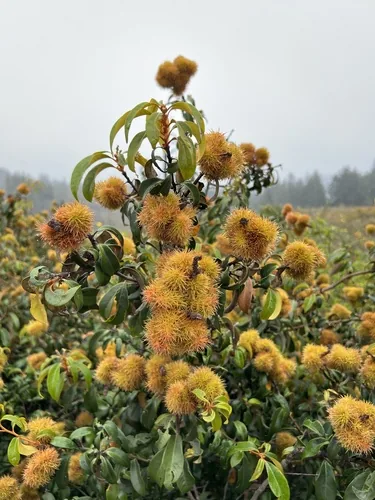
Golden chinquapin (Chrysolepis chrysophylla) is an evergreen tree to large shrub of moist to dry montane forests along the Pacific coast of North America, with leathery leaves, golden leaf undersides, and spiny burs enclosing sweet nuts prized by wildlife and foragers willing to negotiate spines. It fills a chestnut-like niche in evergreen oak-madrone matrices, feeding bears and jays while stabilizing steep, organic soils. For permaculture west of the Rockies, it is a long-lived mast source where summer drought and winter rain define the hydrology. Full sun to partial shade; juvenile plants appreciate afternoon shade in hot exposures. Prefers well-drained, acidic to neutral forest soils rich in organic matter; tolerates summer drought once established with deep mulch. Not for alkaline deserts or compacted urban fill without soil reconstruction. Coastal fog patterns suit its physiology; inland heat demands moisture access. Sow fresh nuts immediately; delay invites desiccation and rodent heists. Transplant only small seedlings with intact long roots—large specimens sulk. Collect burs when they split; use gloves. Roasted nuts are sweet but labor-intensive—budget time like chestnut processing. Prune for clearance only; natural form supports wildlife perching and epiphyte niches.
Permaculture Functions
- Edible: Chrysolepis chrysophylla spiny burs hide sweet chestnut-flavored nuts that roast after gloves split hulls on Pacific slope batches -- labor beats supermarket chestnut imports only if you budget glove boxes and time like real chestnut processing math.
- Wildlife Attractor: Mast fills bear fattening calendars in Sierra Nevada mixed-evergreen forest -- where Steller jays cache nuts upslope from campsite picnic litter you already picked up because rodents rewrite harvest calendars if you delay nut gathering once burs split open.
- Shade Provider: Thirty-to-sixty-foot evergreen crowns hold snow load better than madrone thin branches -- while casting year-round dim for huckleberry groundcover guilds on north aspects you mulched with coarse oak duff instead of fine bark volcanoes against trunks.
- Erosion Control: Mycorrhizal root webs lock steep colluvium under summer-dry redwood transition zones -- where winter rains would deliver shallow slides if understory bare soil stayed exposed on the same percent-slope transects you already mapped with clinometer tapes.
Companion Planting
Also mentioned as companions:
- Douglas Fir
- Huckleberry
Not yet profiled in PermiePortal
- Chestnut blight risk awareness—know regional pathogen status when sourcing seed and nursery stock
Threats & Pressure