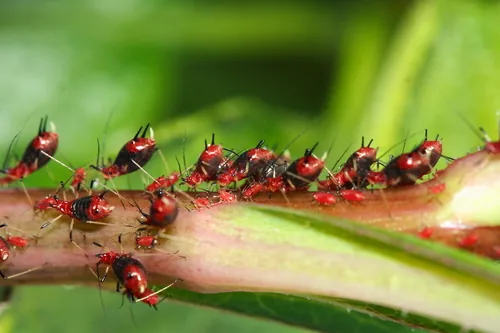
Field Identification
If new growth is curling, yellowing, sticky, or chewed, lettuce aphid may already be on the plant. This pest often builds quietly, then damage appears all at once. Feeding stress weakens growth, reduces yield, and opens the door to secondary disease. Early cleanup is much easier than fighting a full population surge later.
Inspect the newest growth first: leaf undersides, flower buds, stem joints, and tender tips where pests gather. Look for body shape, color, eggs, cast skins, honeydew, webbing, or fresh puncture marks. A hand lens and a white paper tap test help reveal small life stages. Matching visible pests with fresh plant damage confirms active infestation.
Not sure what you have? Use the symptom diagnosis tool →
How to Deal With It
Organic Control Methods
Aphidius spp. and Aphelinus spp. parasitoid wasps mummify lettuce aphids from inside -- look for swollen bronze-colored aphid mummies among colonies as evidence these wasps are working. Syrphid fly larvae and minute pirate bugs also attack. Avoid stripping outer leaves too aggressively which removes the predators along with the aphids. In greenhouses, banker plant systems with barley and cereal aphids support Aphidius populations that move to lettuce aphid. Plant dill and fennel near outdoor lettuce beds to sustain parasitoid wasp populations.
Lettuce aphid is particularly troublesome because it hides deep inside forming heads where sprays cannot reach and where it is discovered only at harvest. Light green and soft-leaved varieties are most susceptible. Resistant cultivars exist -- check seed catalogs for lettuce aphid resistance ratings. Scout the base of outer leaves and inside forming heads weekly. Winged forms arrive from spring through fall -- reflective silver mulch under lettuce plantings disorients landing aphids significantly.
Choose resistant varieties wherever possible -- this eliminates the problem more reliably than any spray. Increase airflow between rows -- dense humid plantings favor aphid populations. Remove bolting lettuce and cull plants immediately as these host large aphid populations that move to new plantings. Harvest heads promptly at maturity -- overmature lettuce accumulates aphids. Avoid excess nitrogen which produces the soft growth lettuce aphids prefer.
A strong water spray with particular attention to inner leaves dislodges colonies on loose-leaf types -- less effective on tight heading varieties where aphids shelter deep inside. Clip and remove outer leaves with heavy infestations. Reflective silver mulch under plants is one of the most effective and low-maintenance physical deterrents for winged aphids.
Insecticidal soap applied with a pressure sprayer that can reach inner leaves kills aphids on contact -- the challenge is getting coverage inside tight heads. Apply every 2-3 days while migrating winged forms continue arriving. Neem oil and azadirachtin reduce reproduction and deter new colonizers. Apply at dusk or early morning. Check pre-harvest interval on any product used on food crops -- insecticidal soap has a 0-day PHI but confirm on any other product used.
Let Nature Handle It
Natural Enemies
- Aphidius spp. (Braconidae)
- Aphelinus spp.
- Syrphid Fly Larvae (Syrphidae)
- Minute Pirate Bugs (Orius spp.)
Threat Map