About
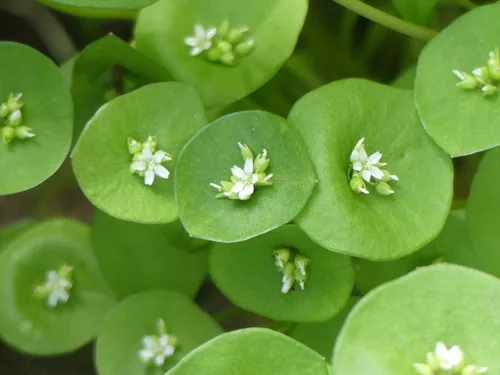
Miner’s lettuce (Claytonia perfoliata) is a cool-season, succulent-textured annual or short-lived perennial (behaving annual in heat) famous for the perfoliate leaf pair that cups a slender flower stalk. Plants form loose rosettes and low mats, often volunteering in disturbed, moist shade; flavor is mild and lettuce-ish when young, before the plant gets stringy and philosophical. subtropical and tropical Americas: Grow as a winter–early spring green in shade; summer heat ends the romance quickly unless you have misty microclimate privilege. Light shade to bright indirect light; direct tropical midday sun bleaches leaves faster than a tourism brochure. Steady moisture; excellent in irrigated food forests under deciduous canopy edges or along north faces of mulched paths. Broadcast ripe seed on raked, moist soil in fall; self-sowers will colonize mulch if you stop weeding like a control freak. Transplant volunteers in cool weather; water in and mulch to reduce shock. Pick small rosettes and stems before flowering for the tenderest salads; after bloom, texture goes from silk to sisal. Stagger plantings or harvest aggressively in mild winters to keep the patch producing before heat calls the season.
Permaculture Functions
- Edible: Mild, succulent rosettes with the signature perfoliate leaf pair are picked for cool-season salads and quick sautés -- harvest before elongating flower stalks turn texture stringy; historic western miners valued the vitamin C hit in lean winters.
- Ground Cover: Low mats fill moist, mulched shade under deciduous canopies and along paths where turf would compete for irrigation -- self-sows freely when winter moisture holds steady.
- Wildlife Attractor: Tiny white flowers on slender scapes feed small native bees and syrphid flies in shoulder seasons -- tender leaves also draw slugs in wet springs unless you patrol or trap.
- Dynamic Accumulator: Juicy tissues concentrate minerals from fertile topsoil into leaf biomass that rots fast on the surface -- best treated as a quick green manure cycle between tree crops, not a deep subsoil miner.
Companion Planting