Case Study — Yulee, FL
Backyard
Food Forest
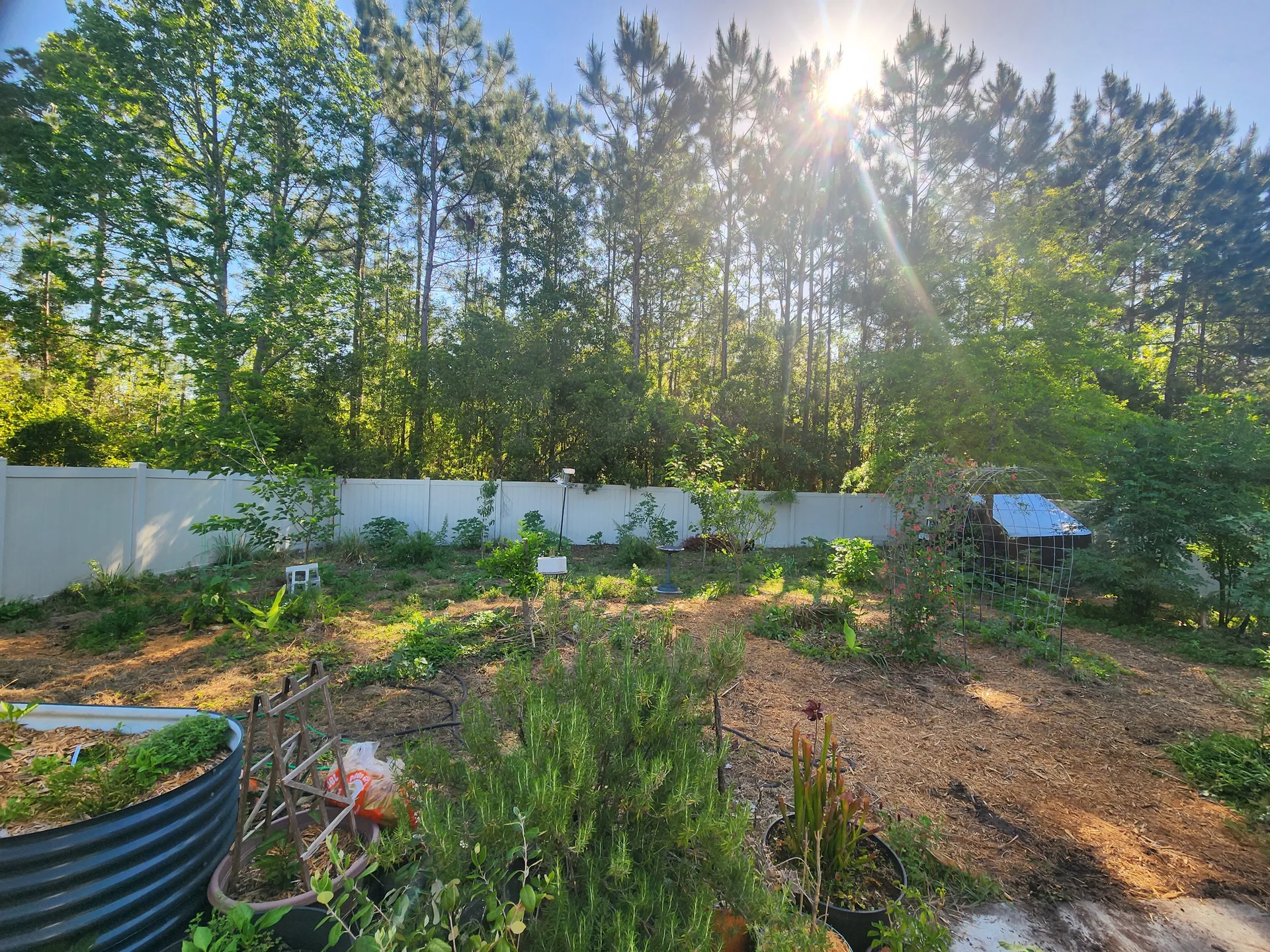
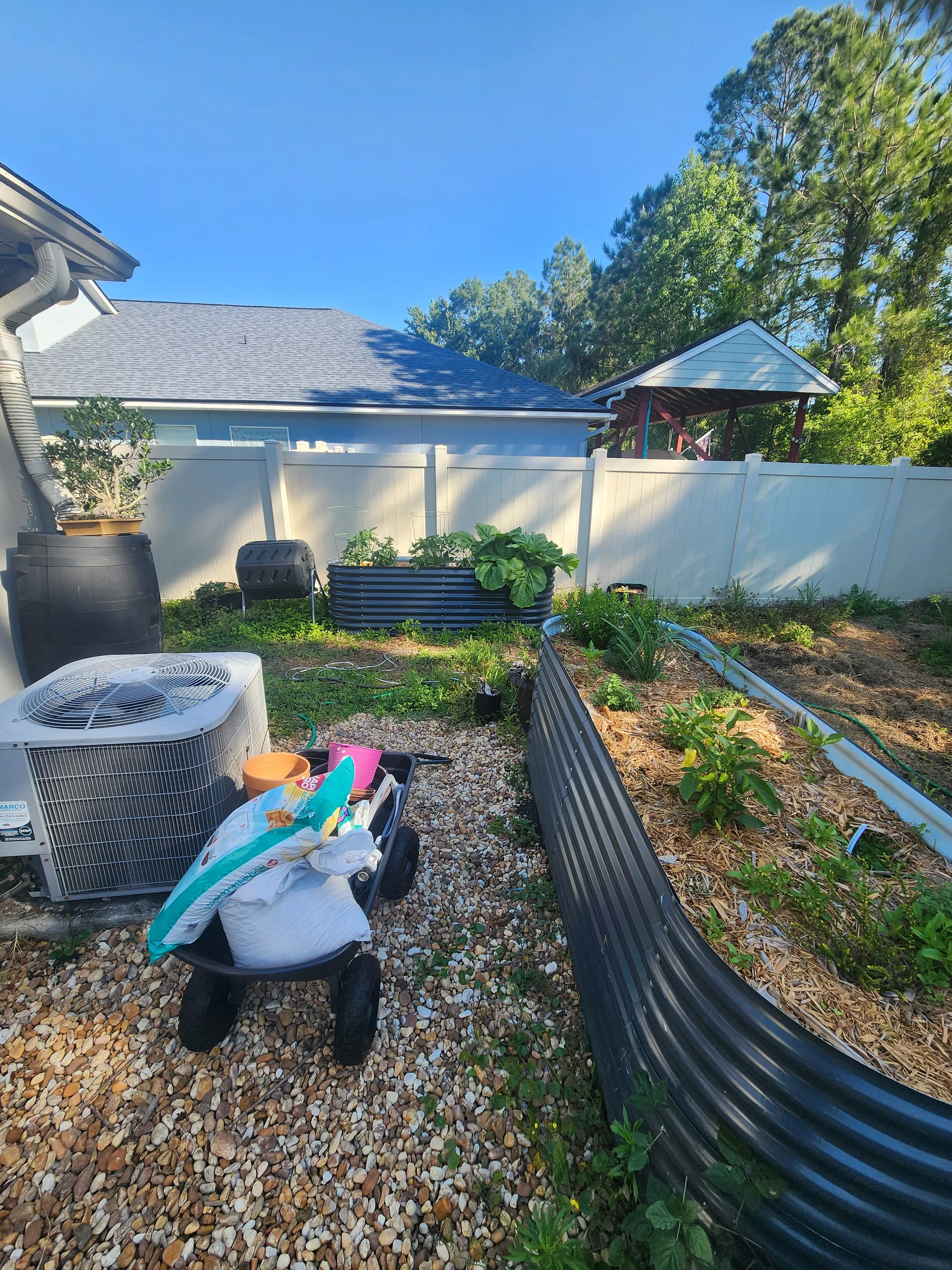
Converting a standard Florida lawn into a productive perennial food system. 1,800 sq ft — the size of an average suburban backyard. Every plant, every tree, and over 200 bags of mulch transported in a Honda Civic. No truck. No synthetic inputs. Just time, observation, and a 2012 Honda Civic sedan.
The Transformation
Before & After
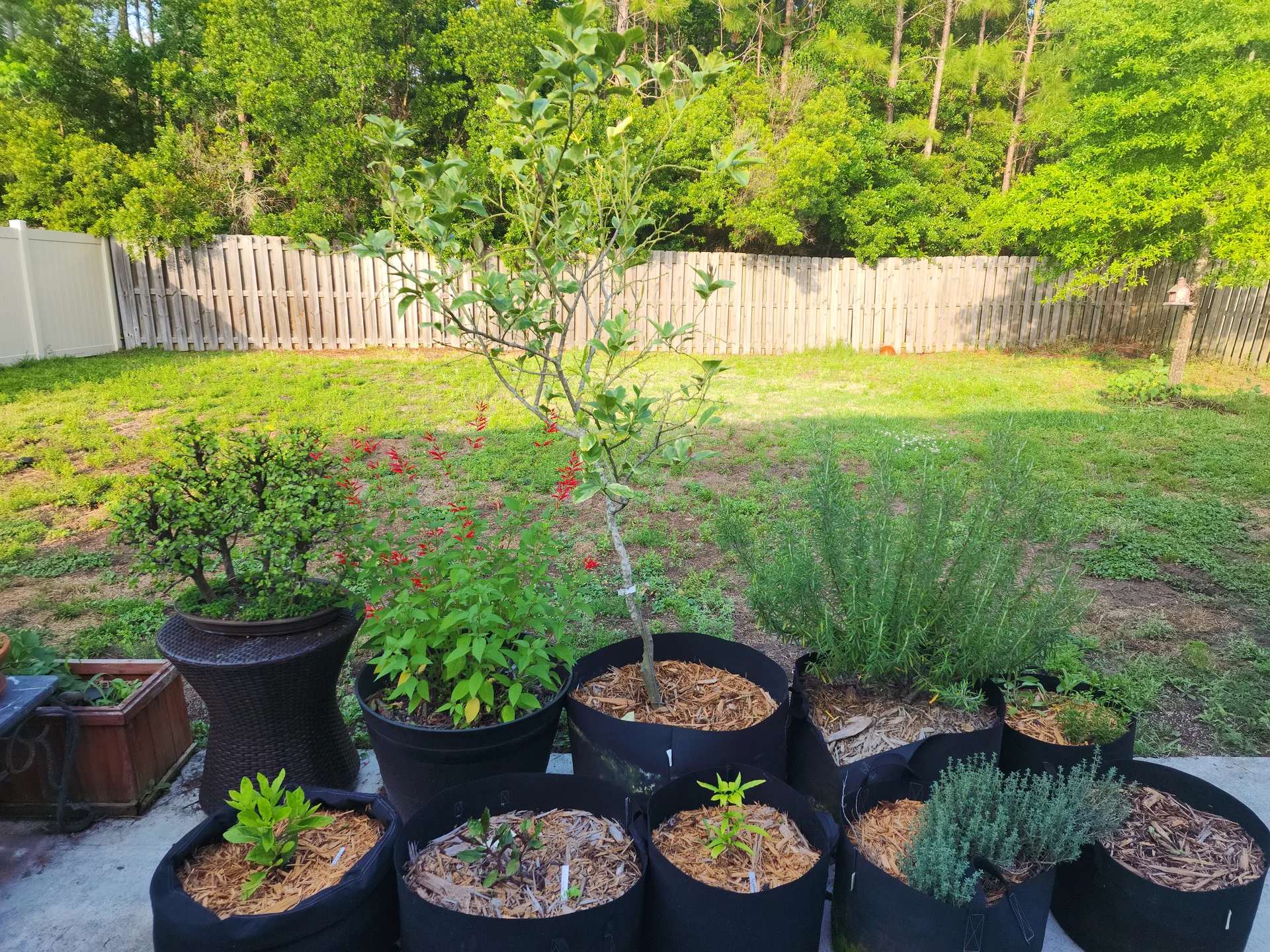
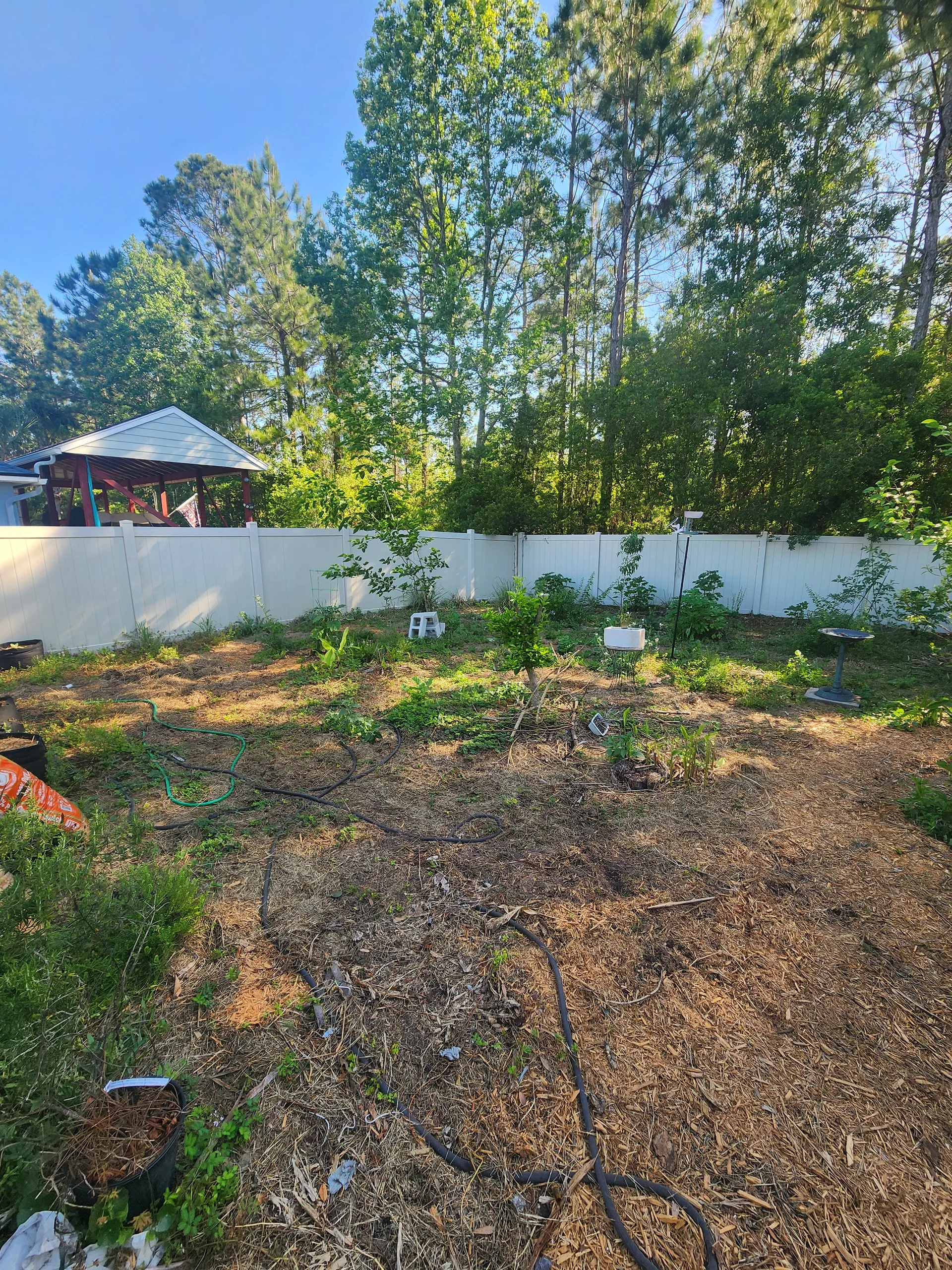
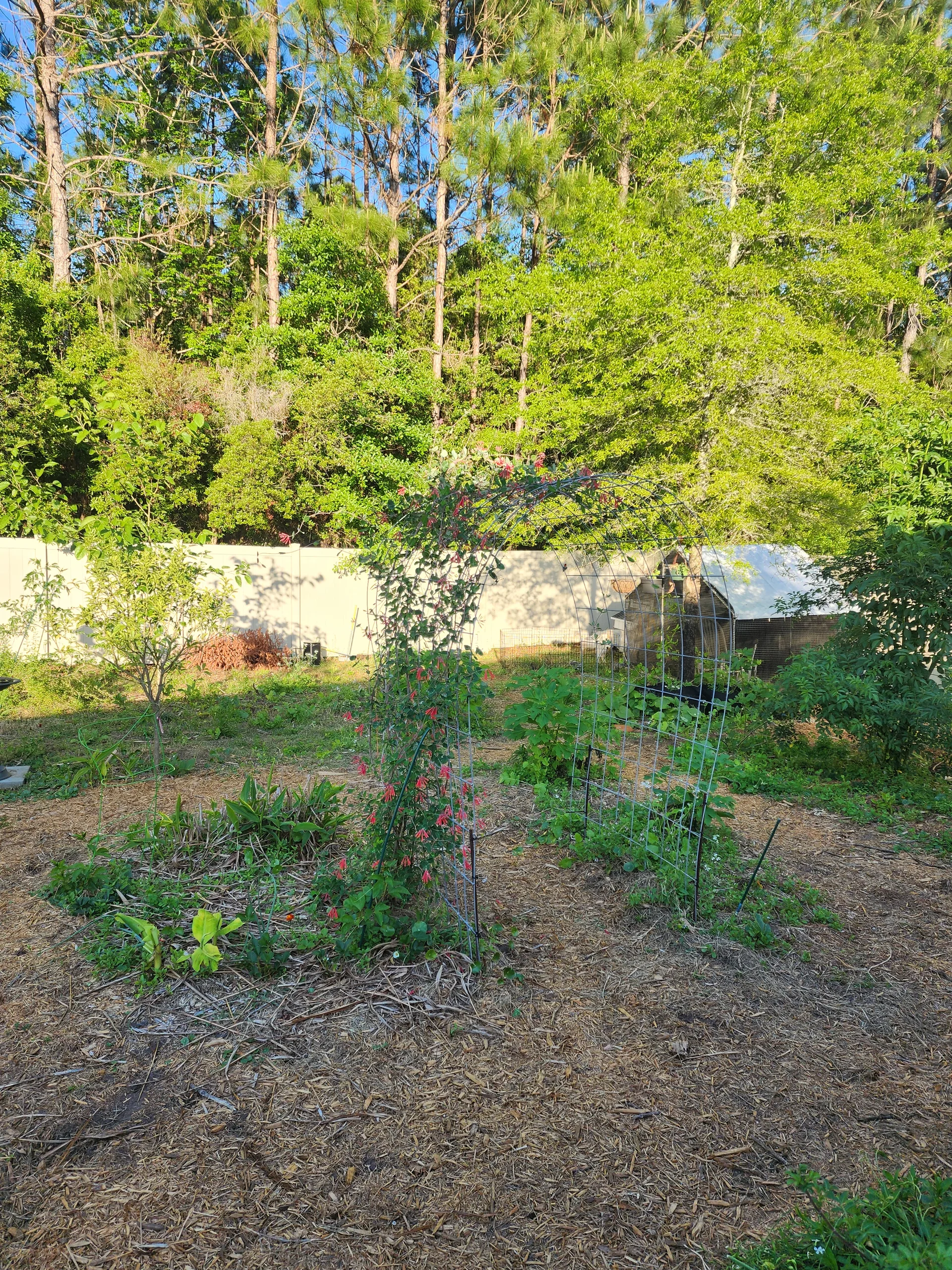
Same backyard. Same perspective. 3 years apart. The lawn is gone. The system feeds itself.
How It Started
Breaking Ground
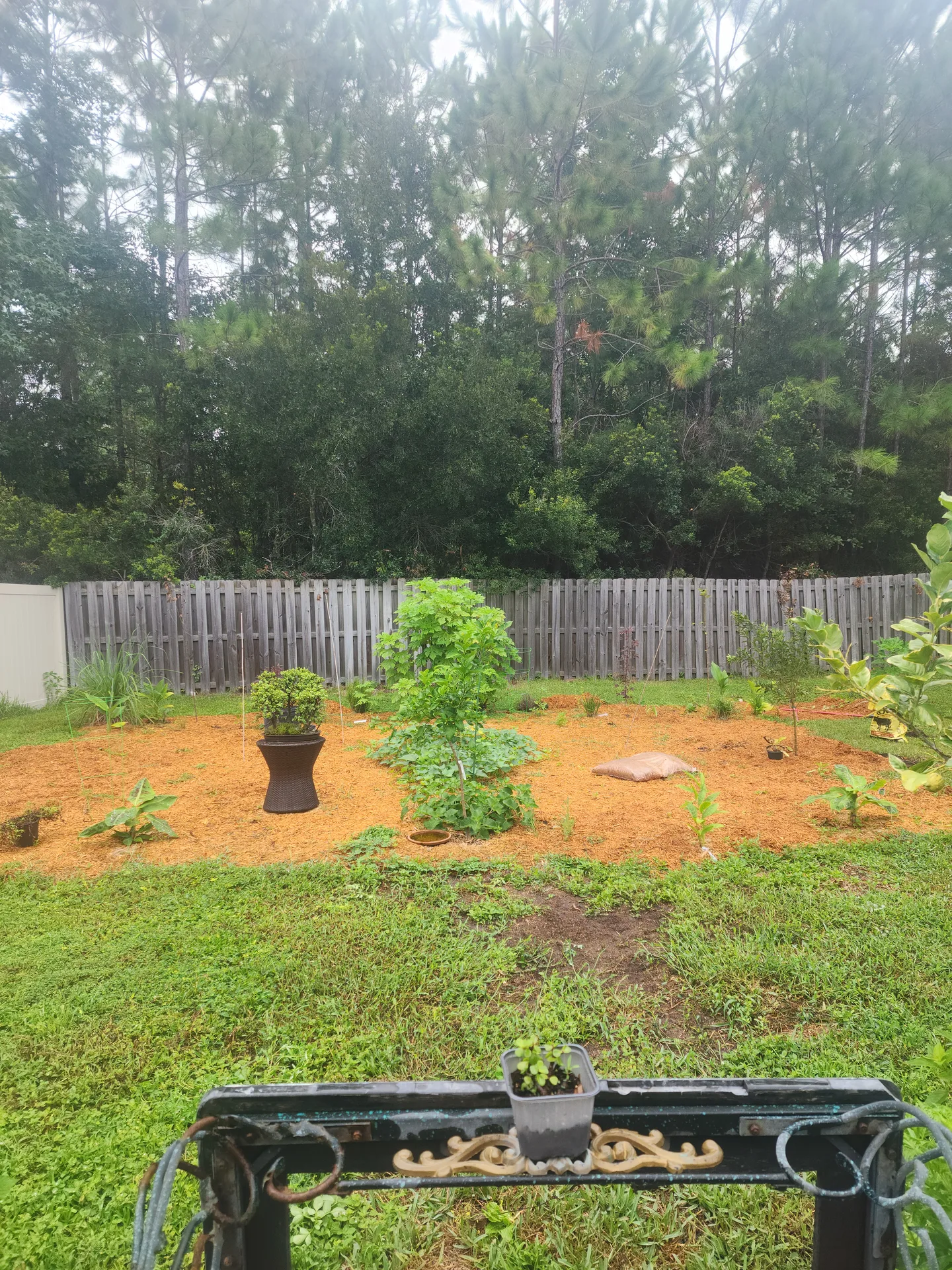
Sheet mulching started July 8, 2023. Just wood chips on top, plants in the same day. No tilling. No soil removal. The lawn dies (Slowly since I didnt use Cardboard) underneath and feeds the system as it breaks down.
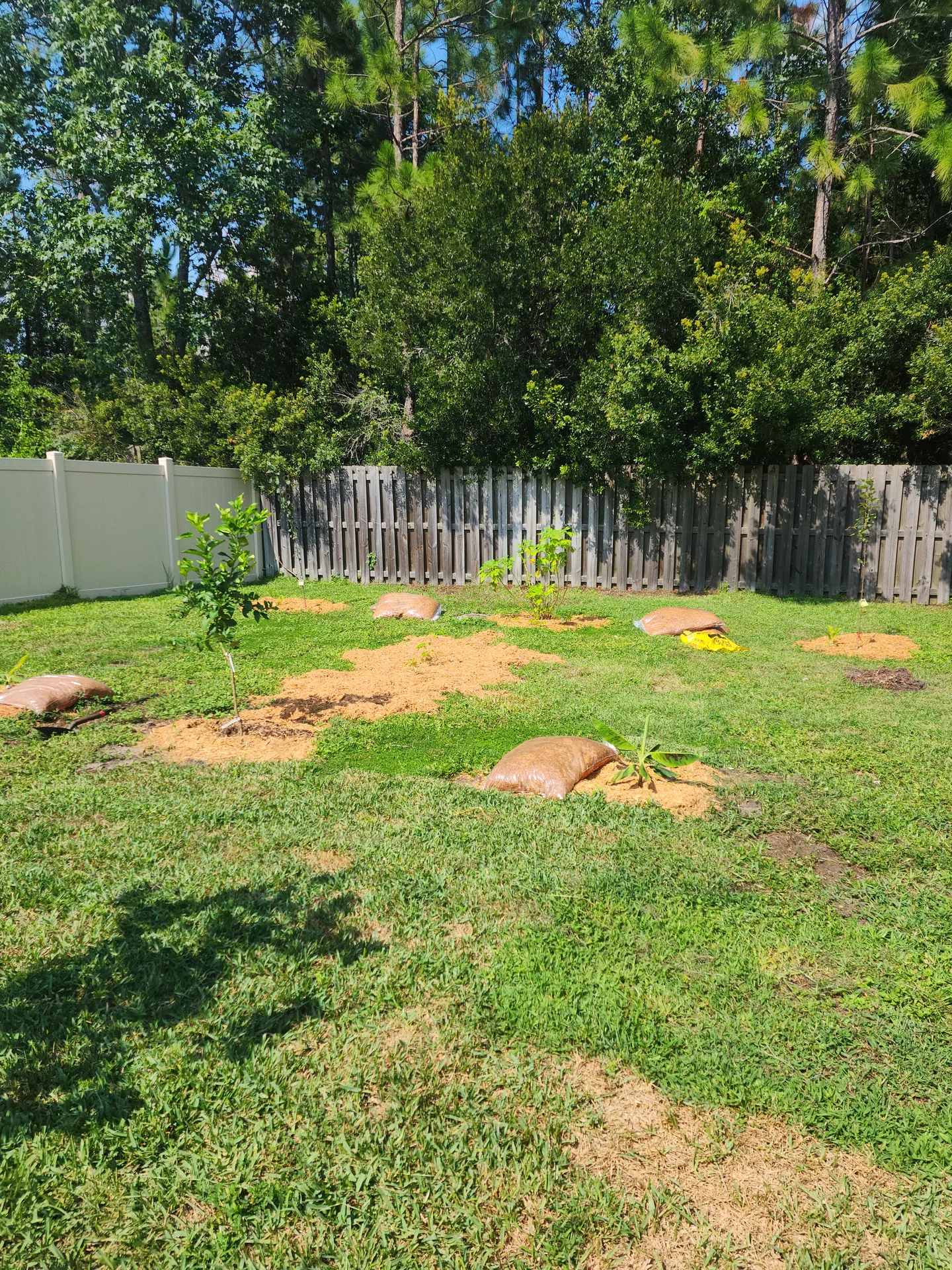
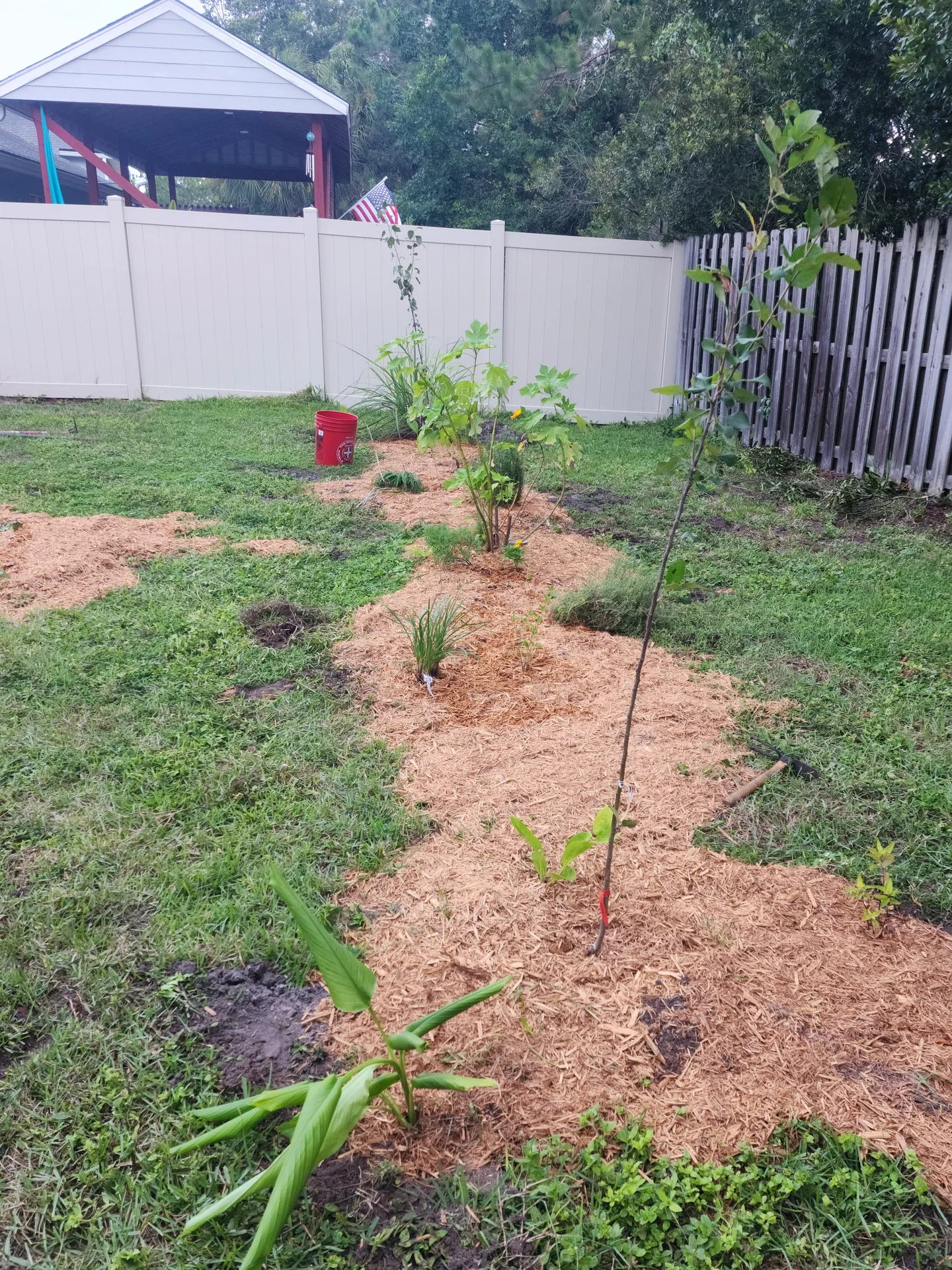
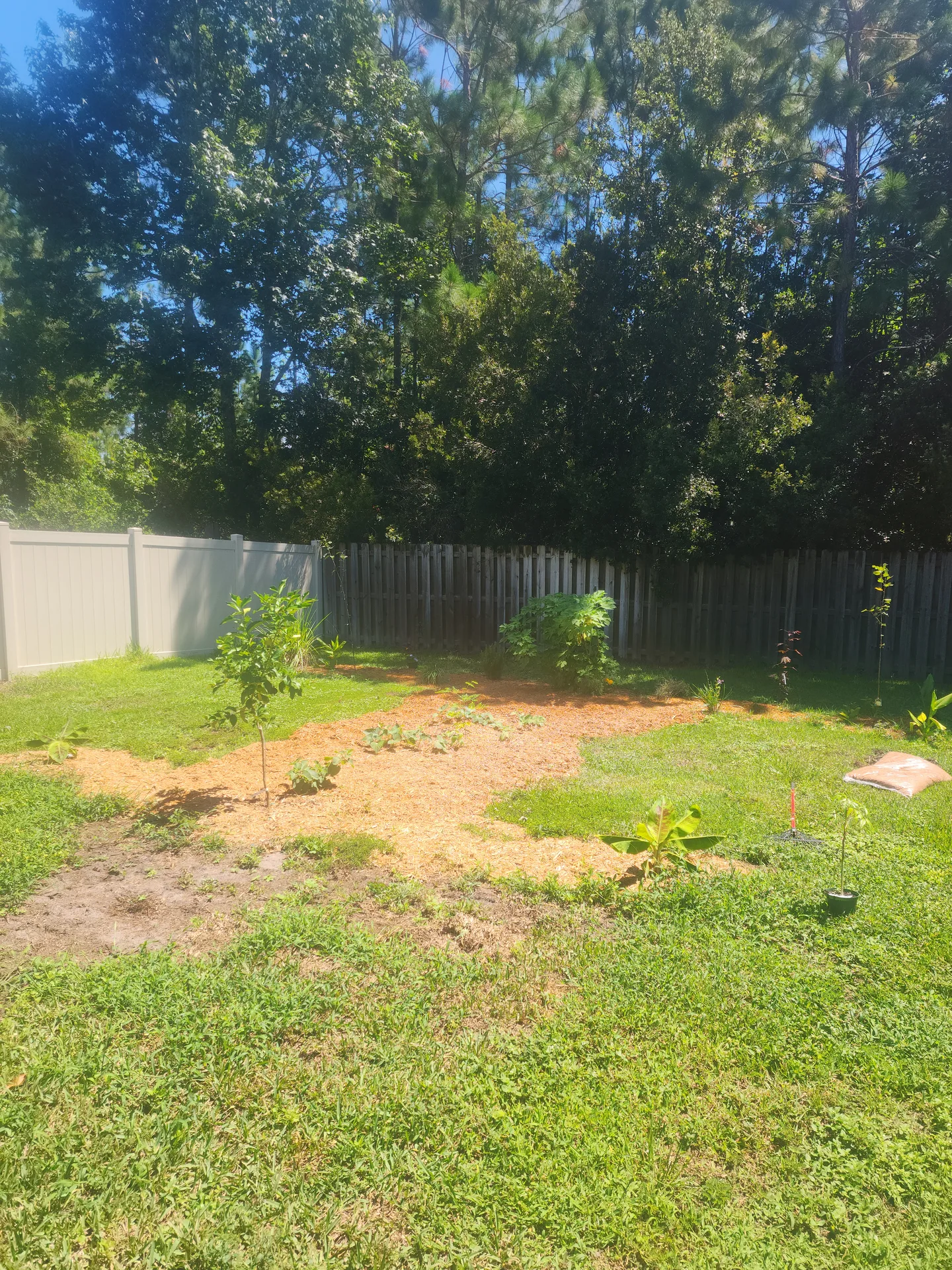
Year 1 — August & September 2023
Establishment
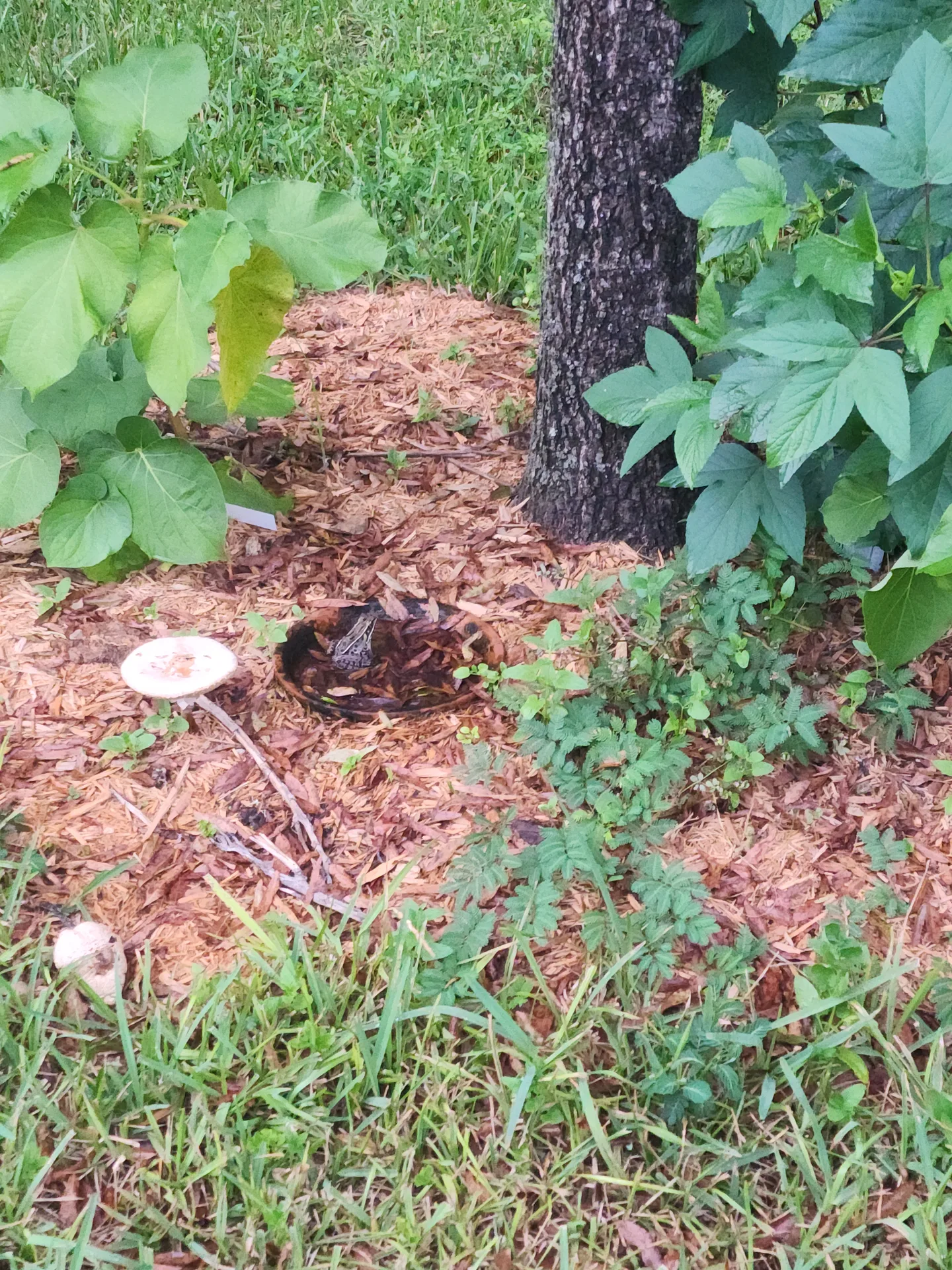
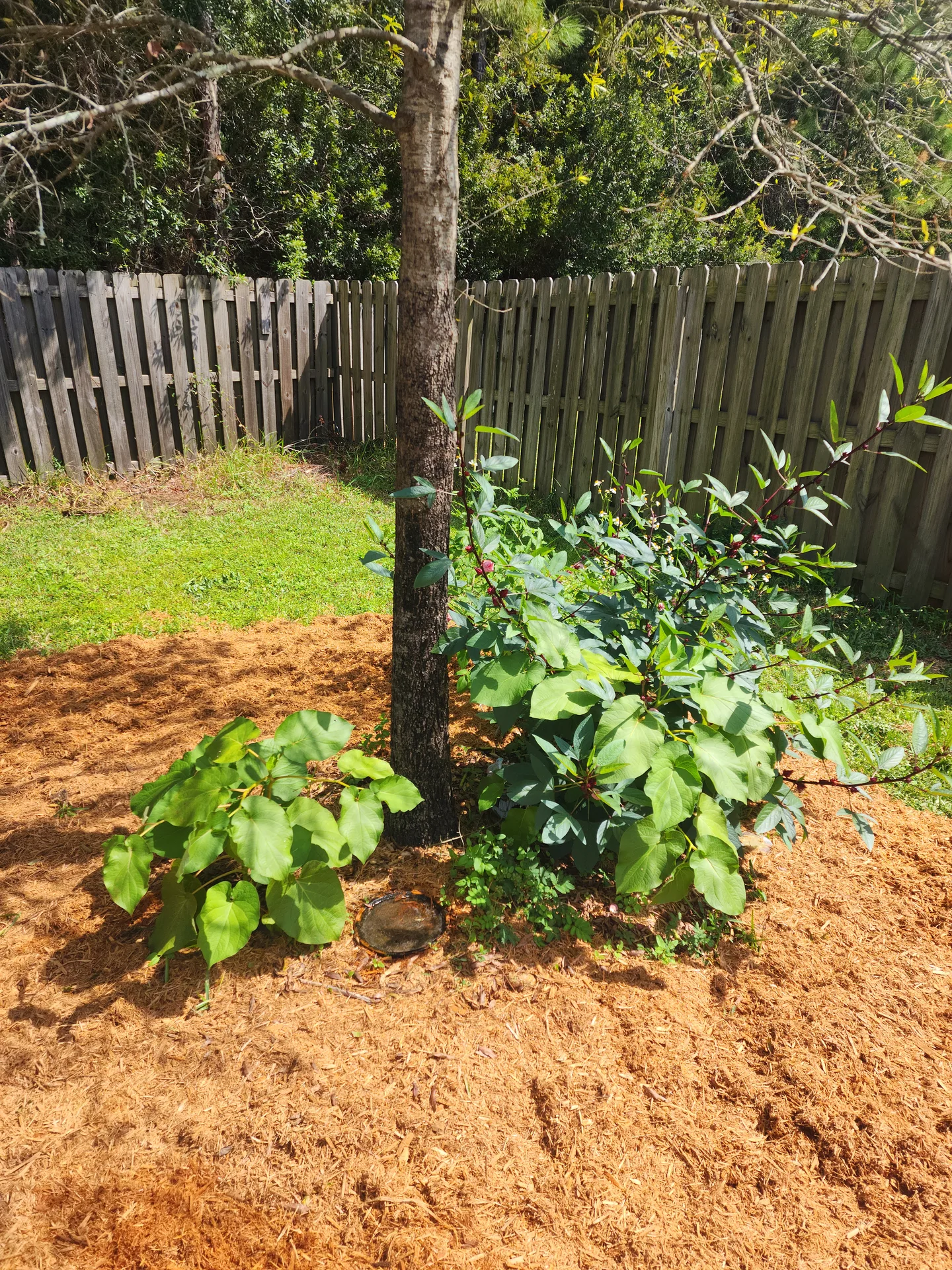
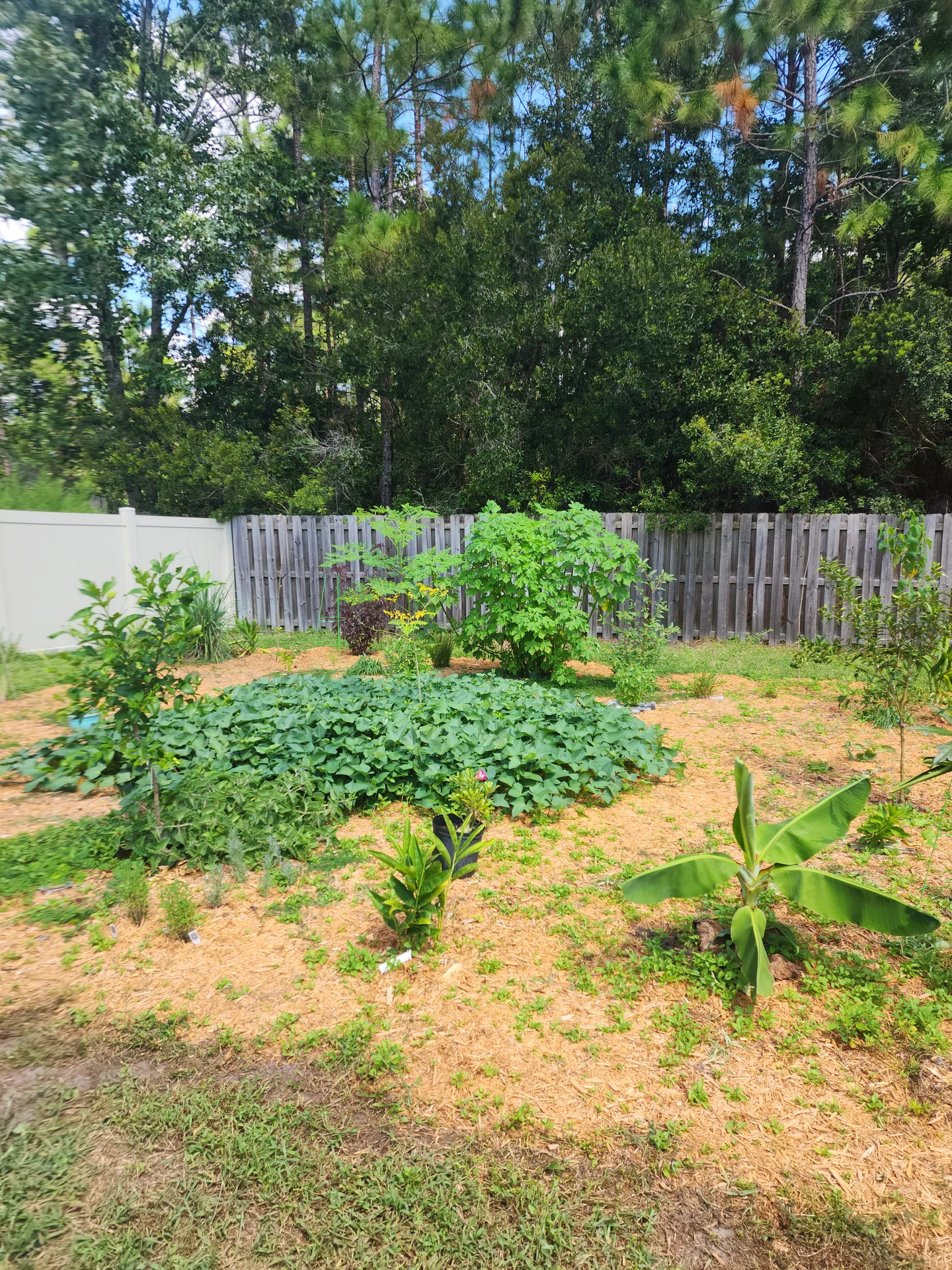
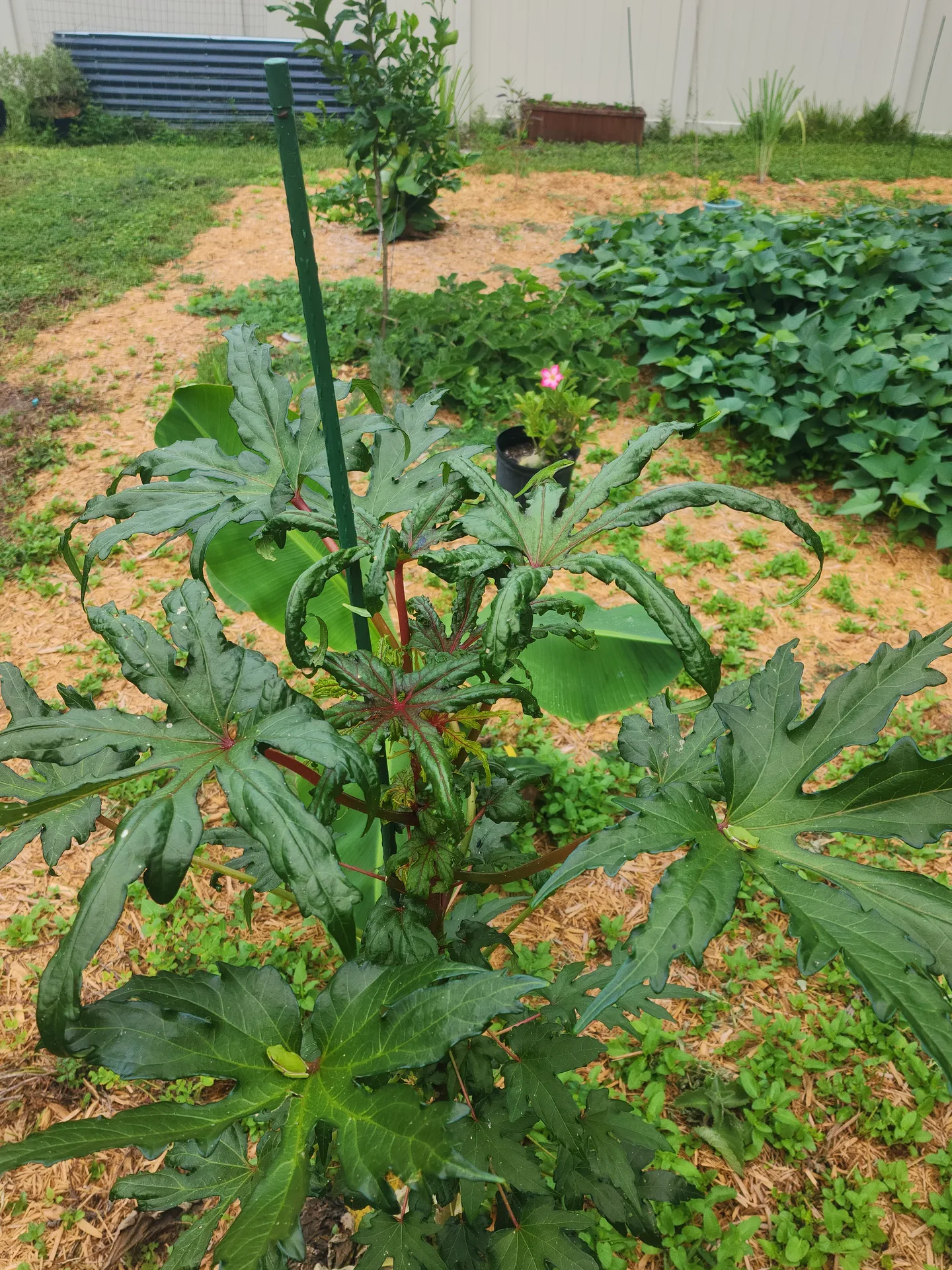
Six weeks in. Some things are taking off. Some are struggling. The weeds are arriving. The wildlife noticed before I did.
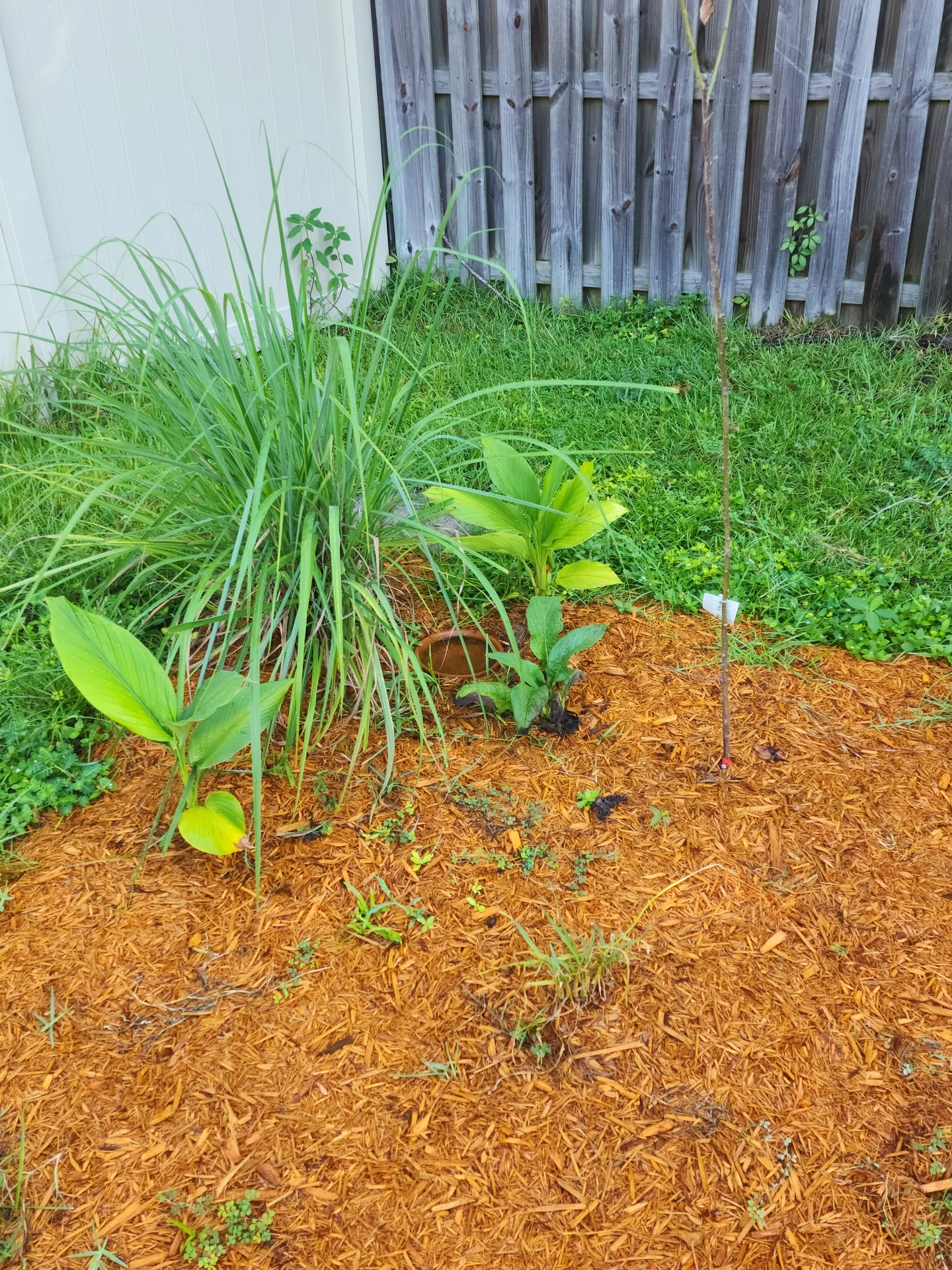
Year 1 — October–December 2023
Taking Hold
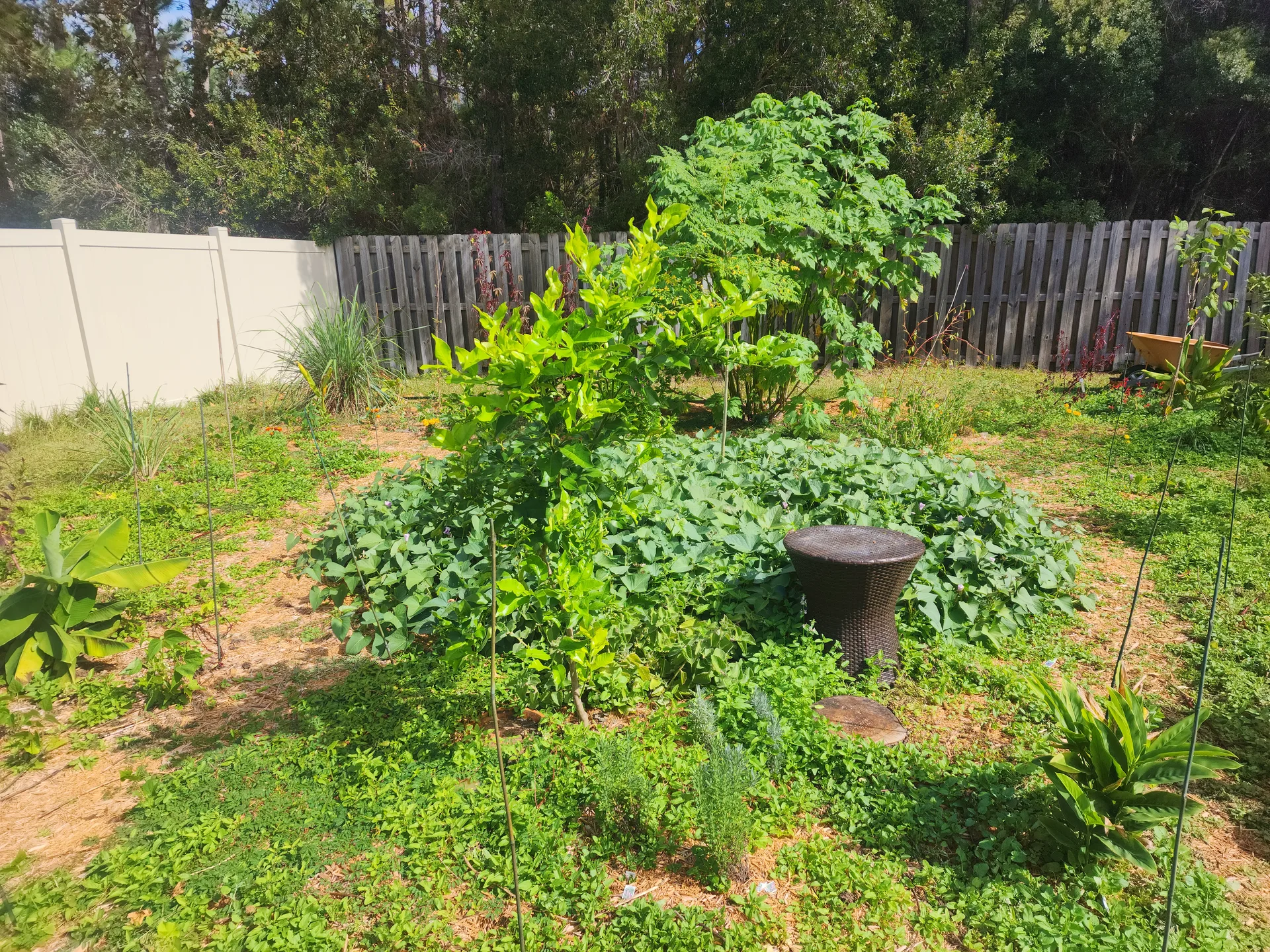
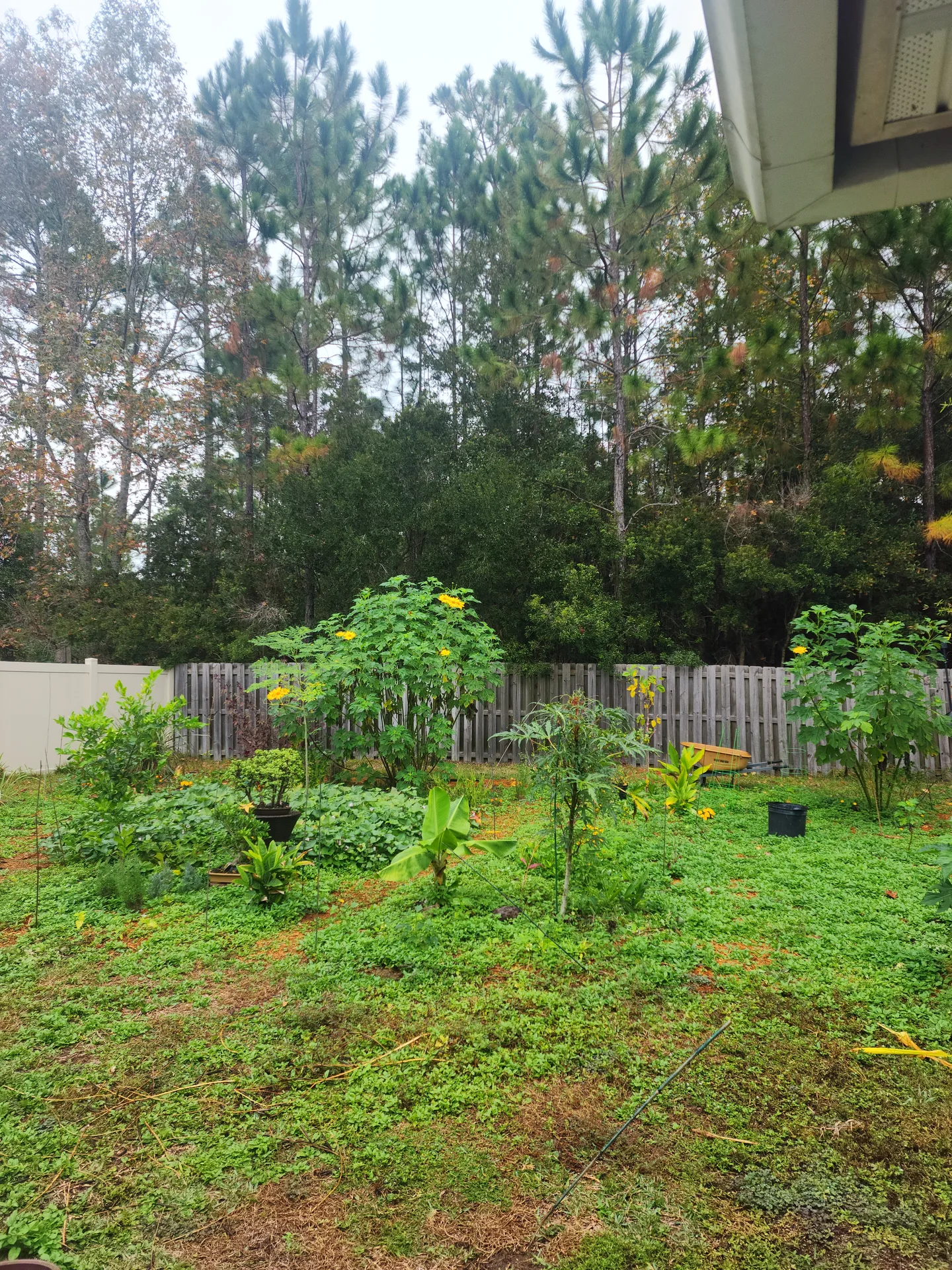
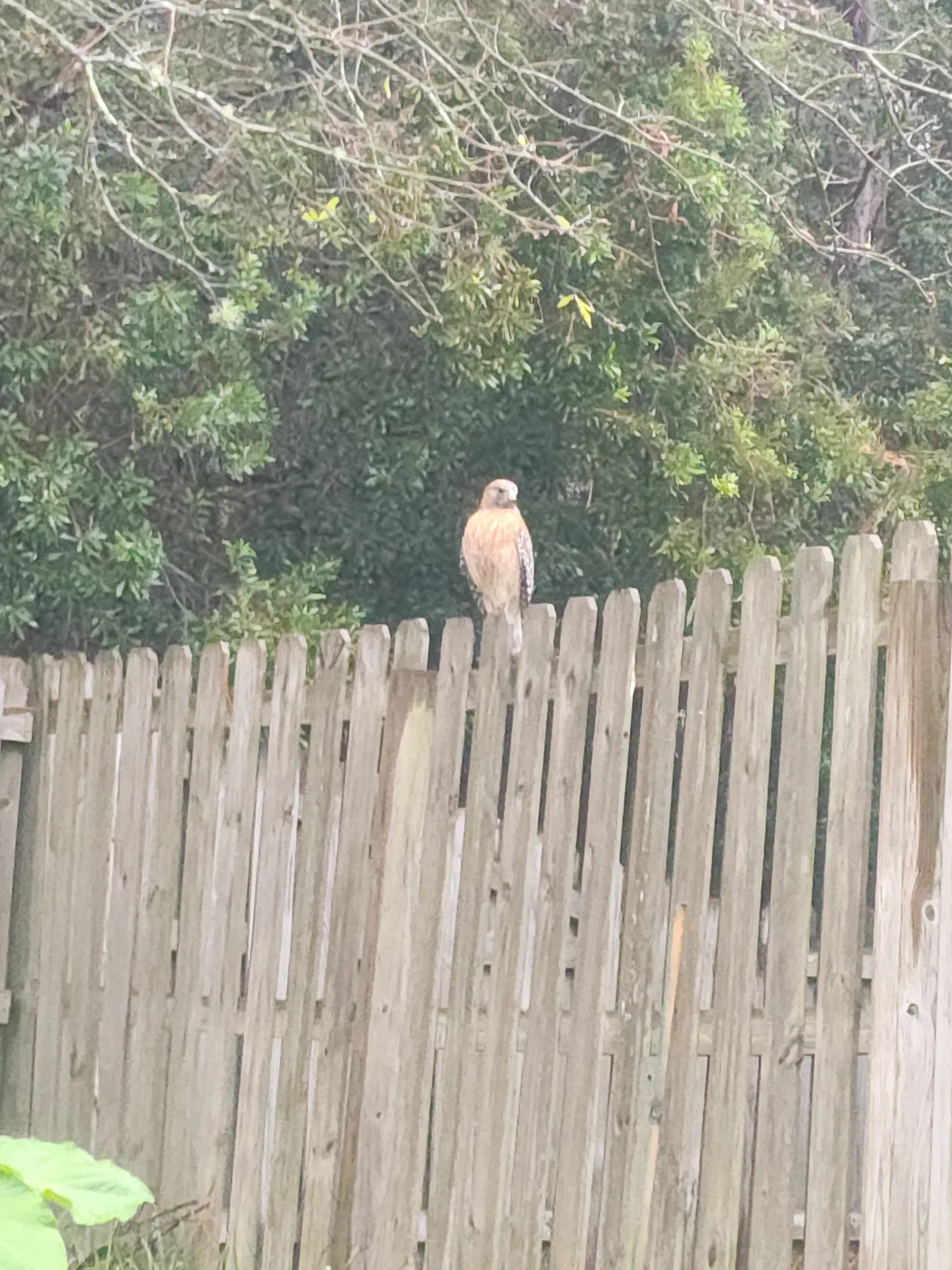
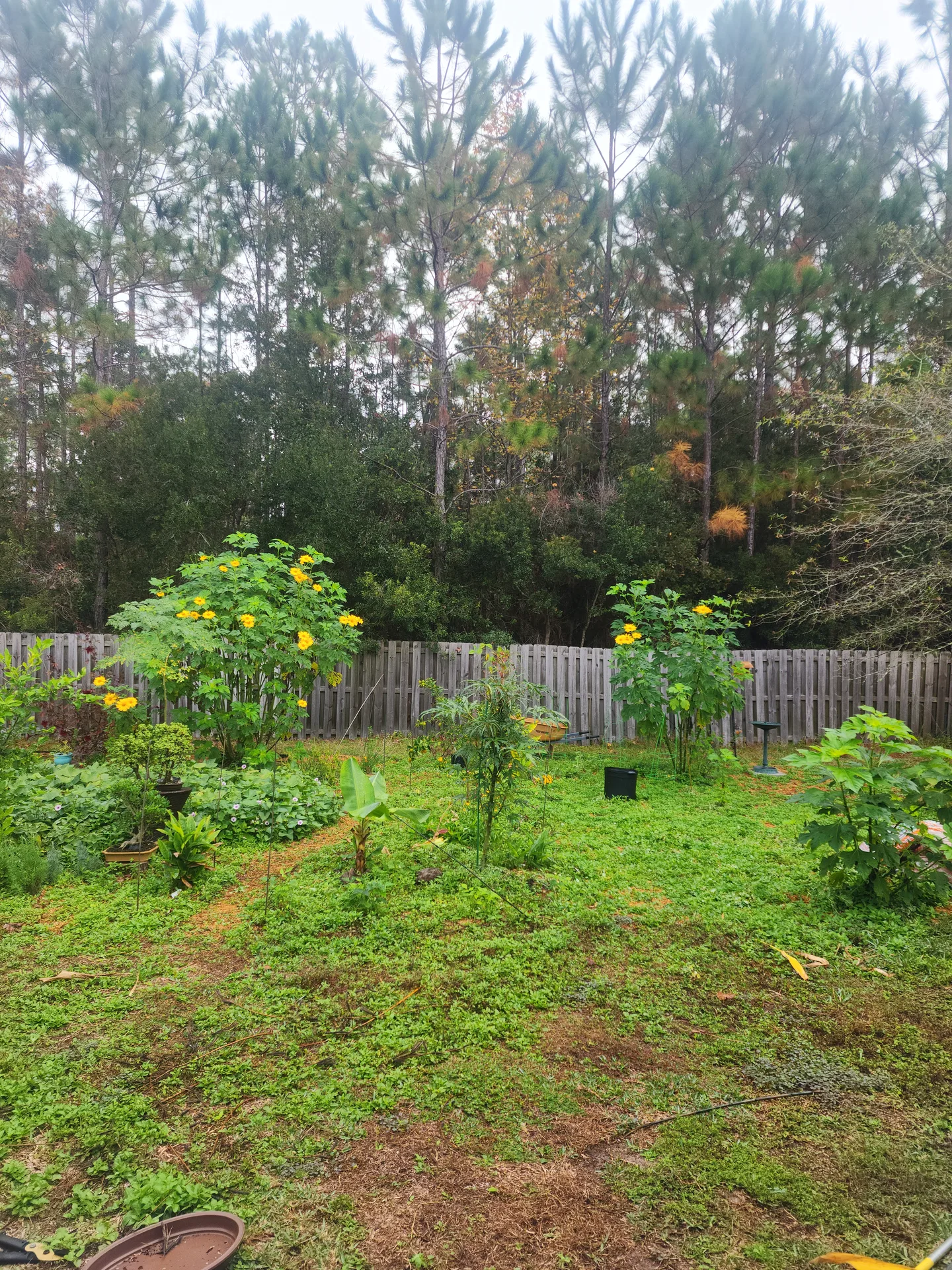
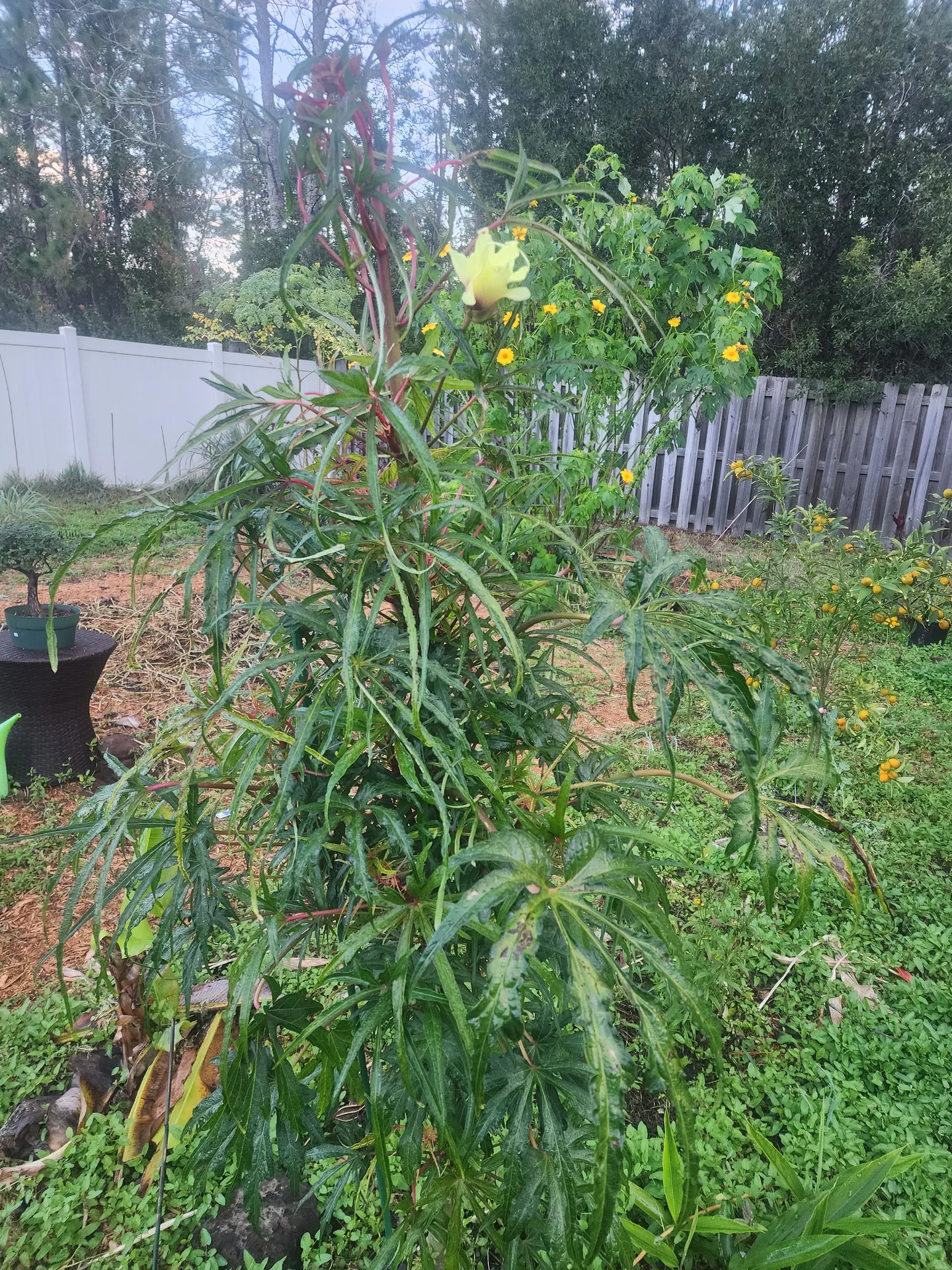
The system started to look intentional. Tithonia hit peak height. Florida Betony took over the ground layer and I let it. A raptor showed up. The food web was assembling itself.
Year 2 — February & March 2024
Coming Back
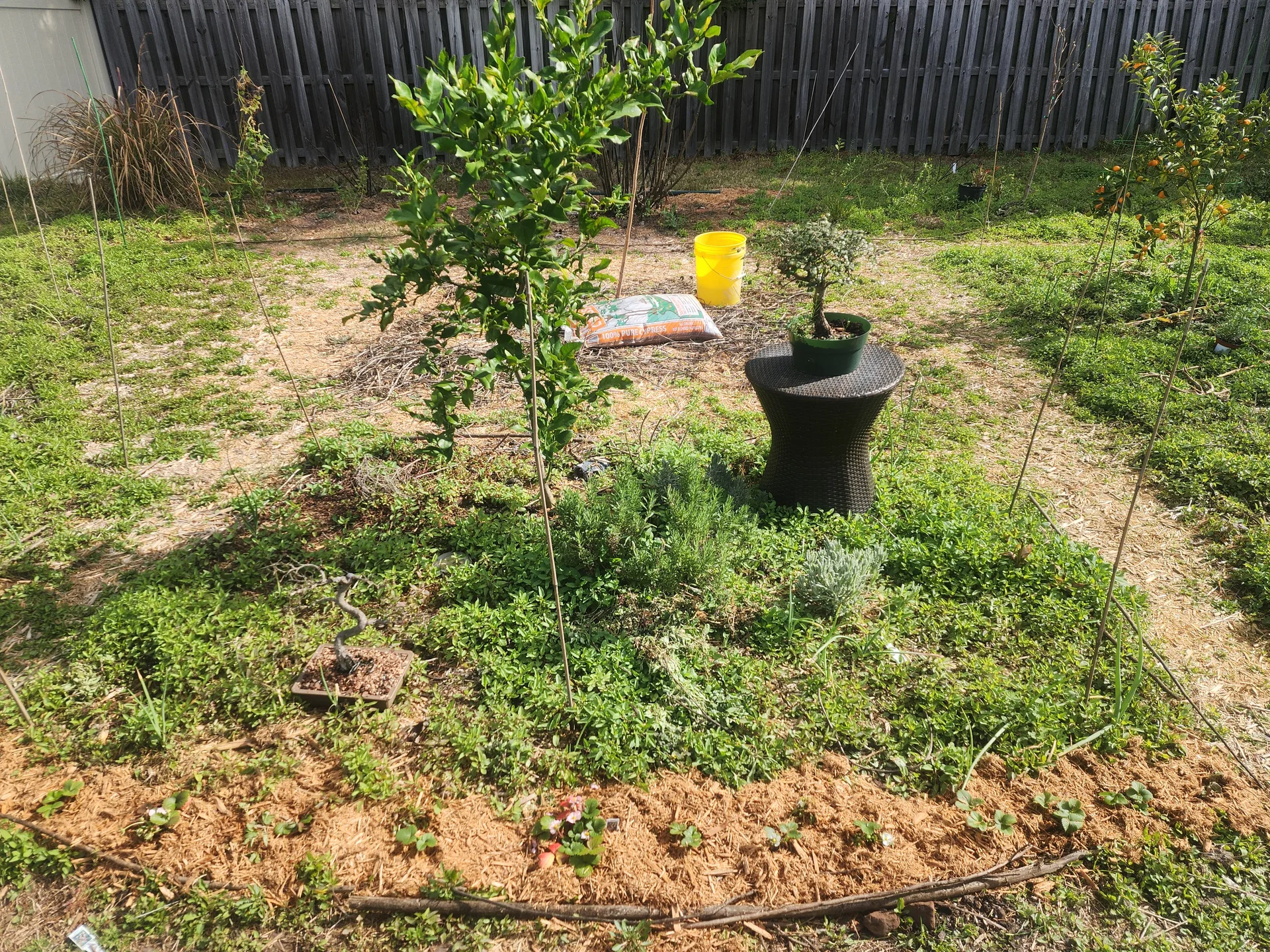
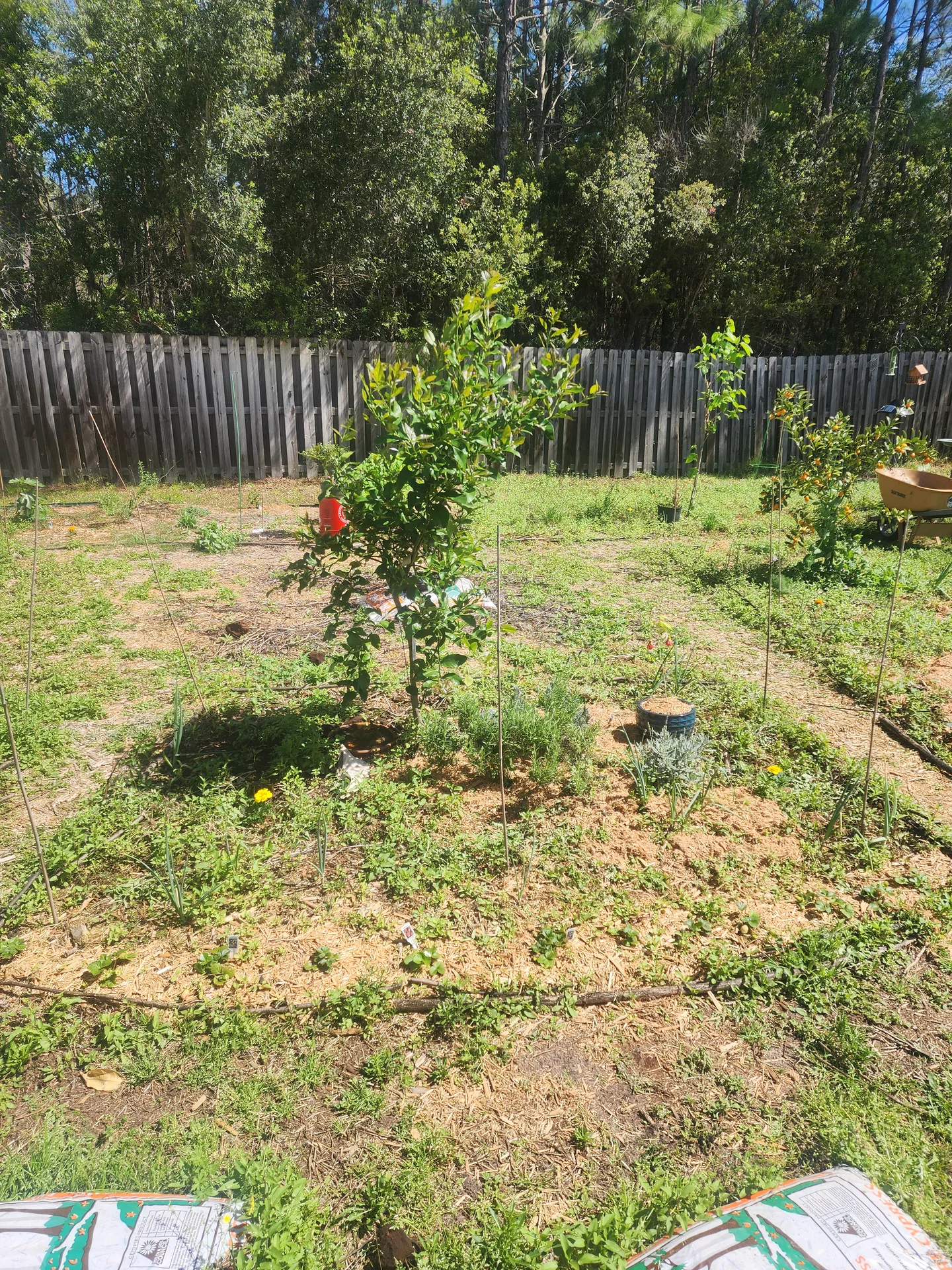
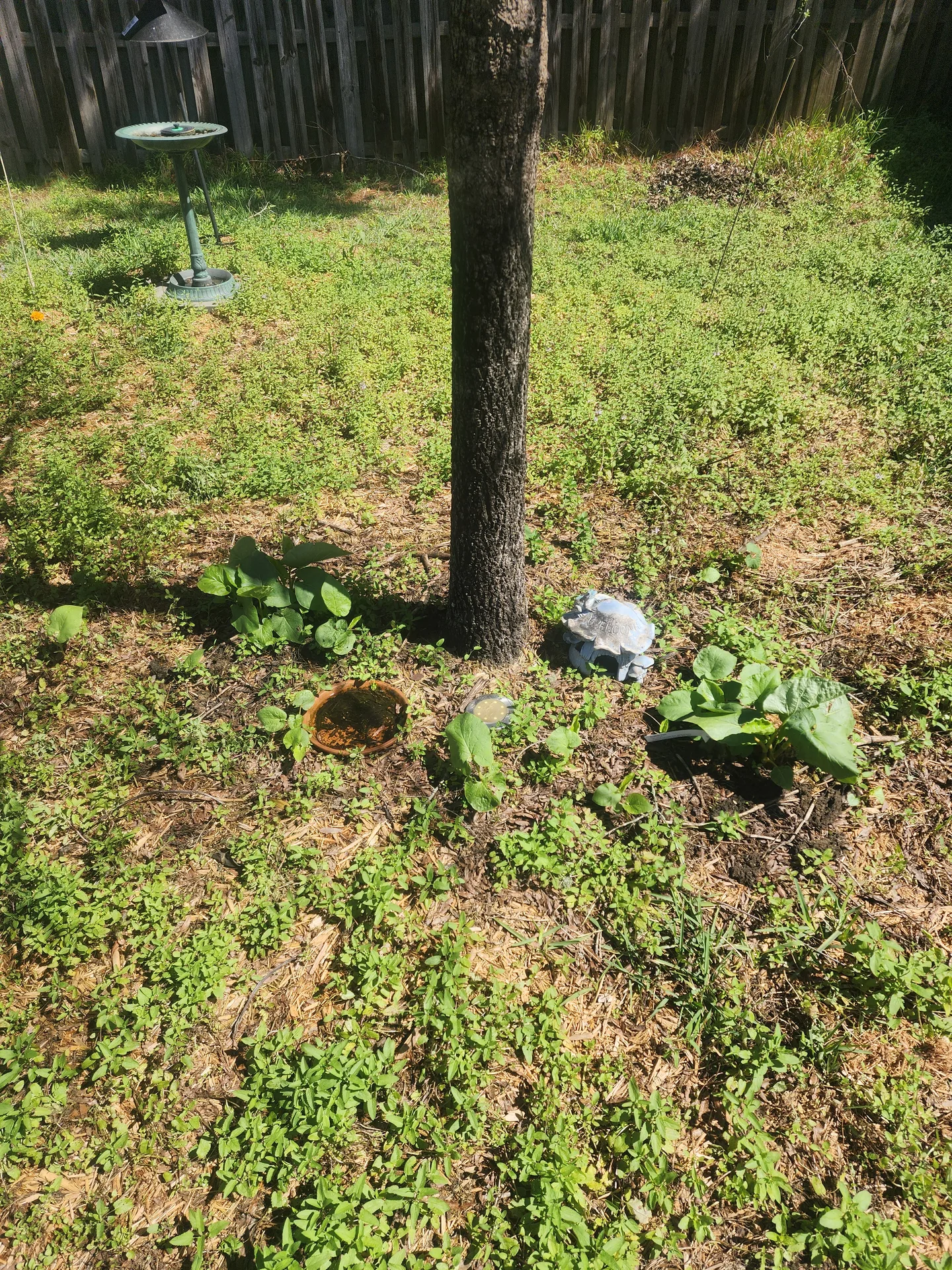
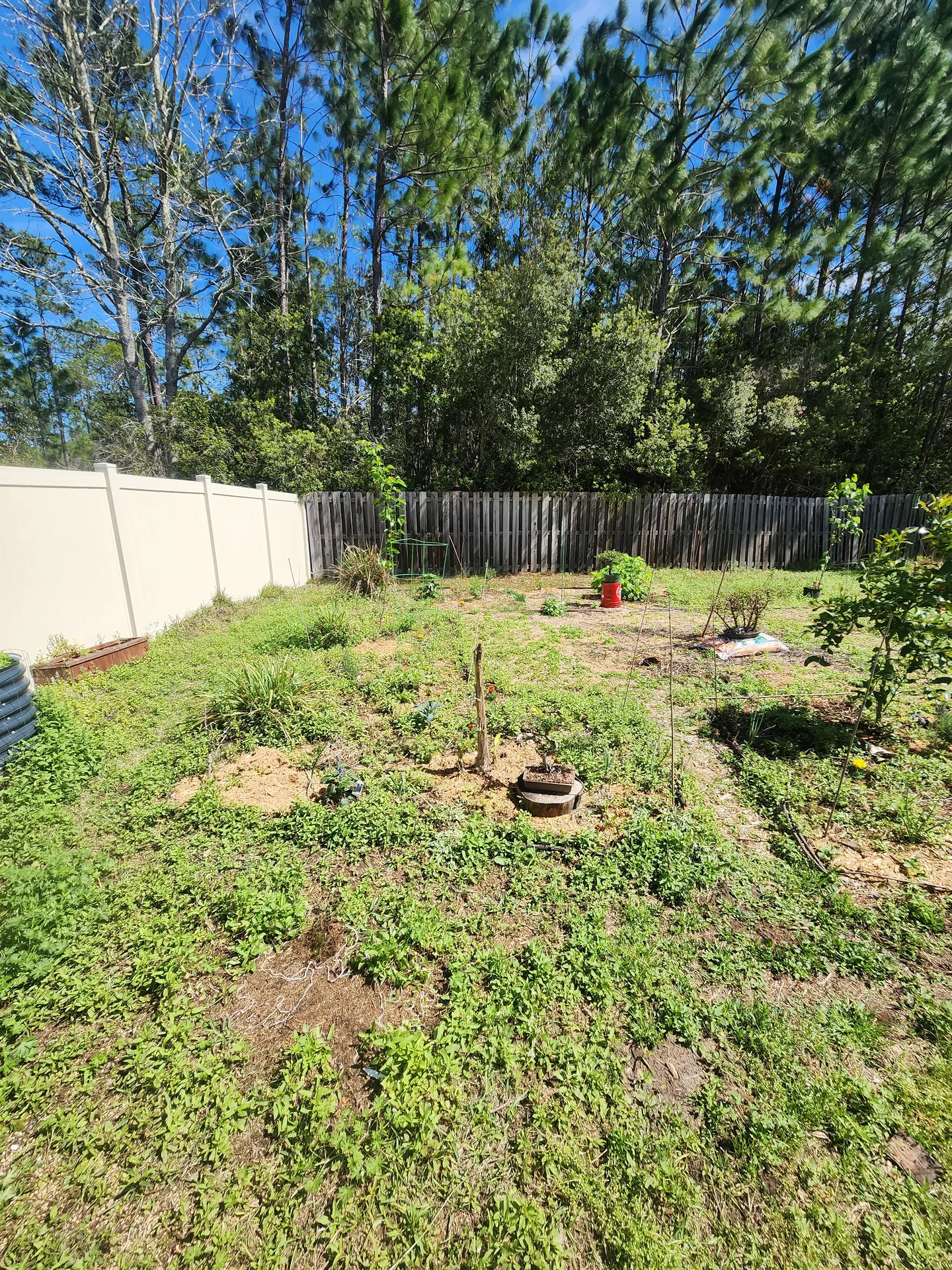
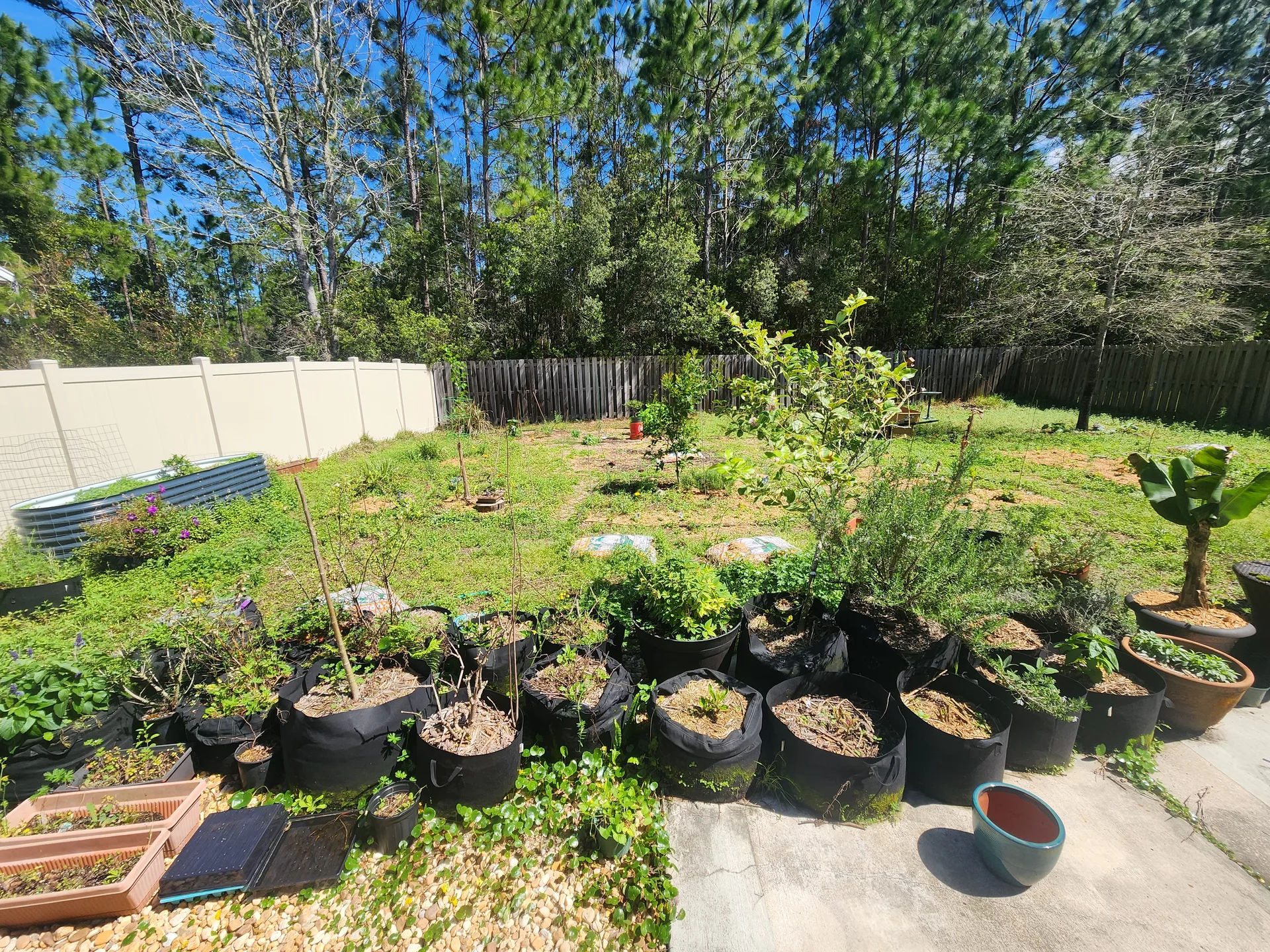
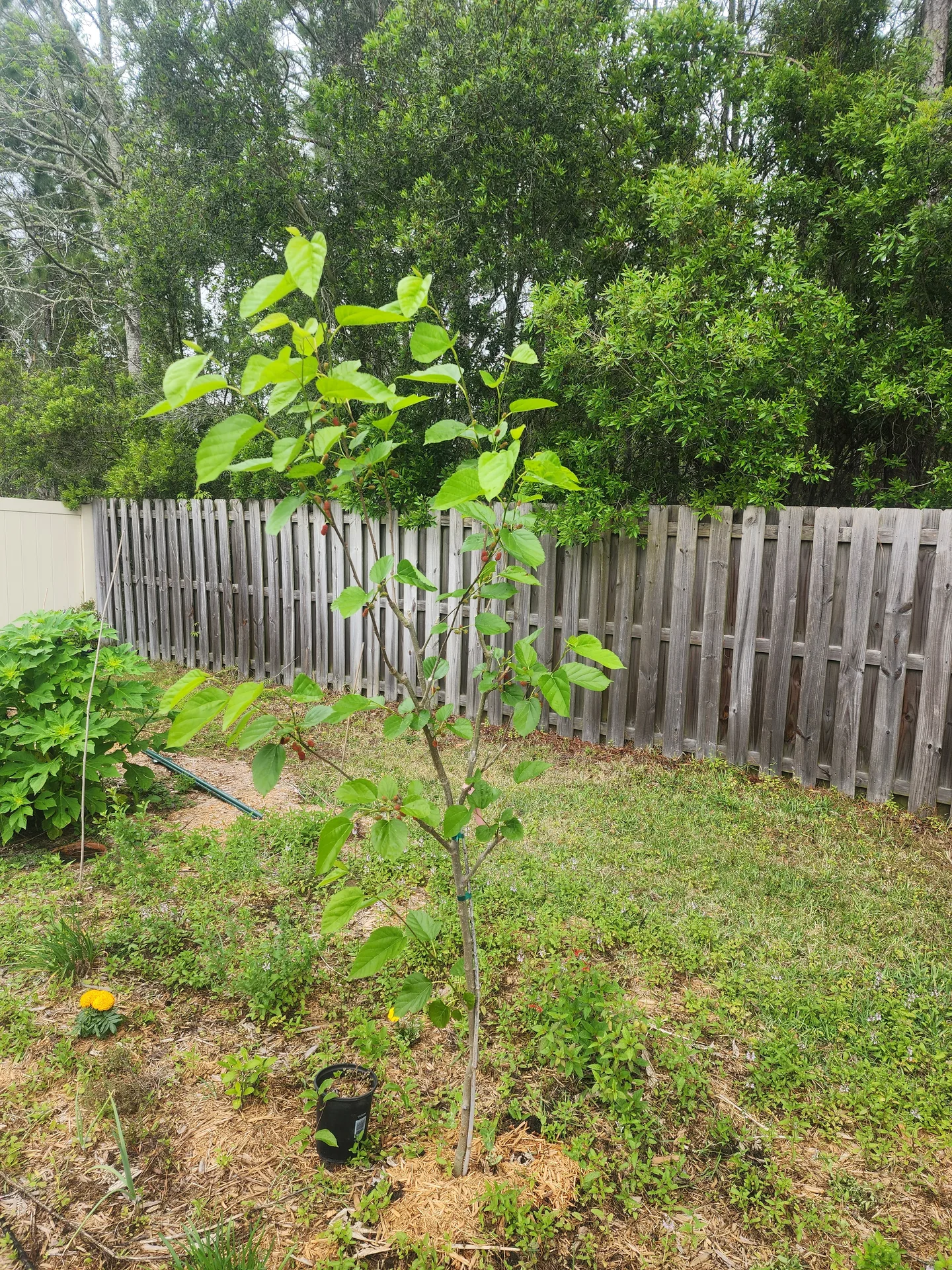
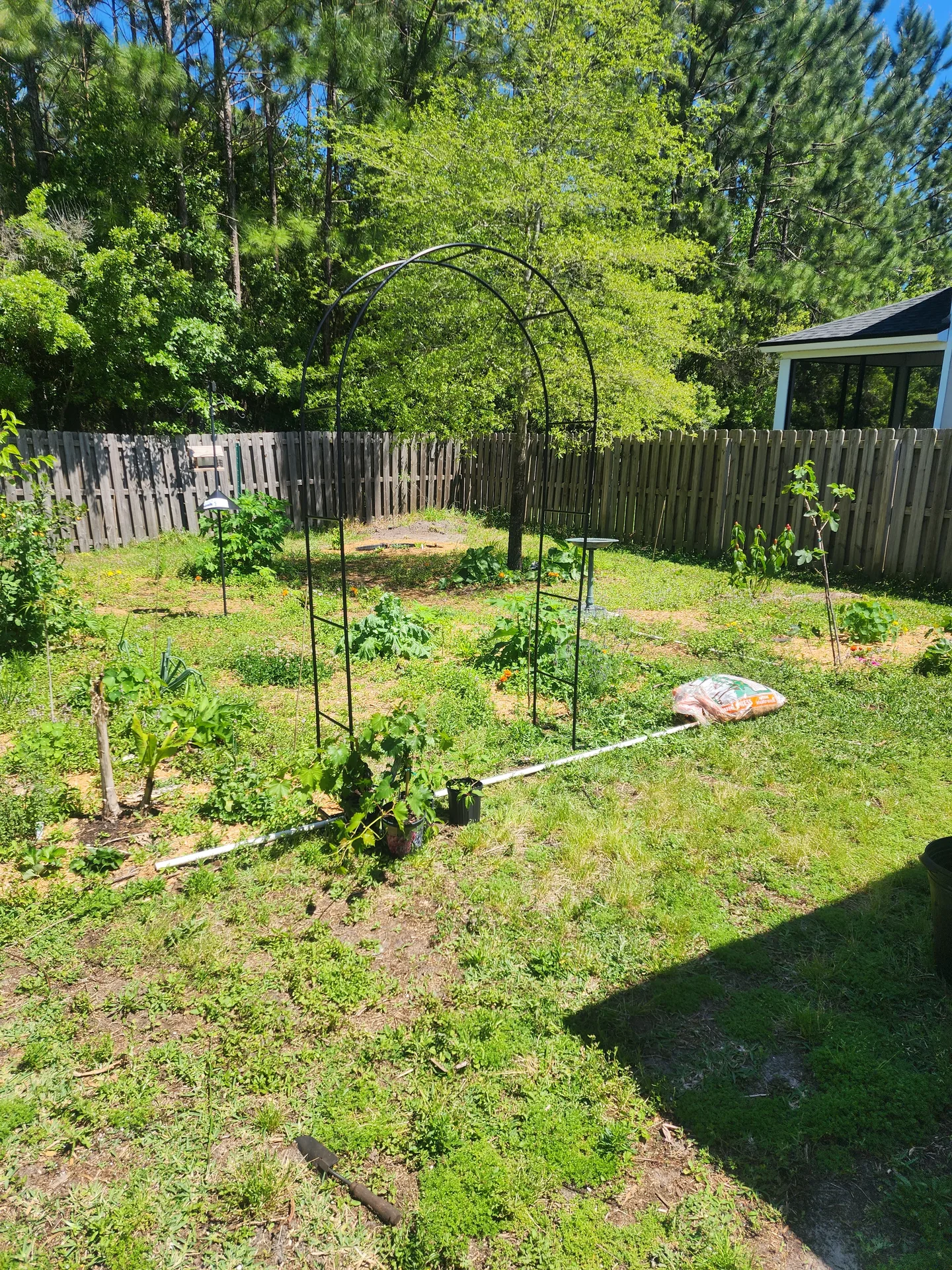
First winter behind us. Most things survived. The weeds came back faster than the plants. Added strawberries, a white mulberry, and started making proper paths with sticks and logs.
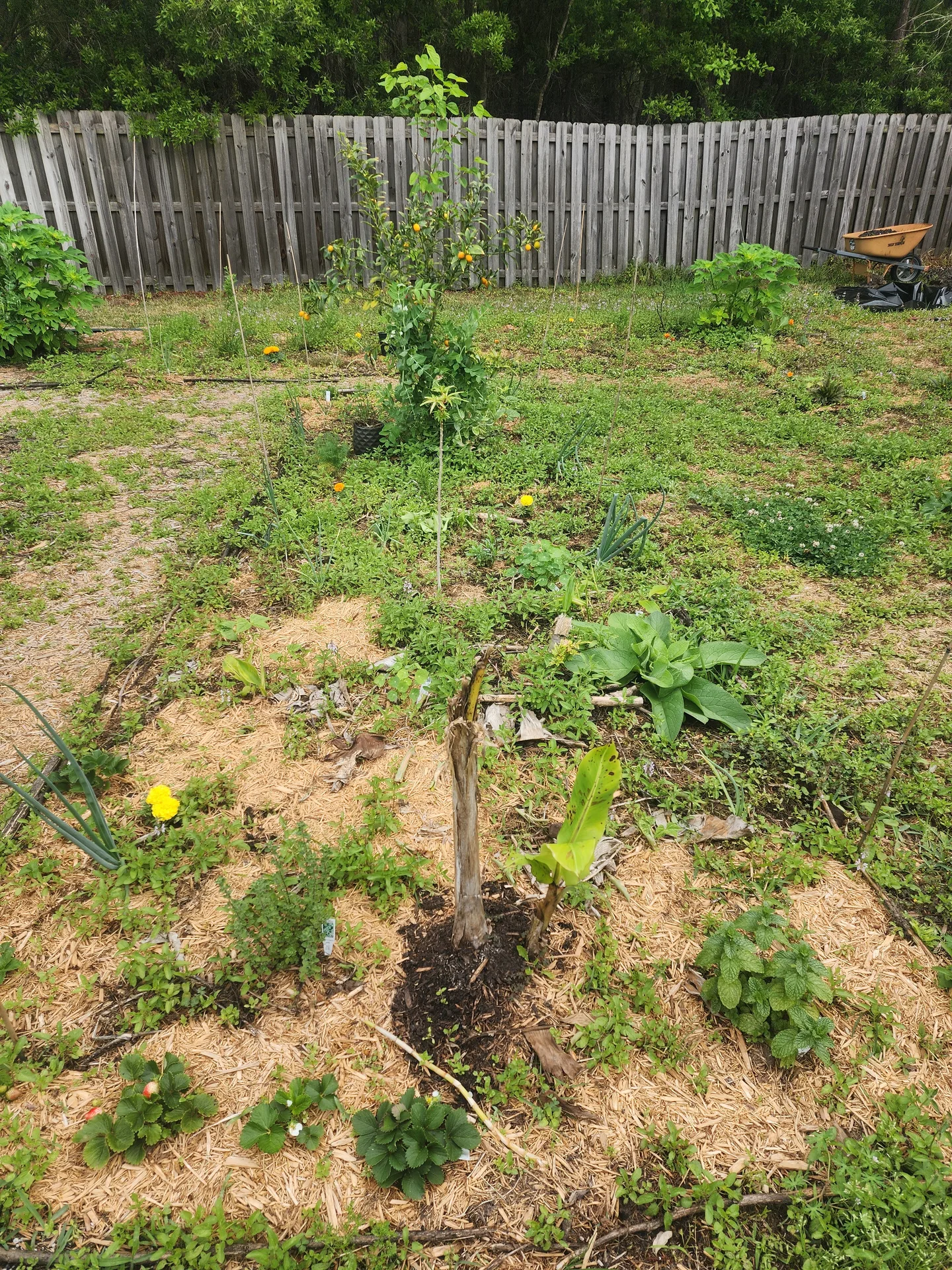
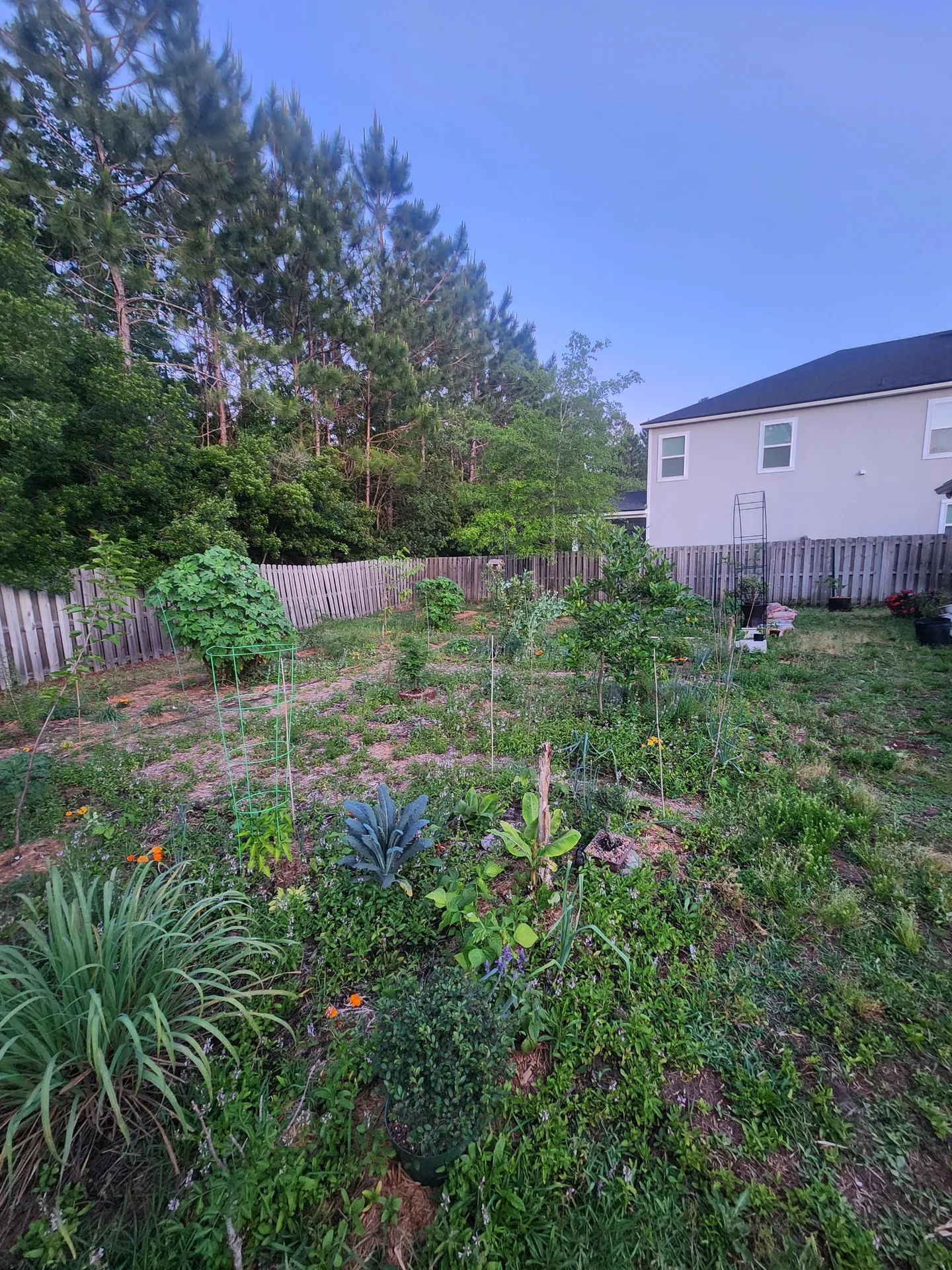
Year 2 — April & May 2024
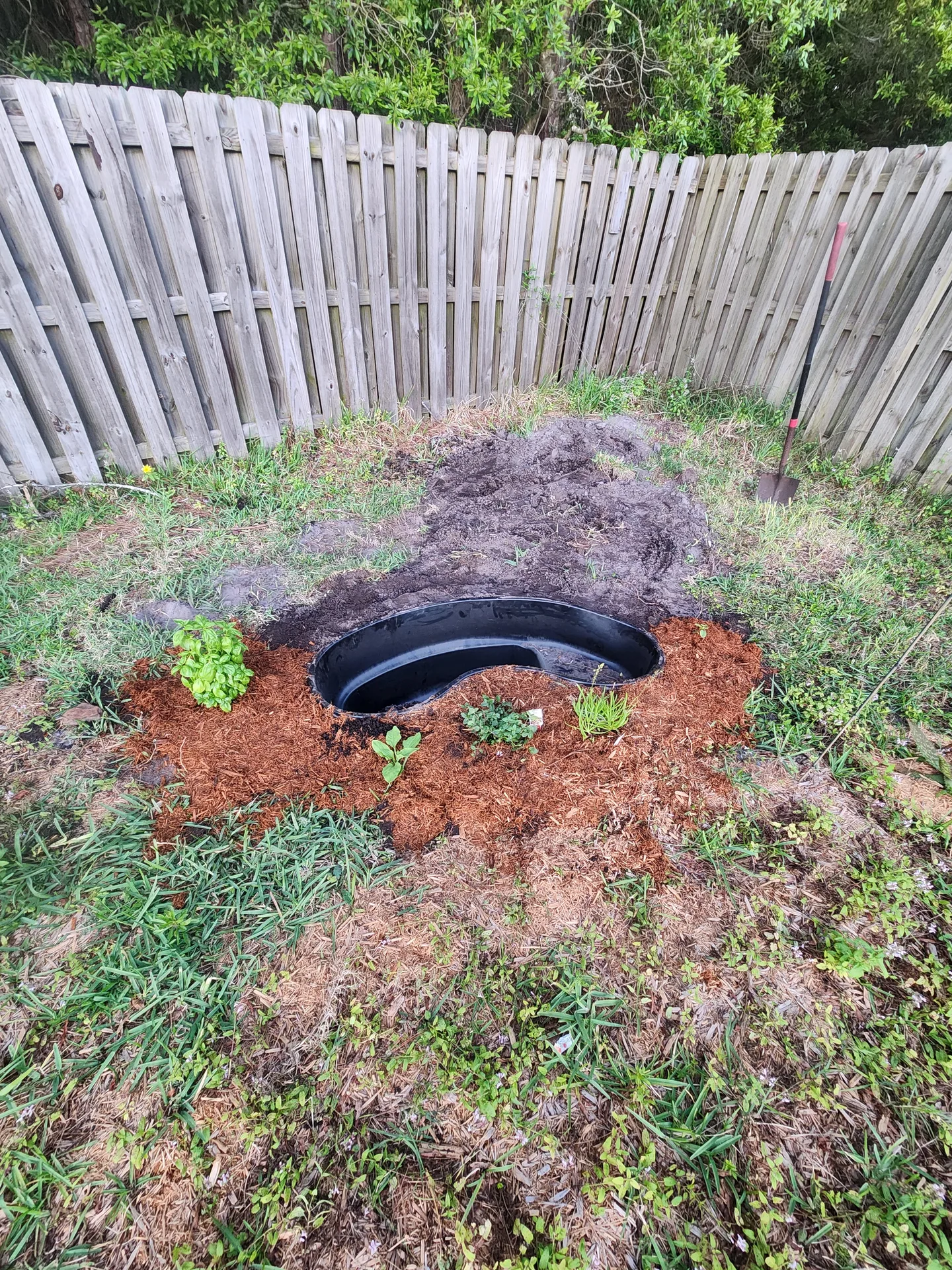
The Frog Pond
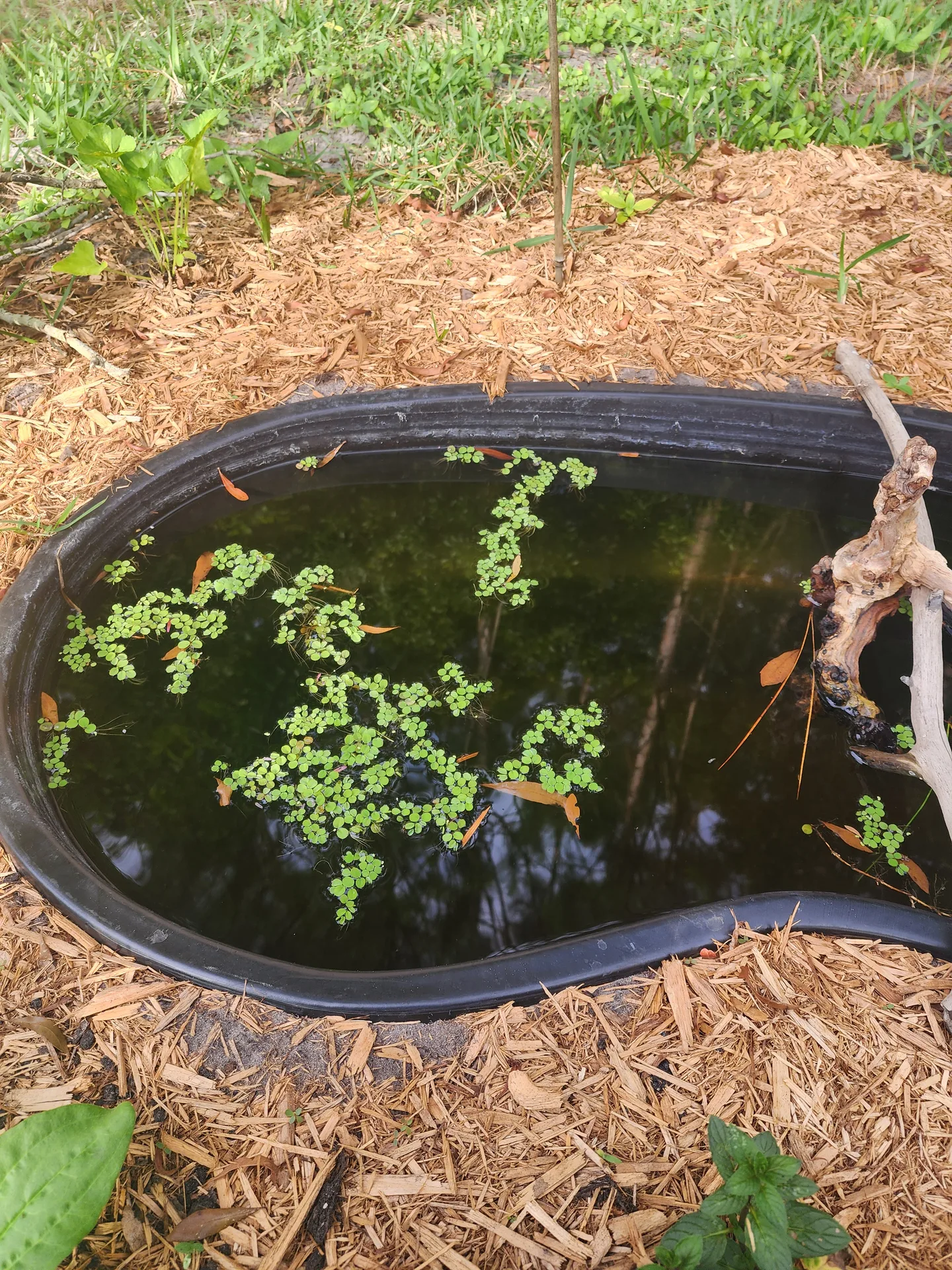
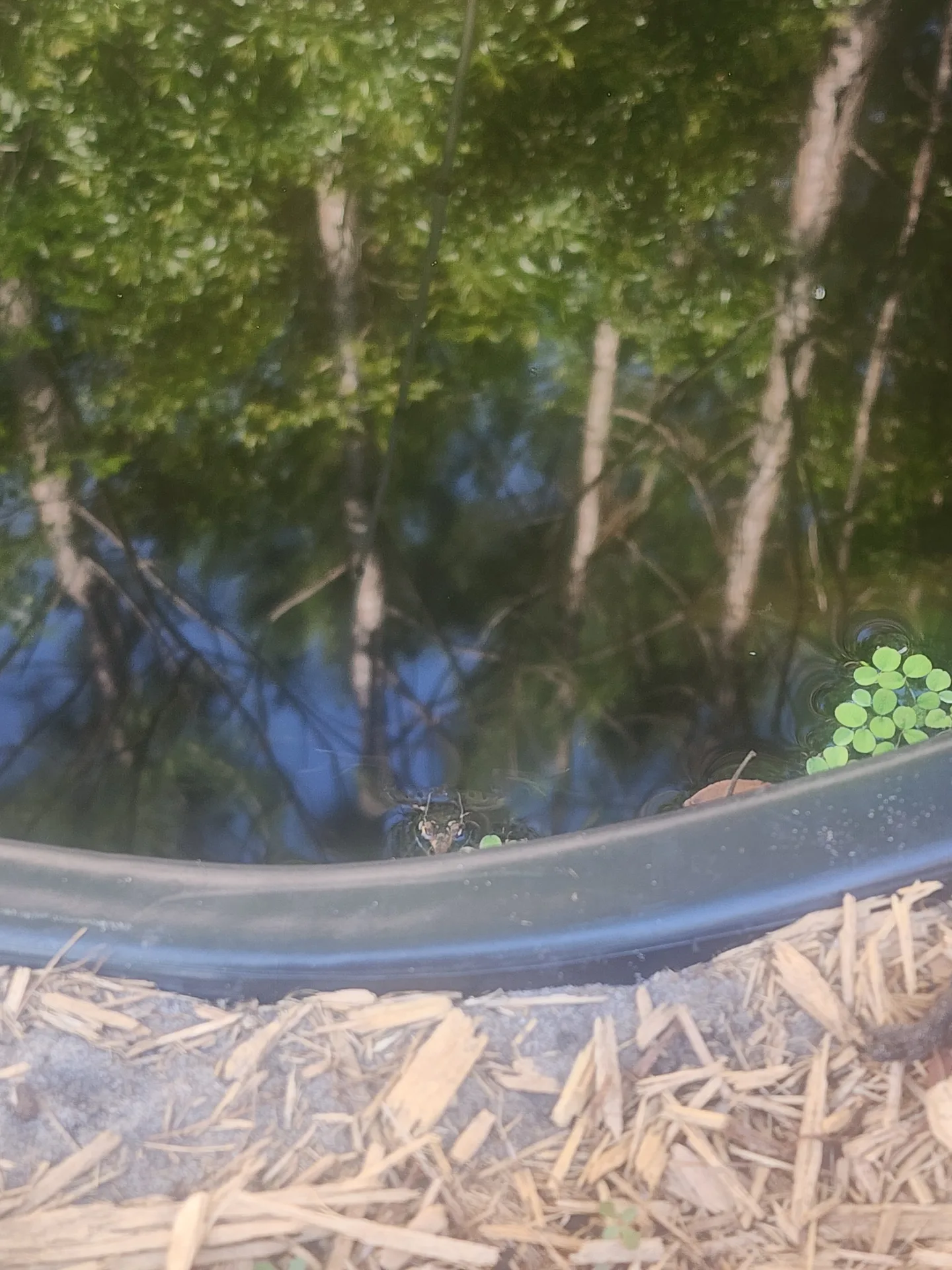
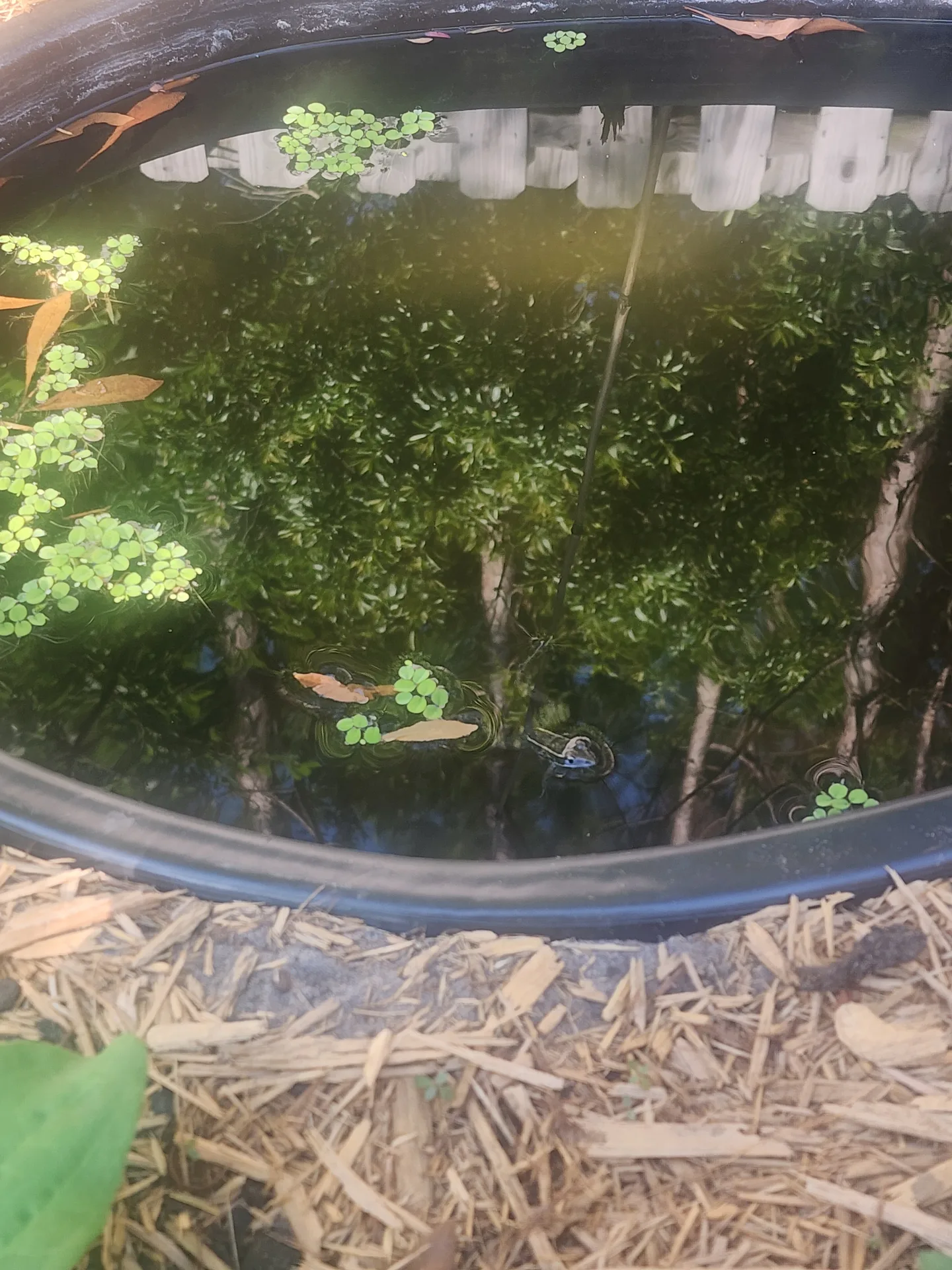
Decided it was time to stop attracting frogs accidentally and start attracting them on purpose. Dug a pond, stocked it with local macro and microfauna captured from retention ponds, and waited. First frog moved in within 30 days.
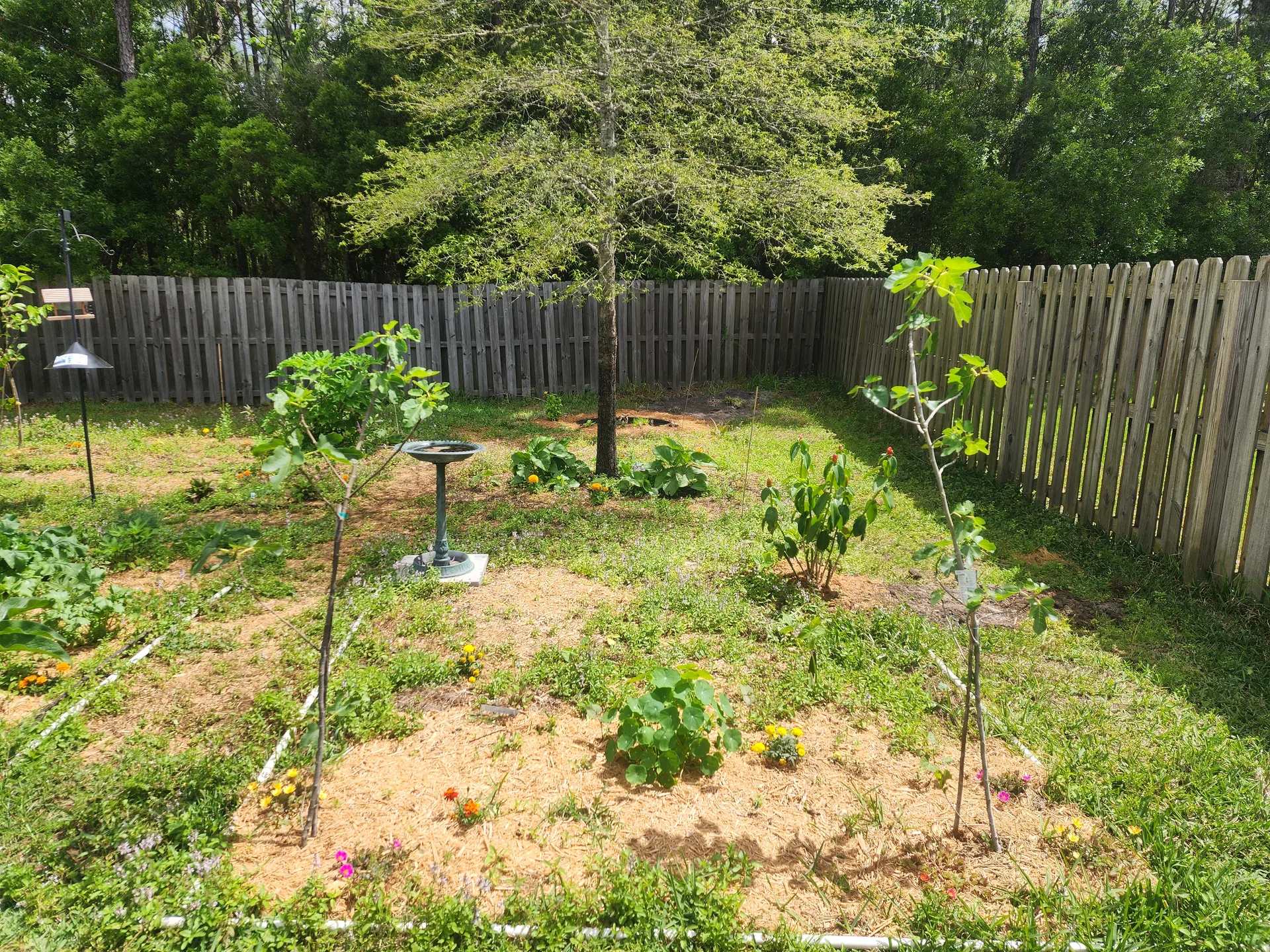
Year 2 — July–September 2024
Summer Explosion
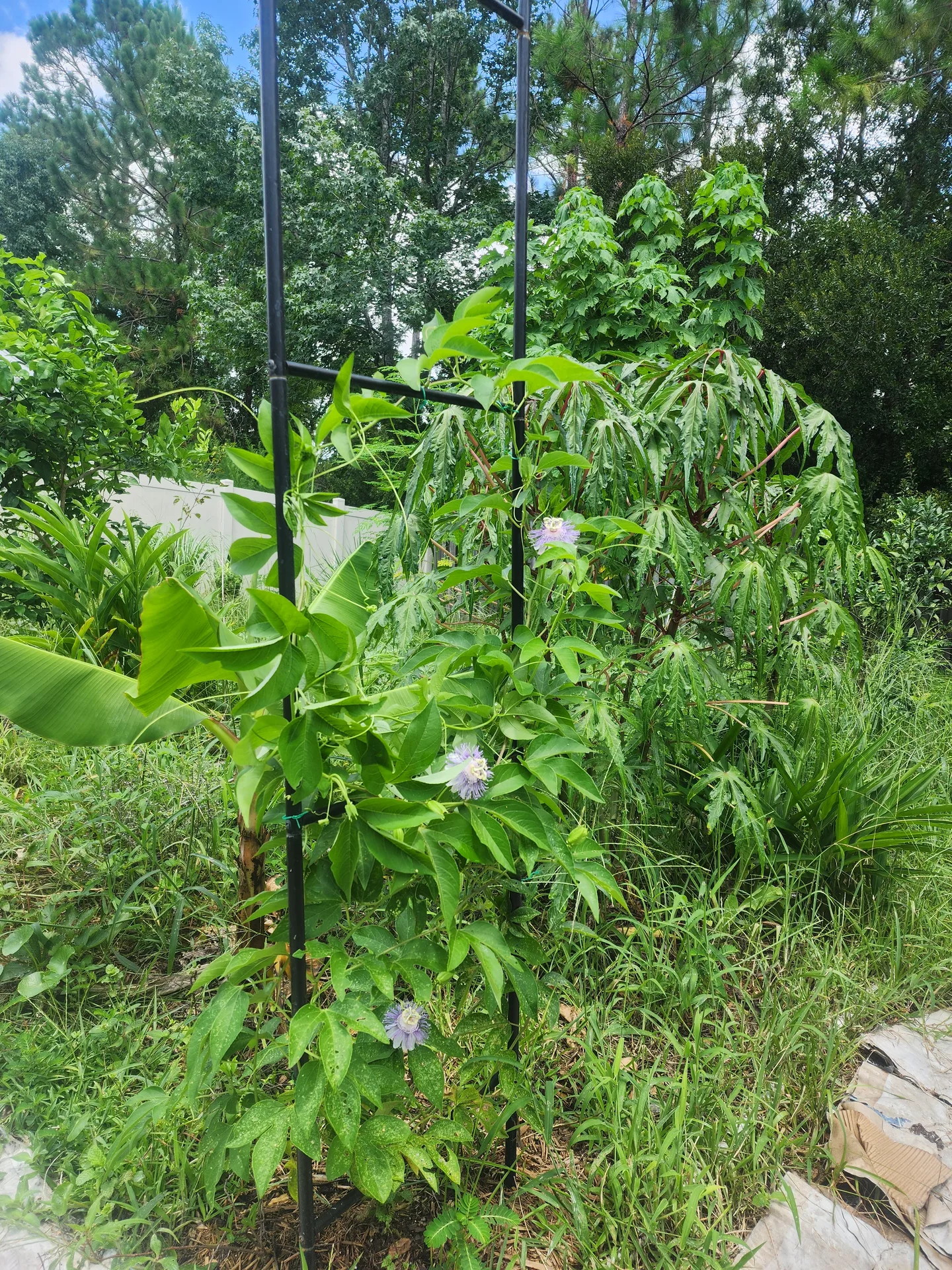
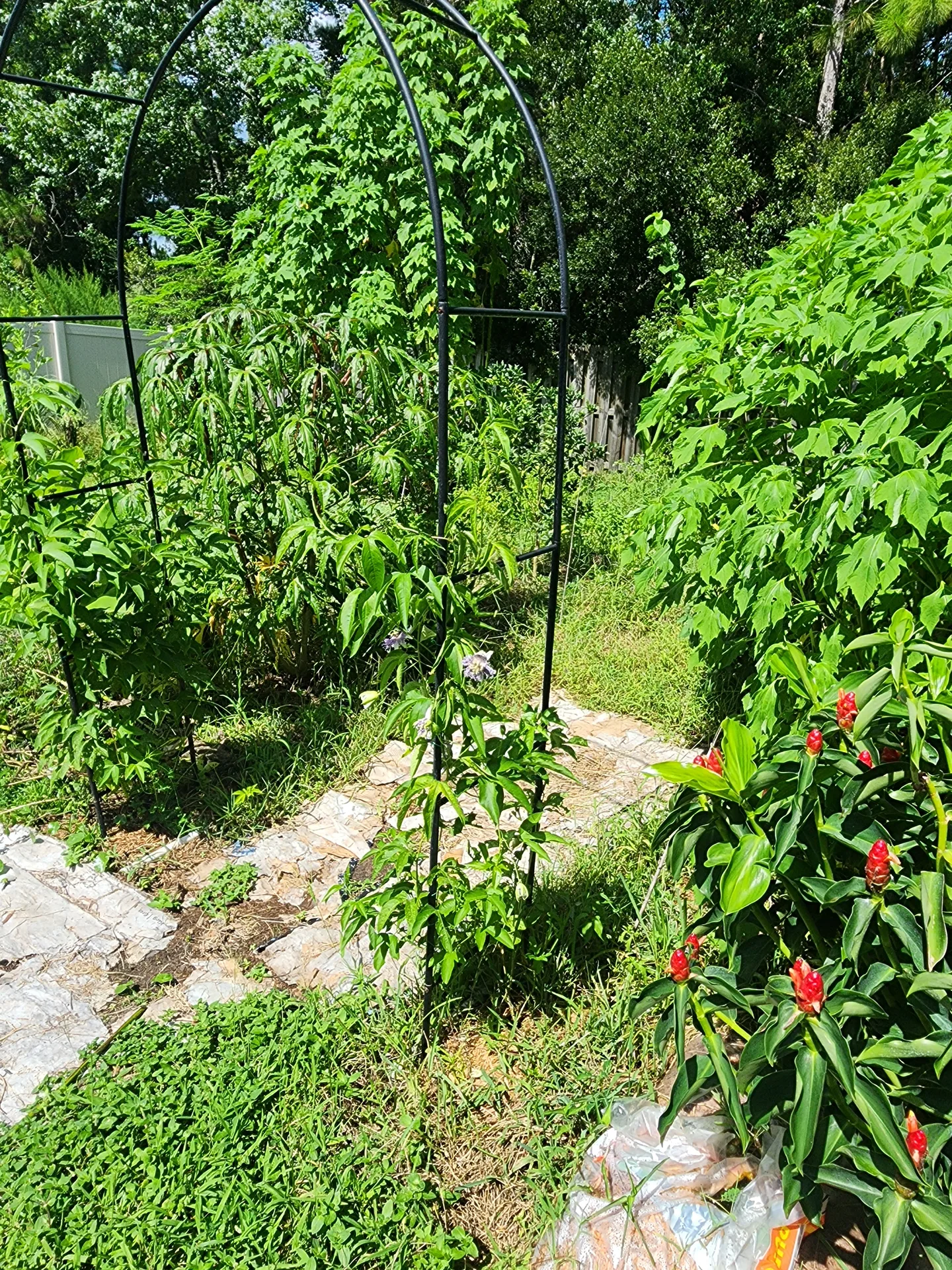
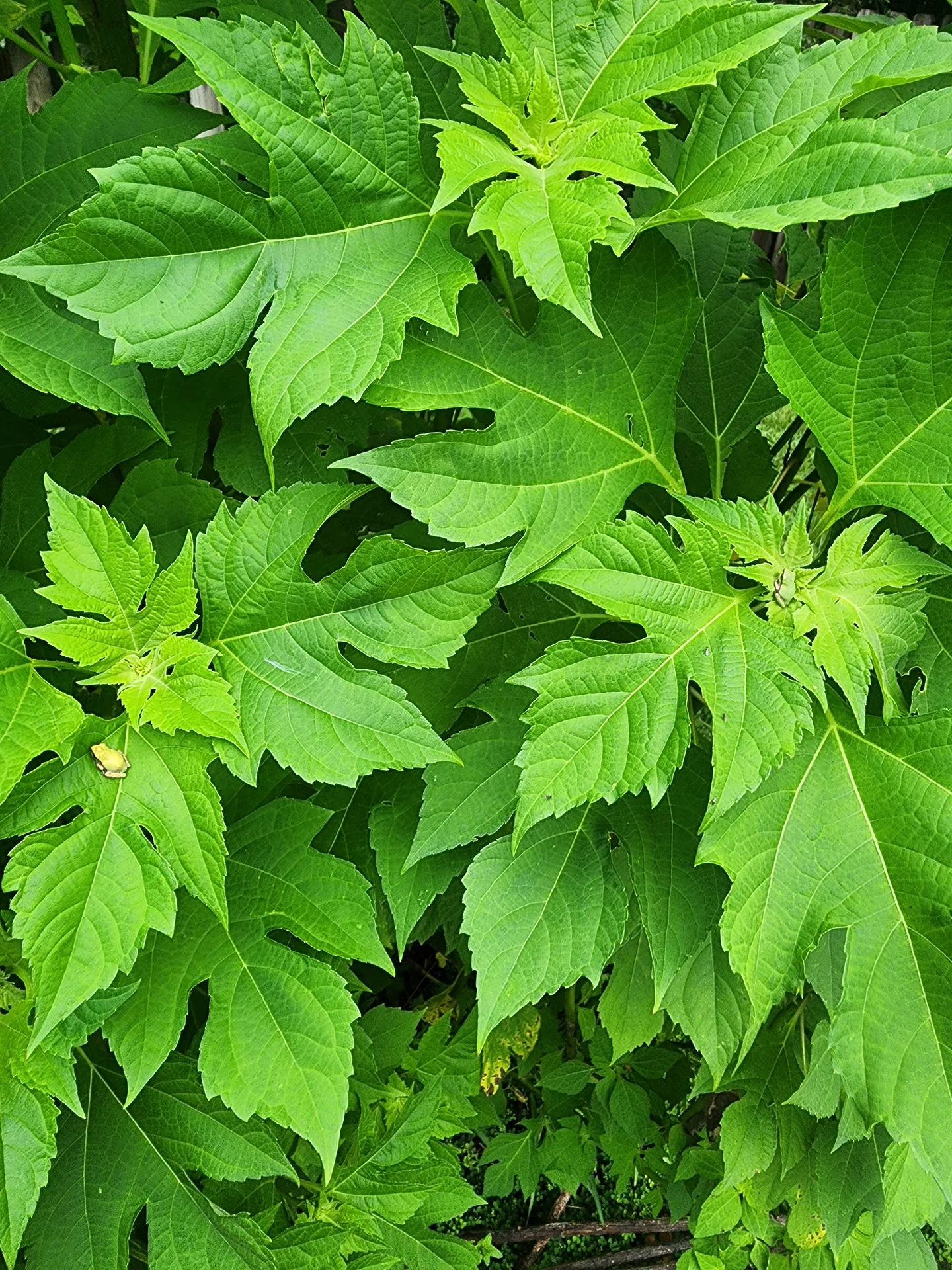
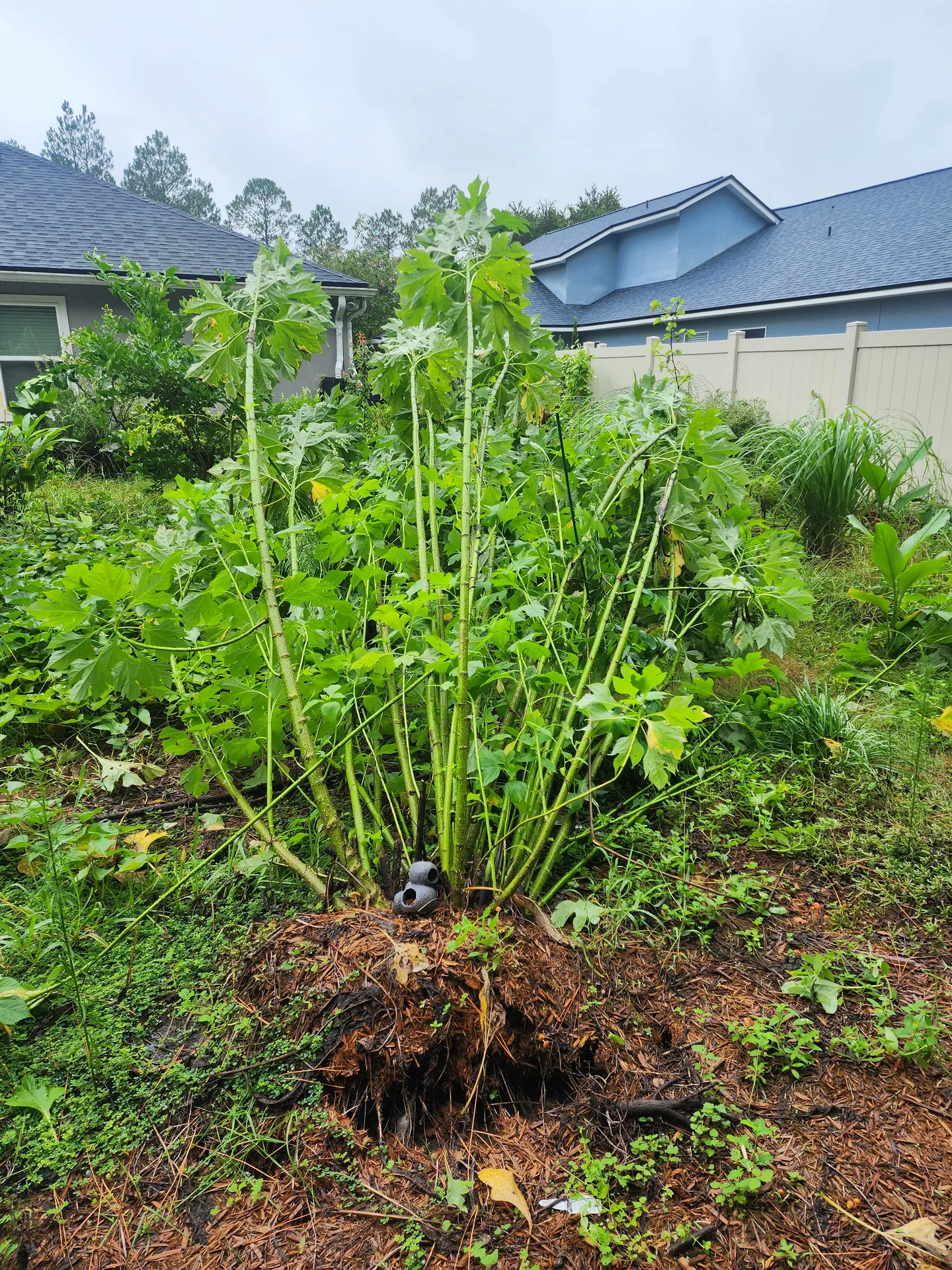
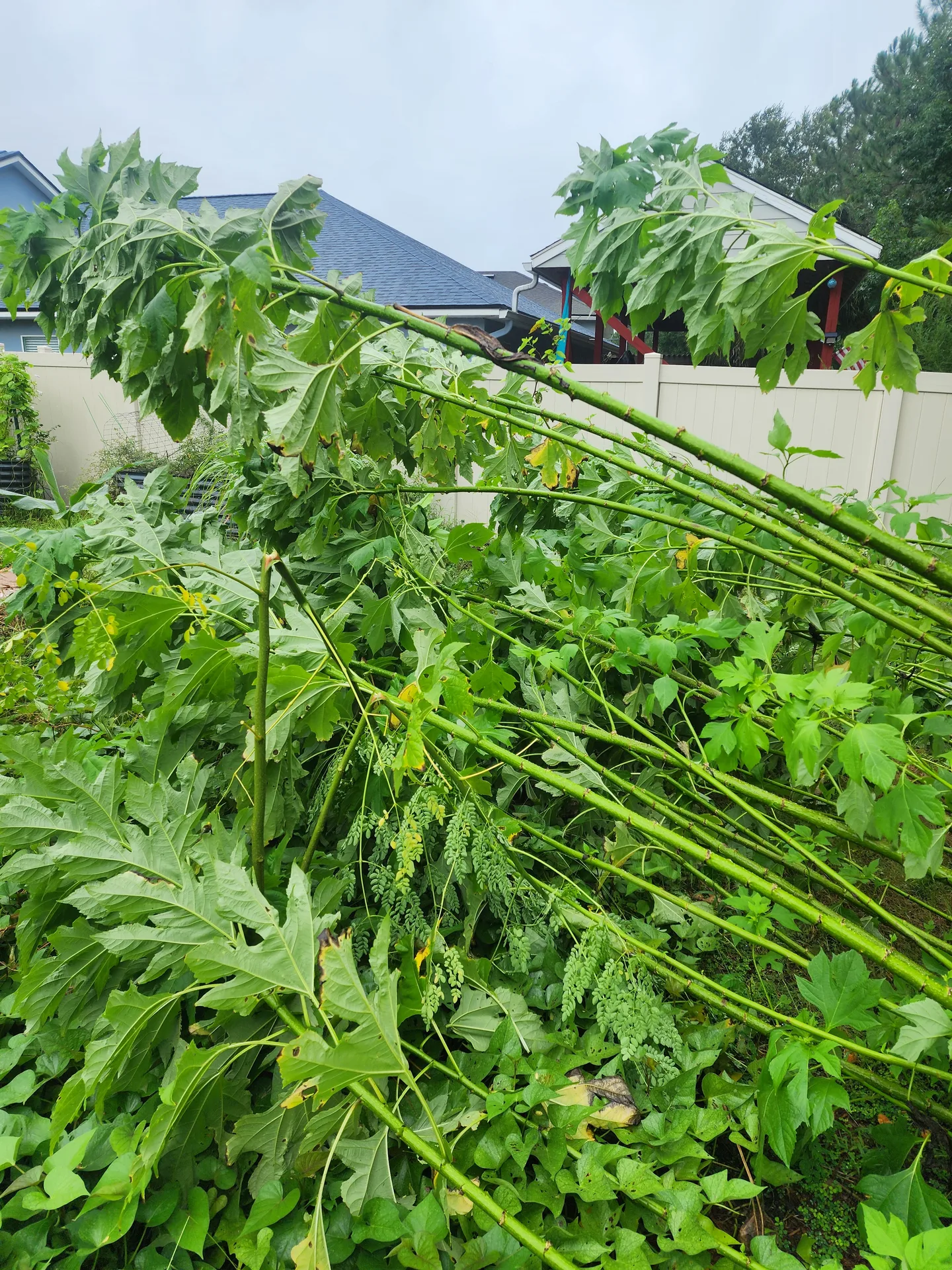
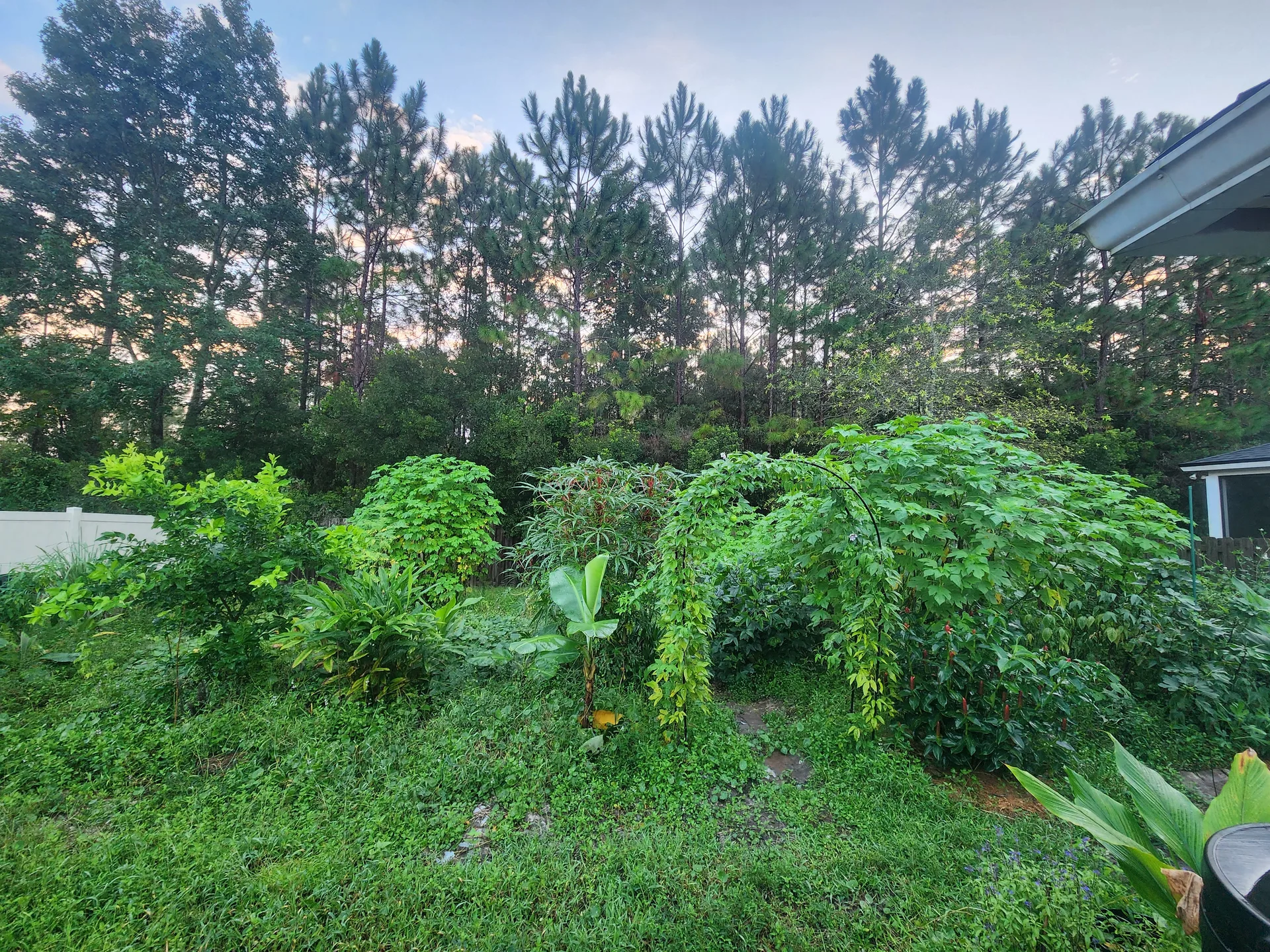
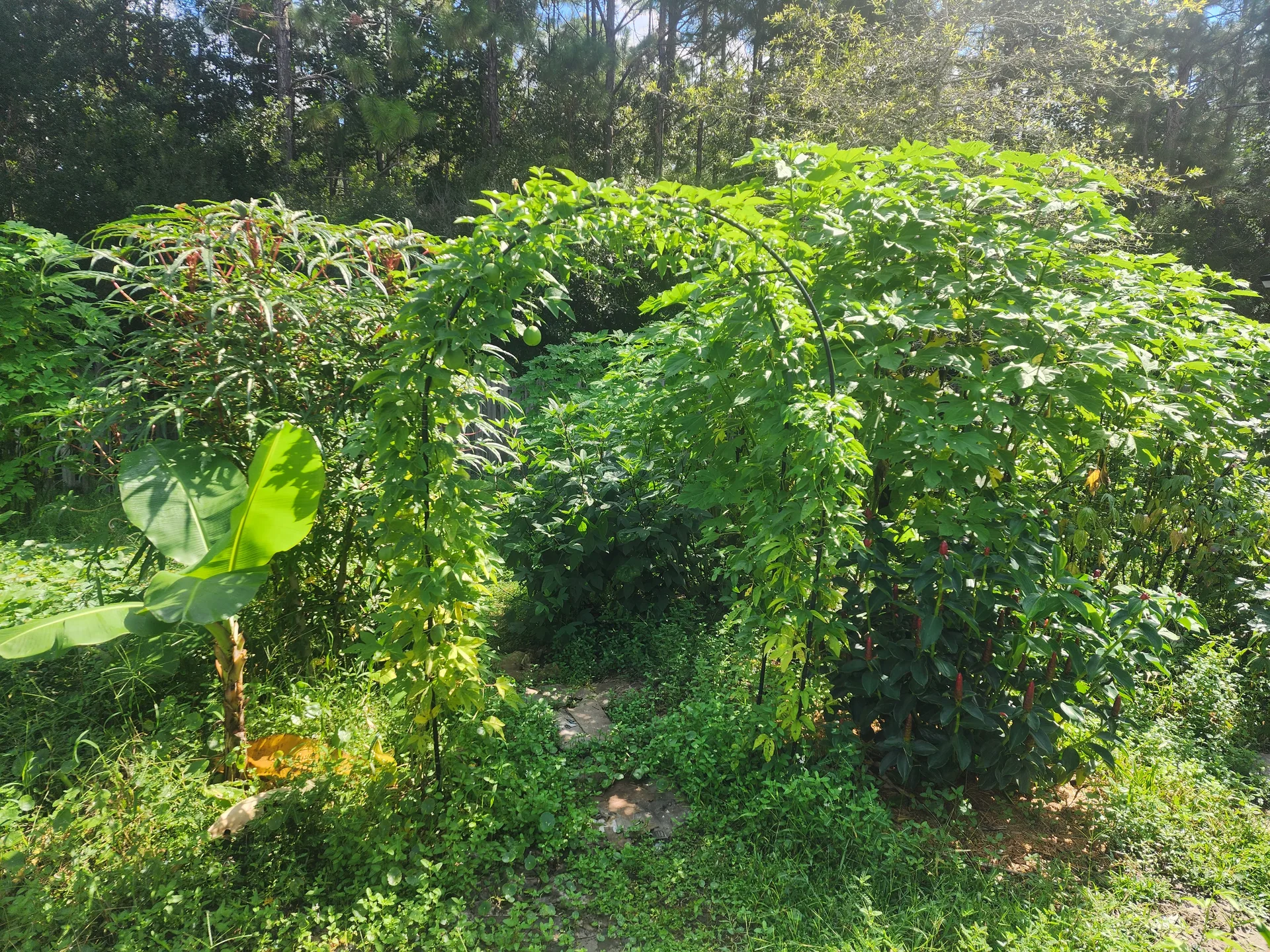
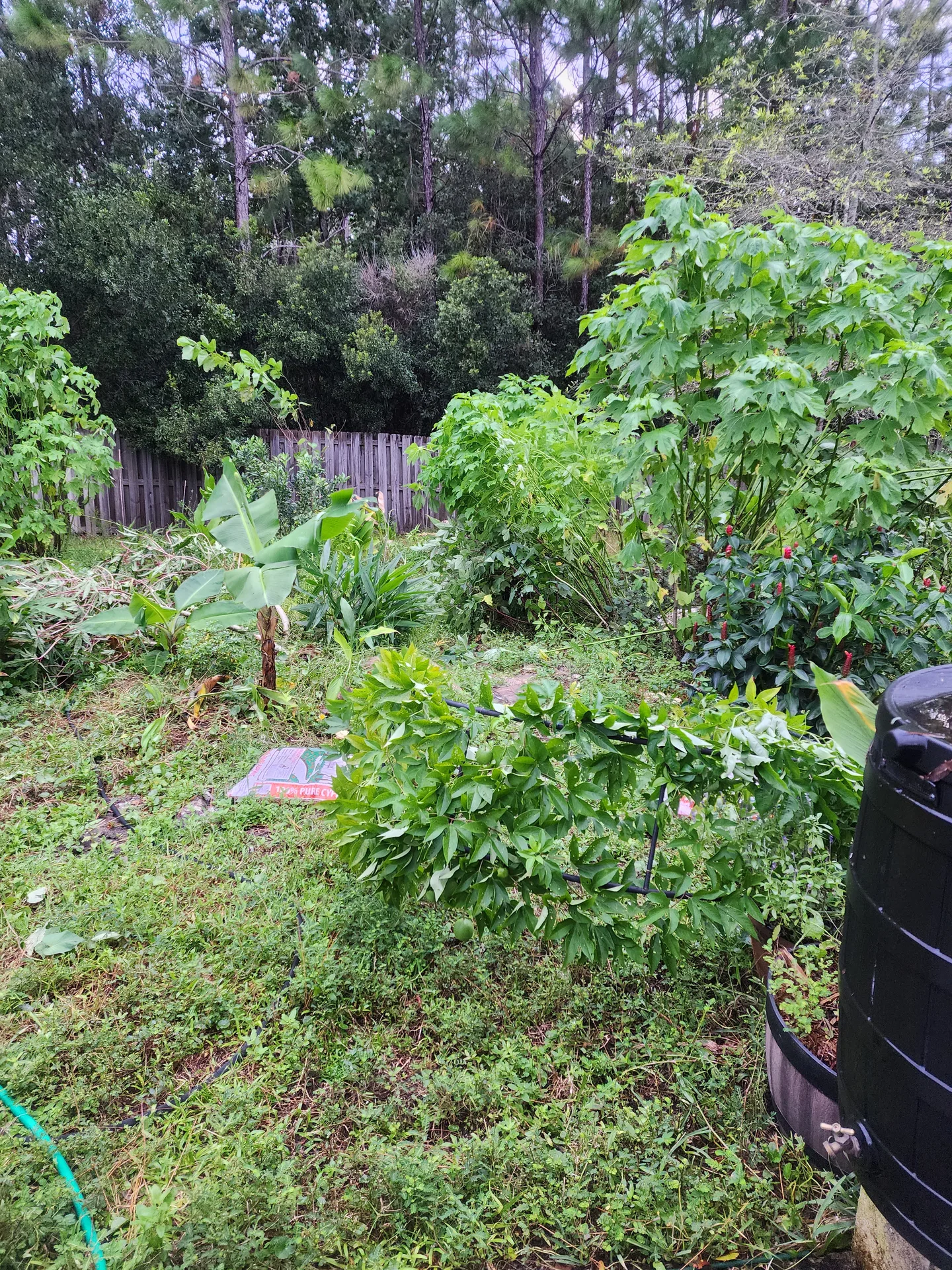
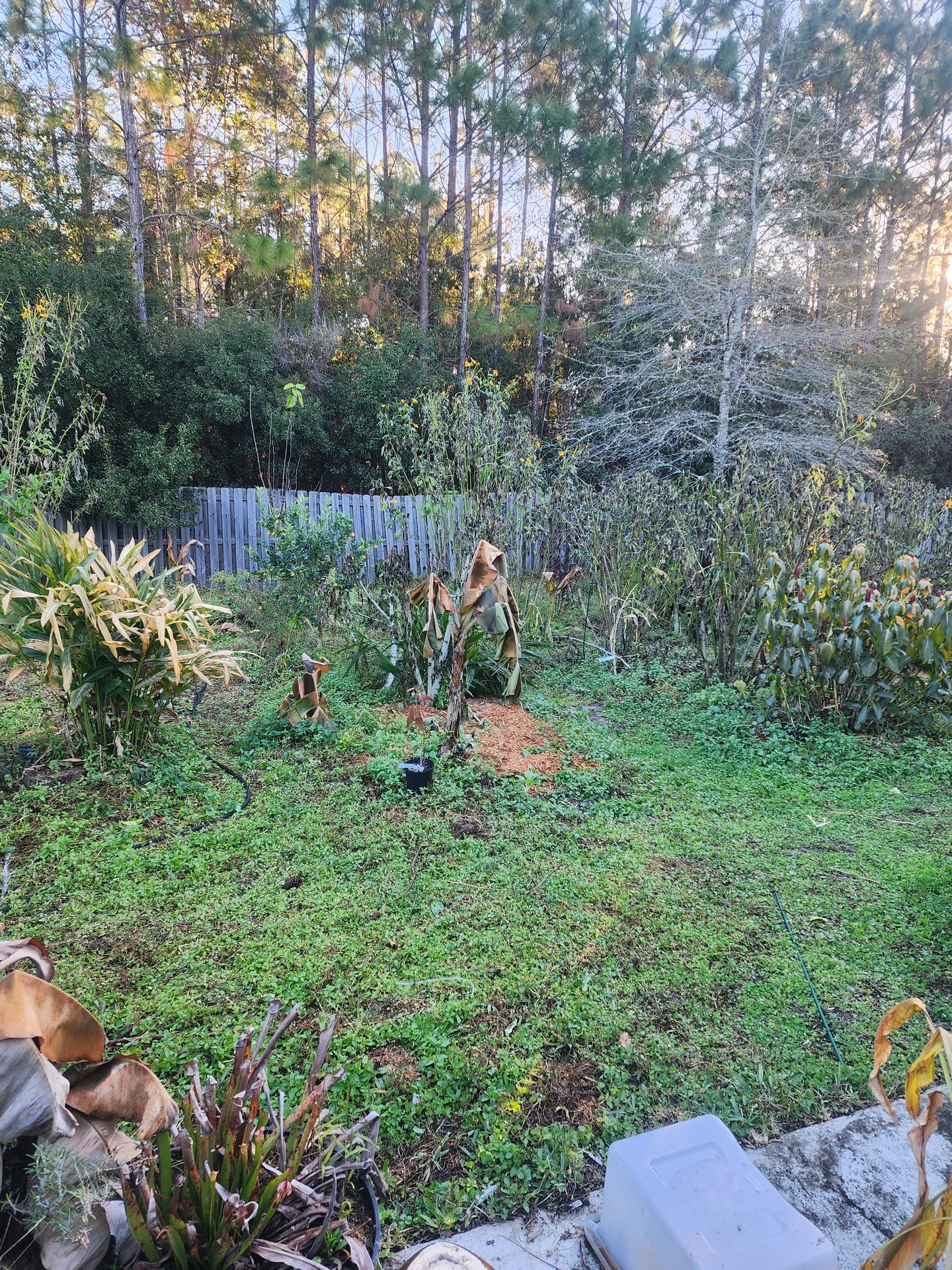
Florida summer did what Florida summer does. Everything went vertical. Then two windstorms in quick succession took out the Tithonia, damaged the Moringa, collapsed the Chaya, and destroyed the trellis. The system absorbed it and kept going.
Year 2 — October–December 2024
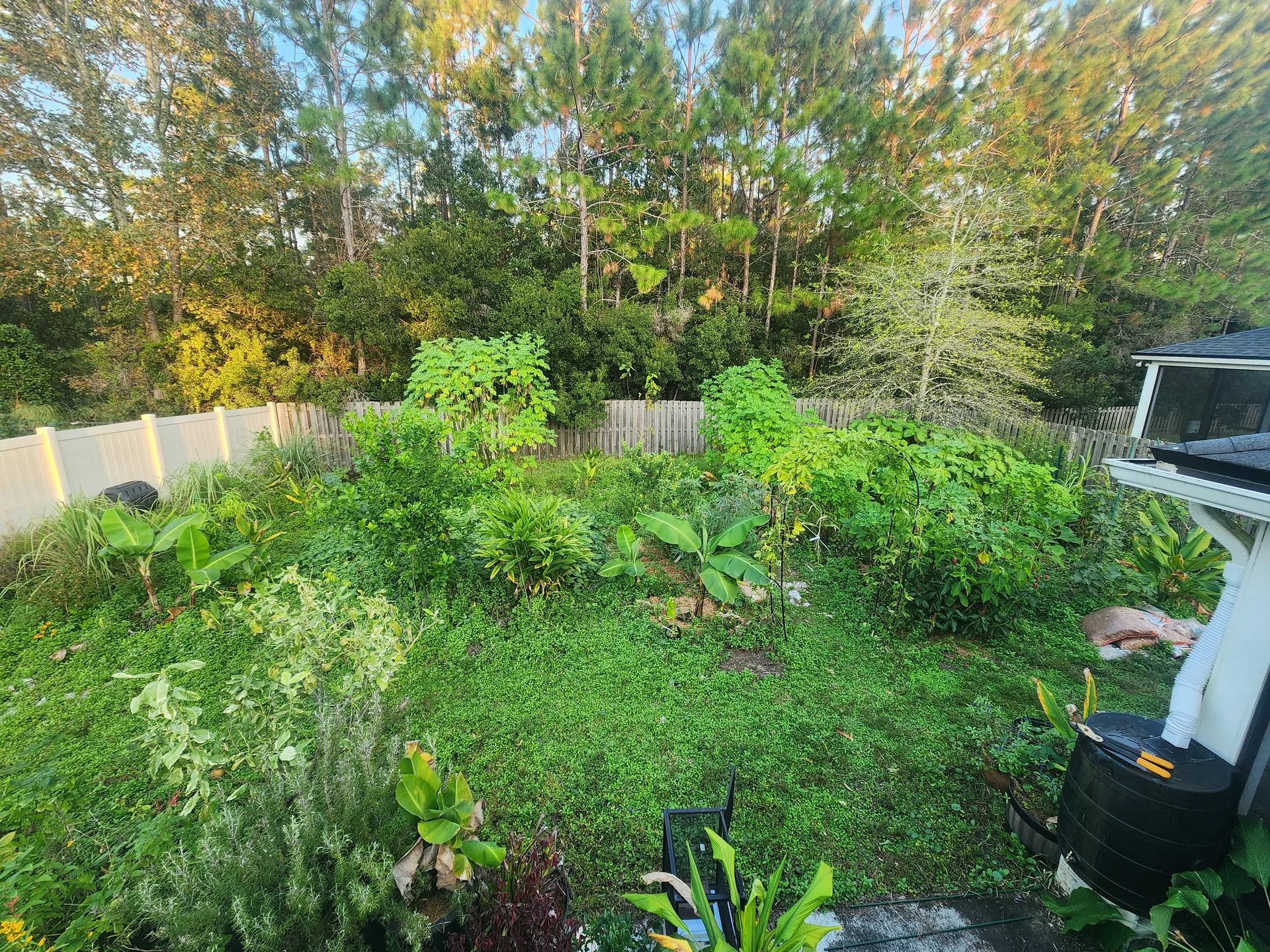
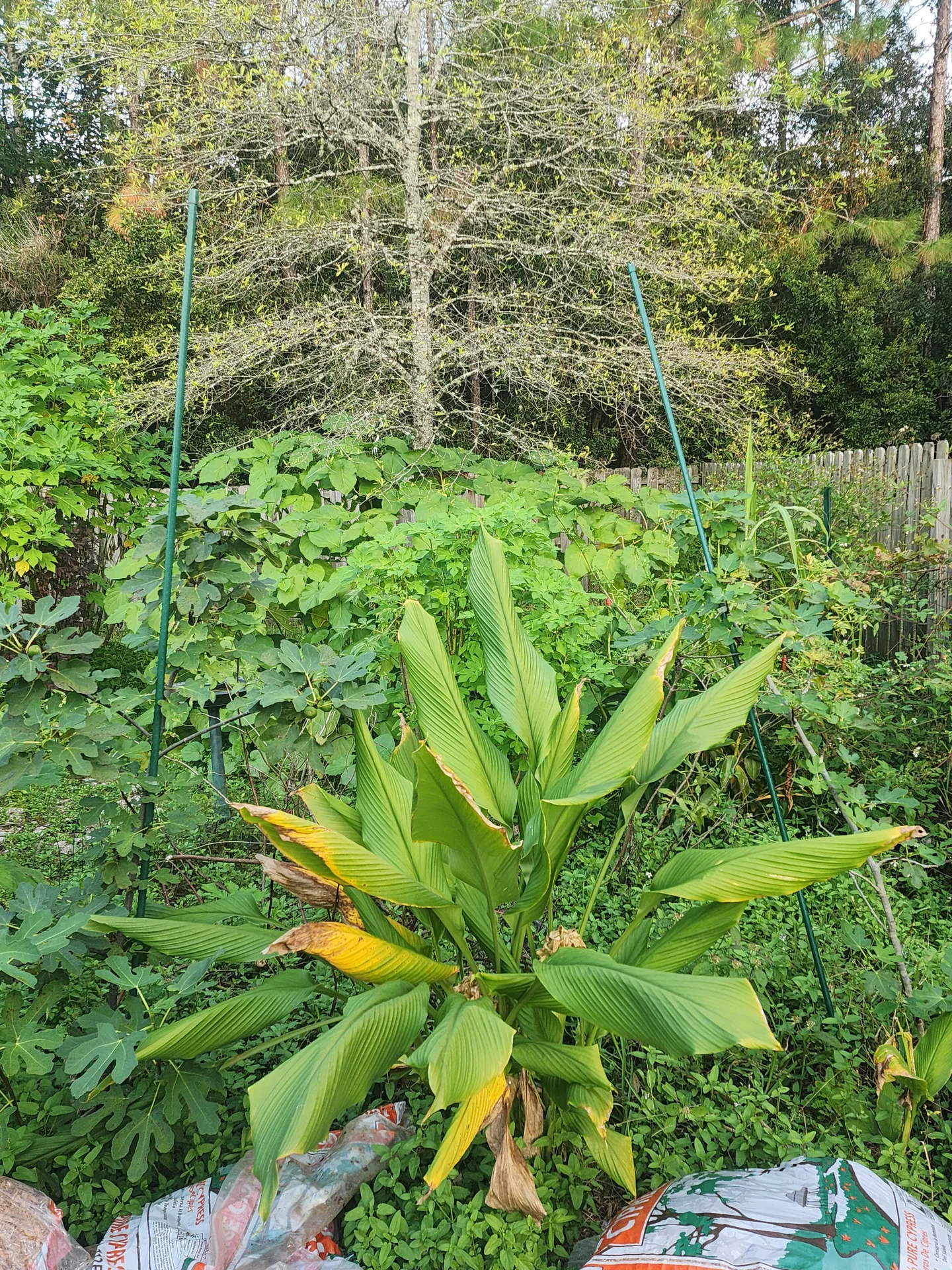
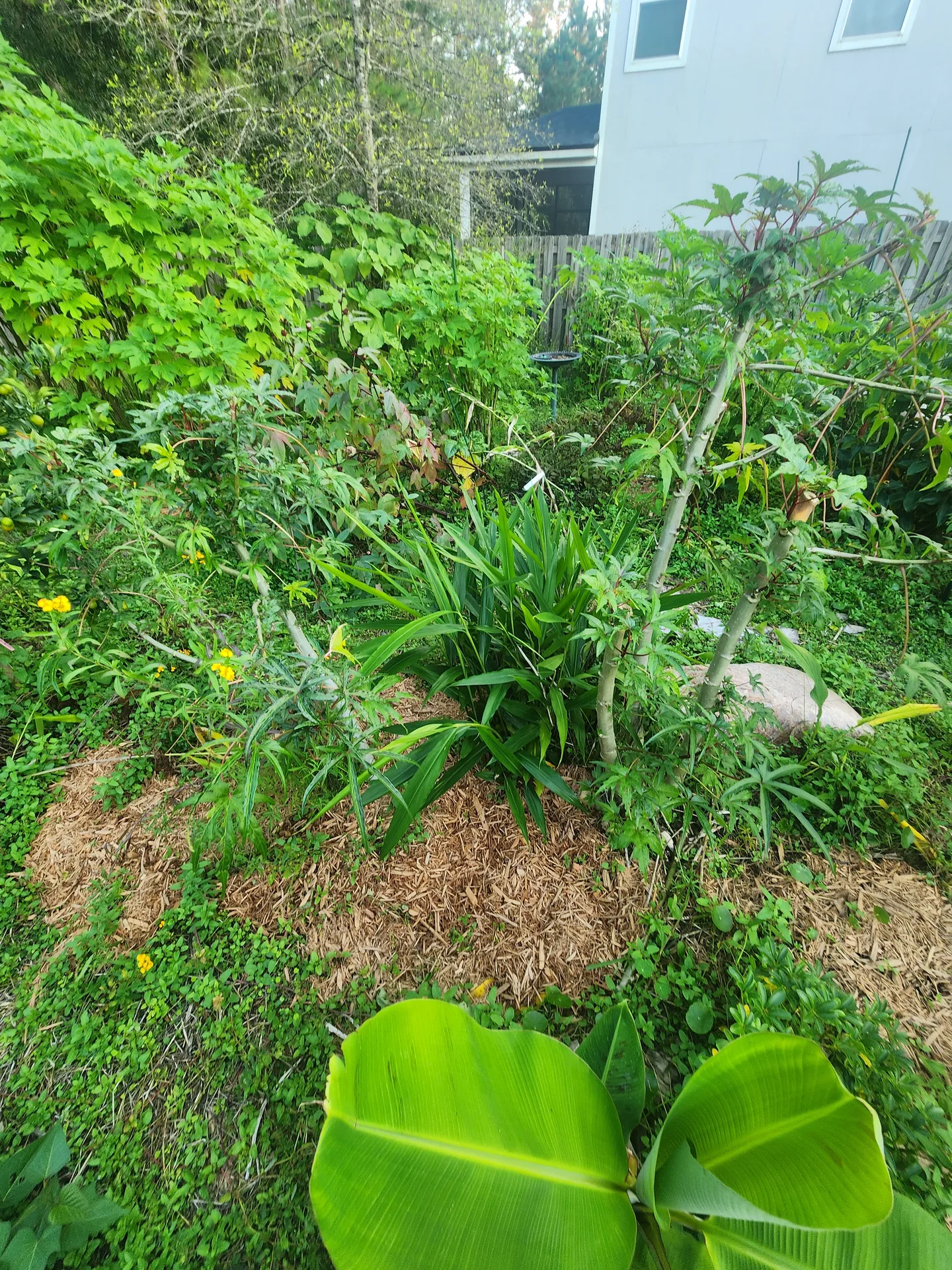
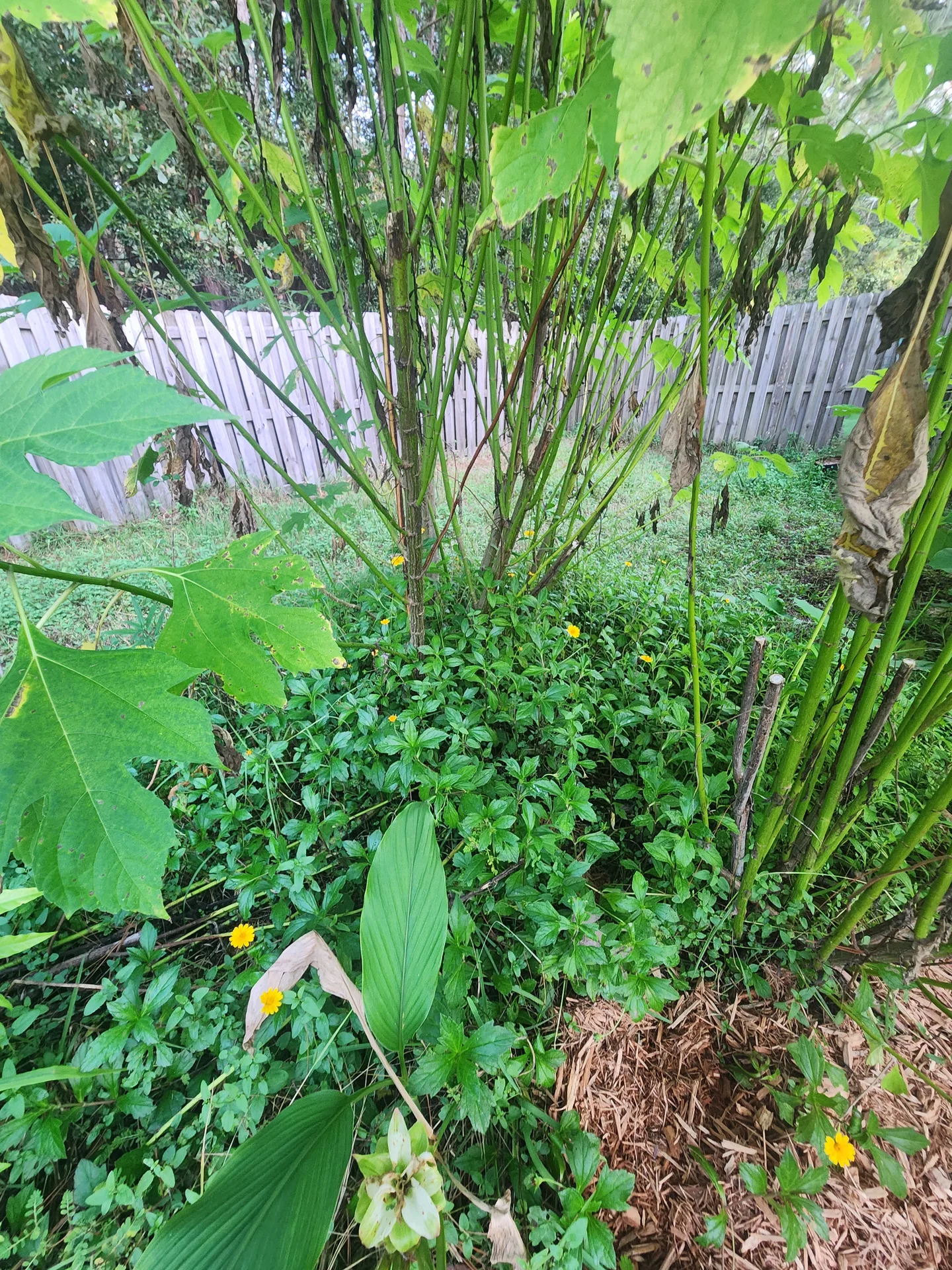
Year 3 — January 2025
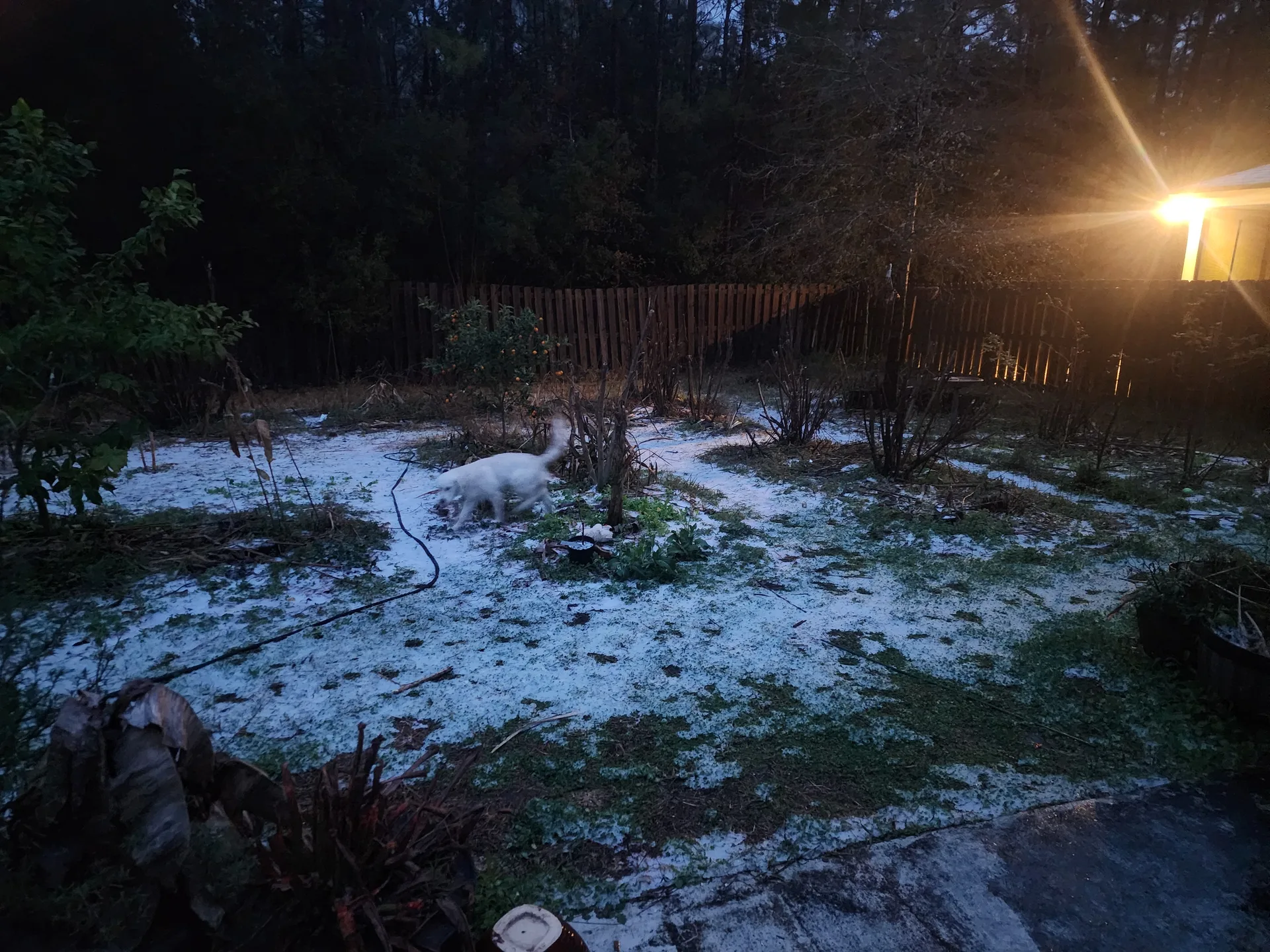
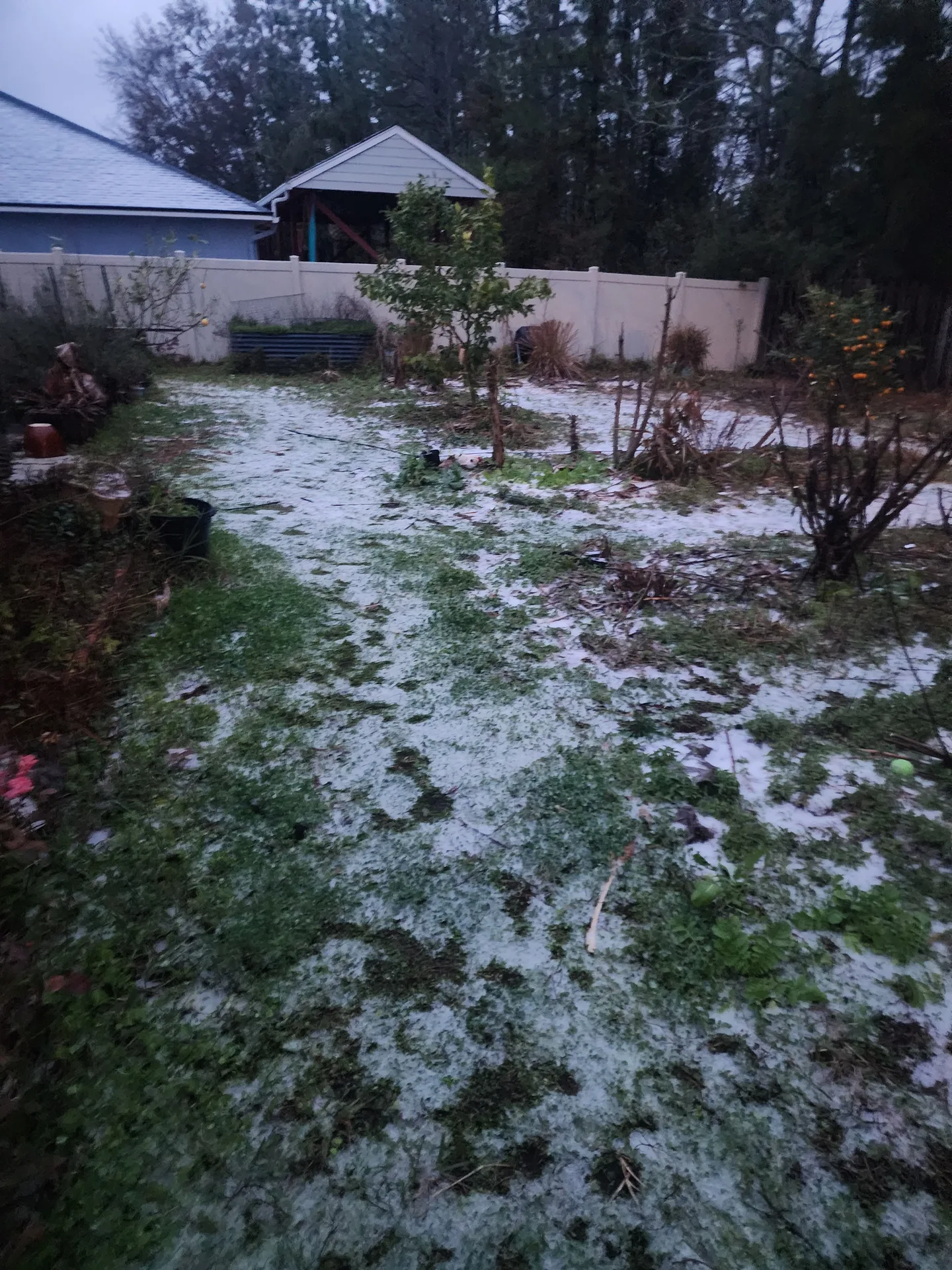
It Snowed in Florida
January 2025 brought snow to Yulee. Not supposed to happen. At that point I assumed everything was done for. It wasn't.
Year 3 — March & April 2025
Post-Snow Recovery
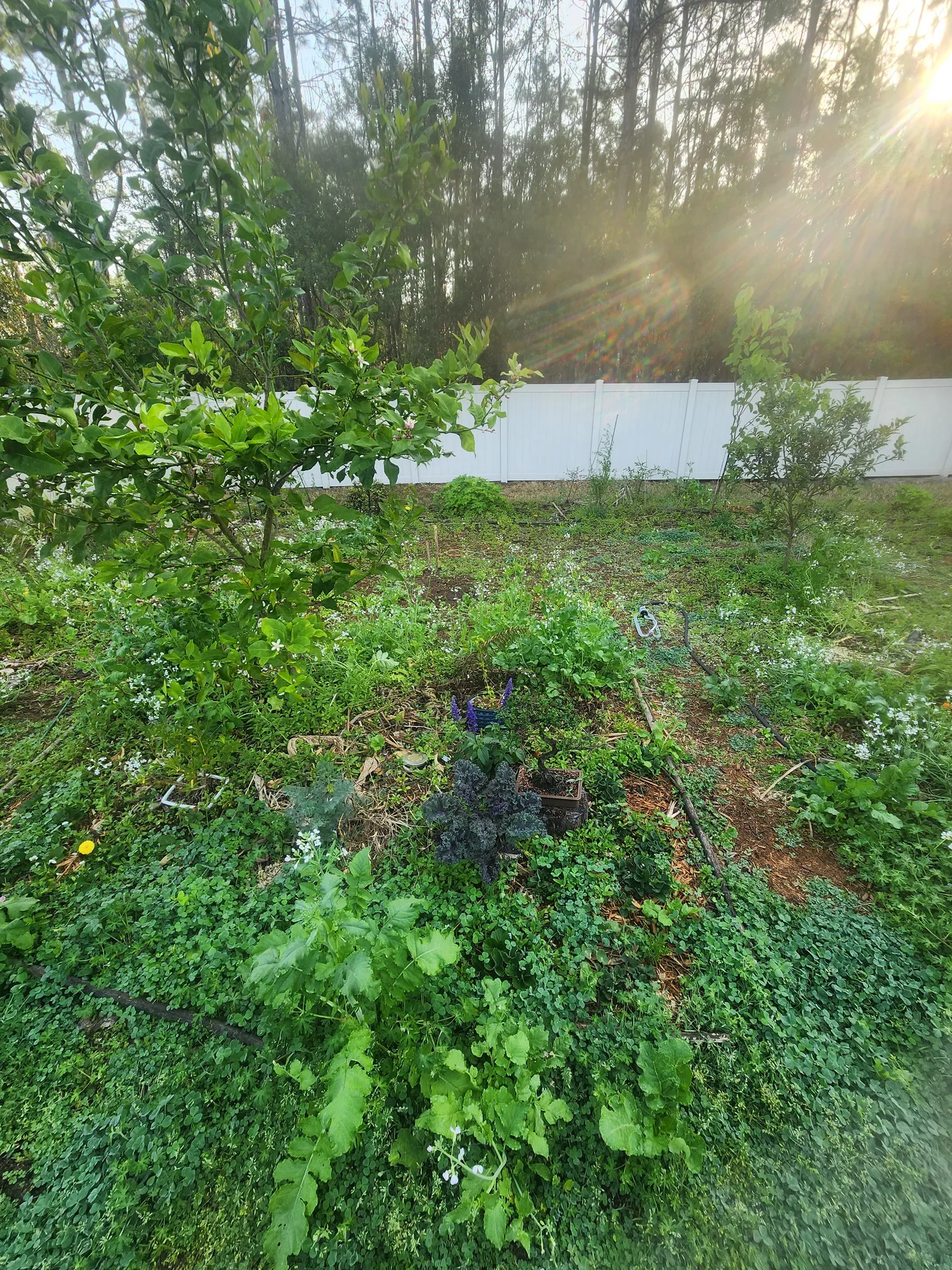
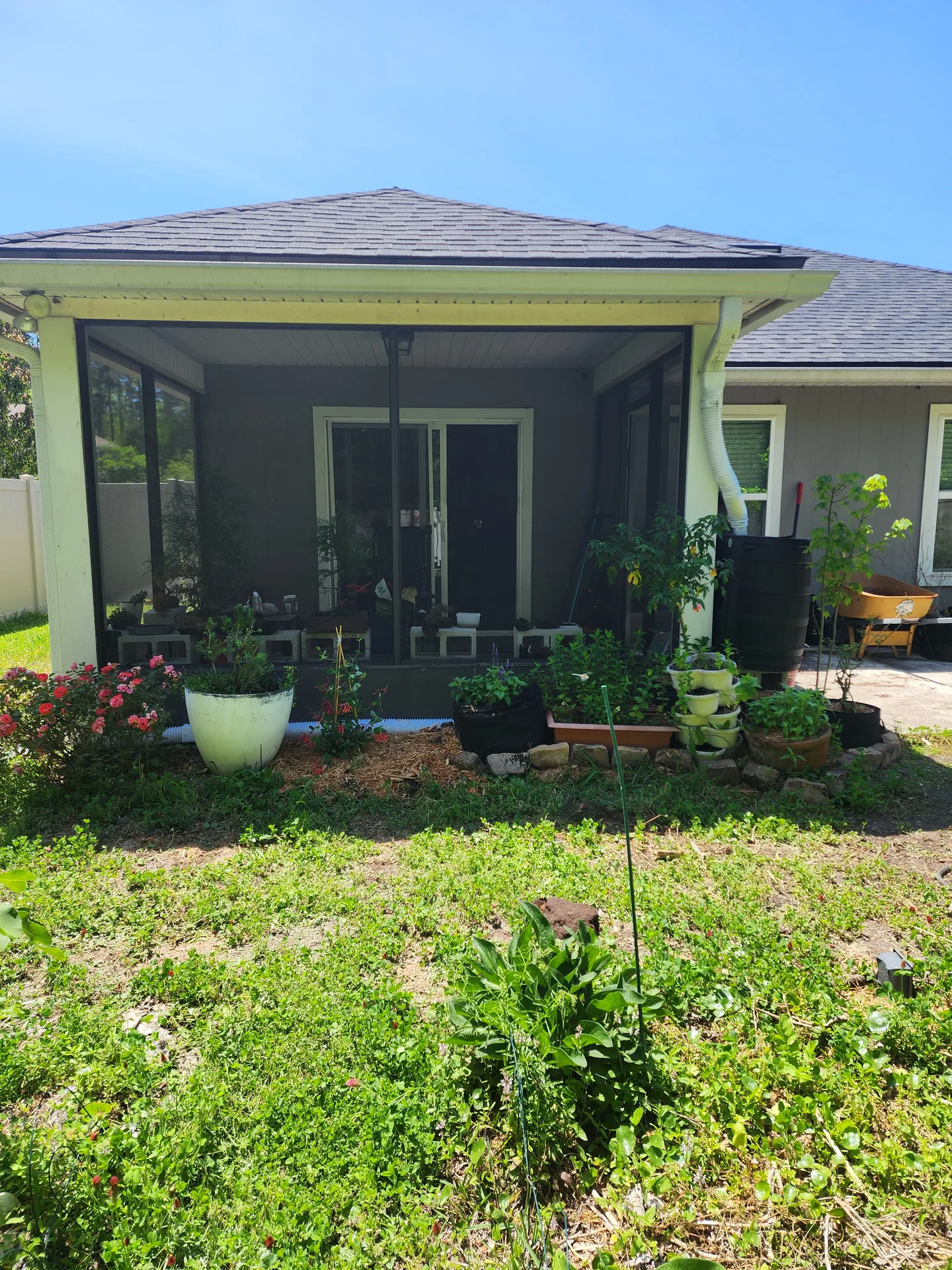
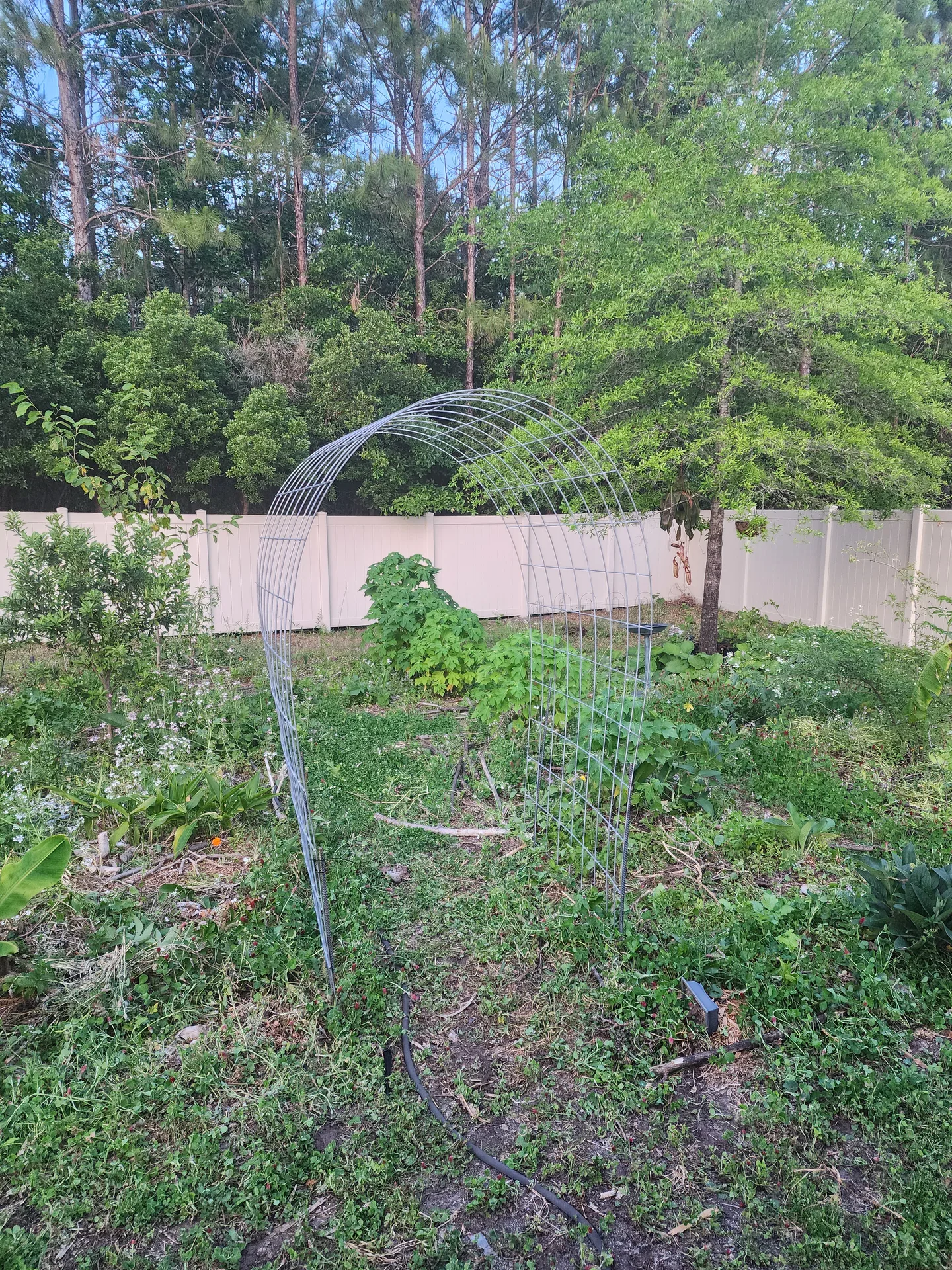
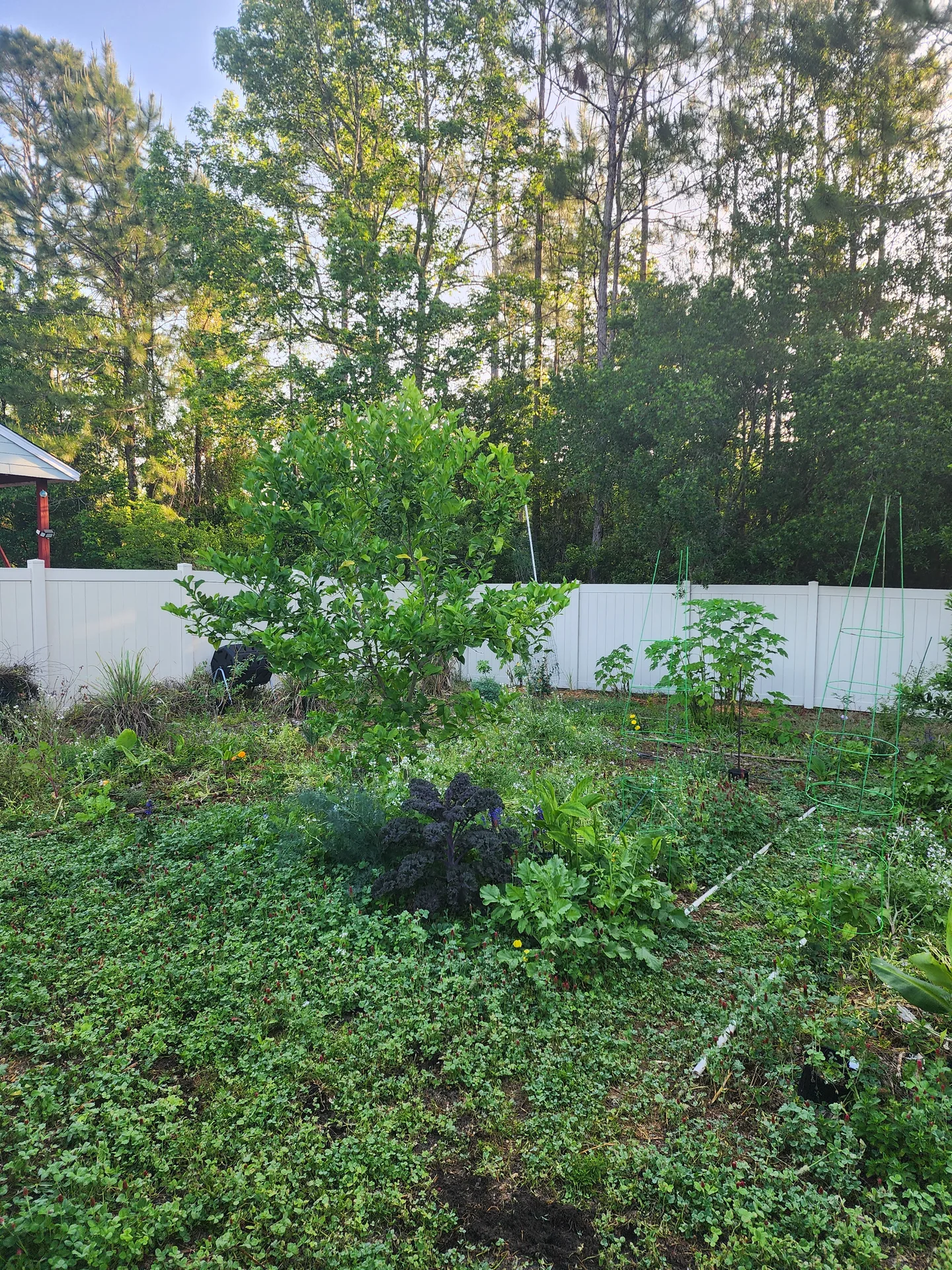
Spread Crimson and Dutch Clover and Daikon Radish after the snow. The Daikon became one of the best decisions of the year — free nutrients, bee habitat, and edible pods. Built the hummingbird garden. Replaced the destroyed trellis with a cattle panel anchored with rebar. Done with windstorms.
Year 3 — Late April 2025
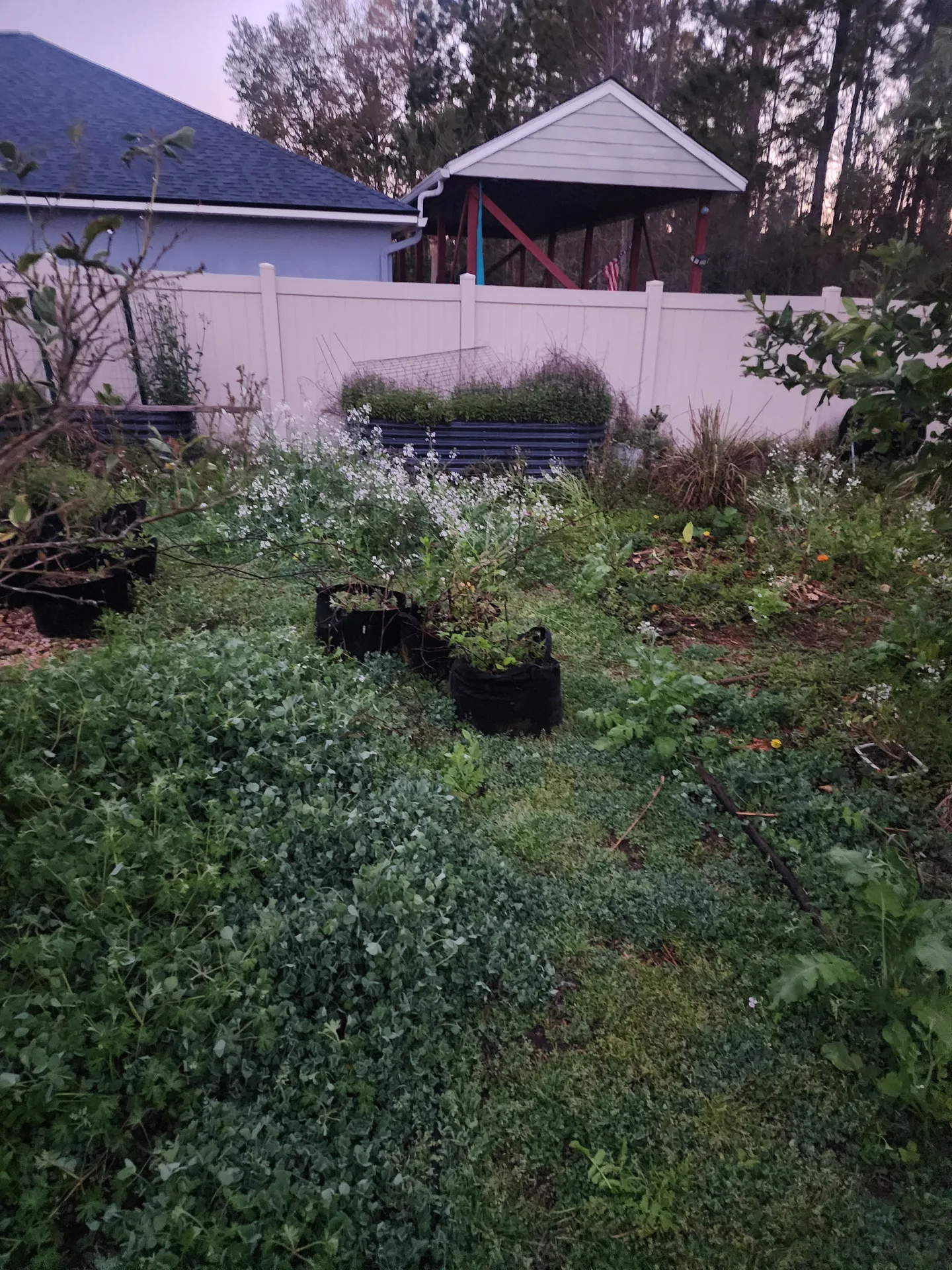
Spring Surge
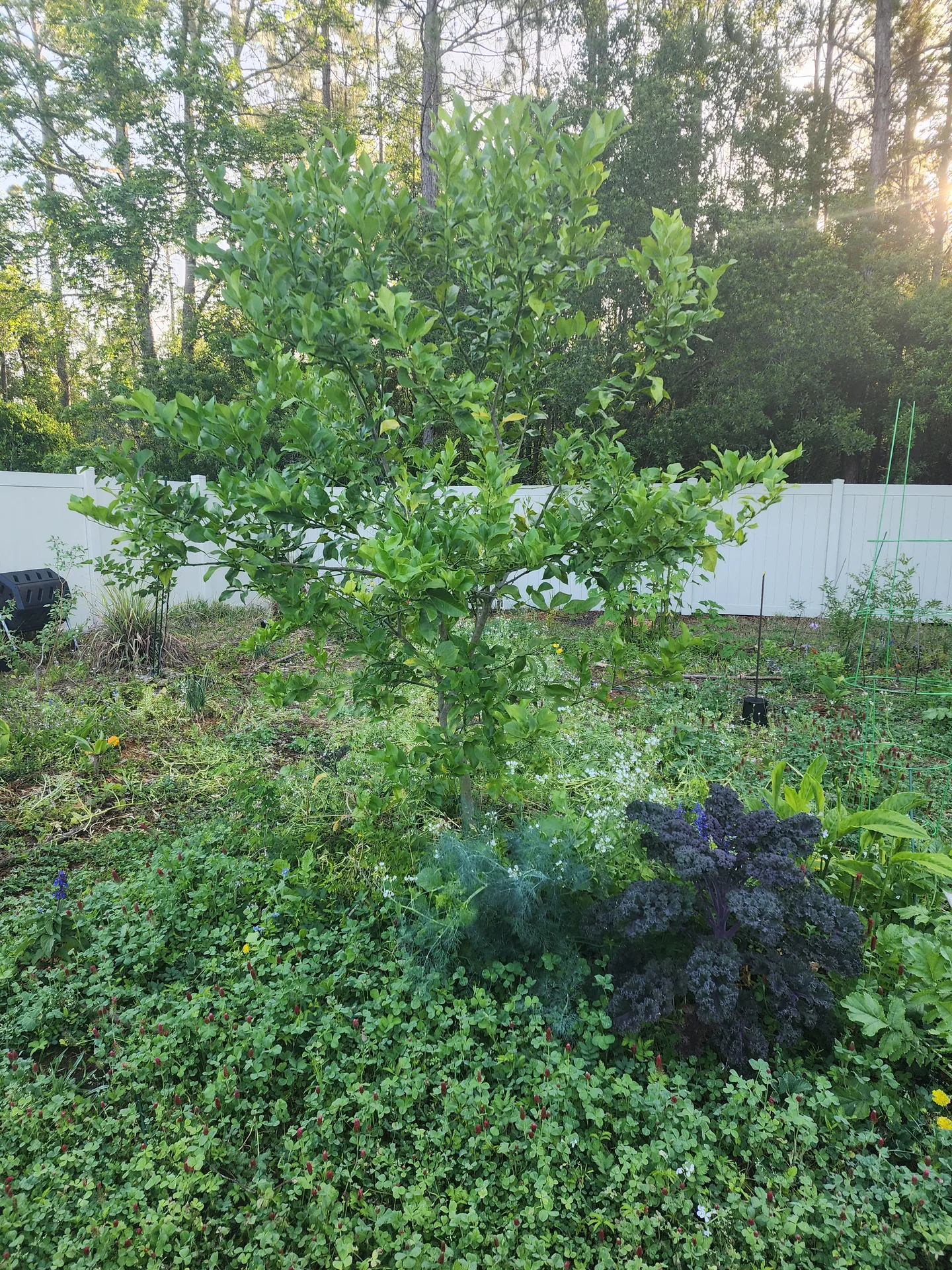
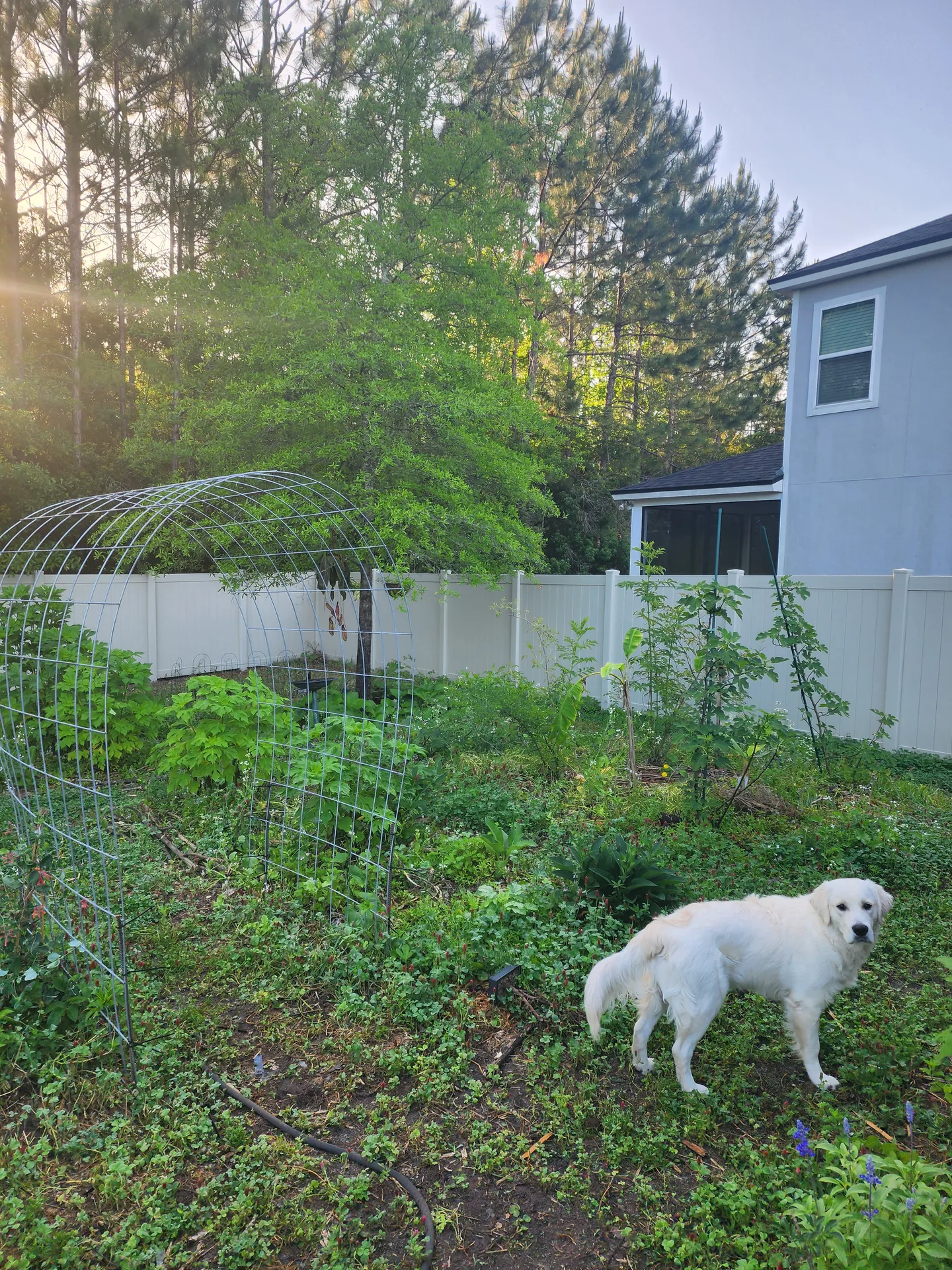
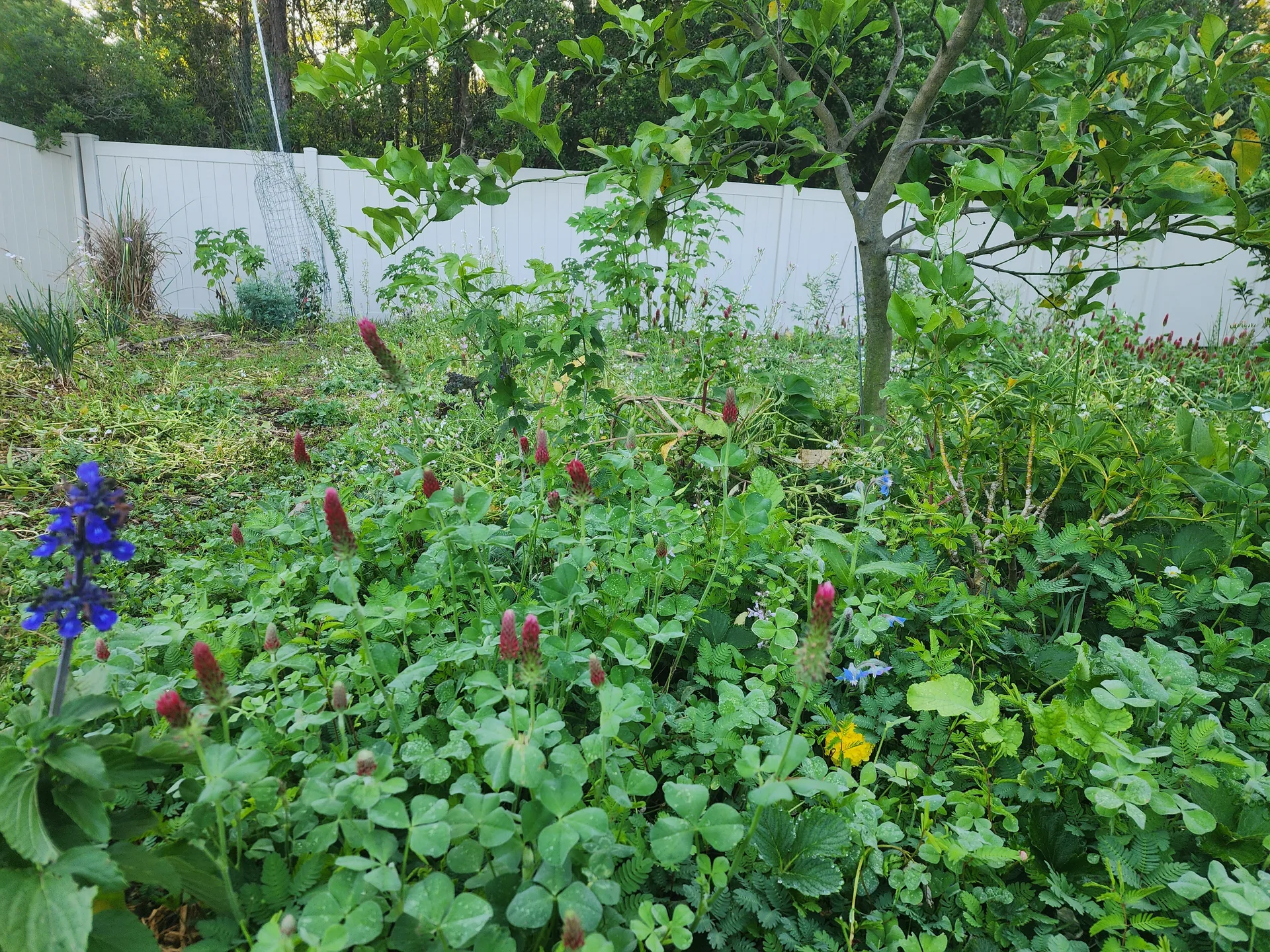
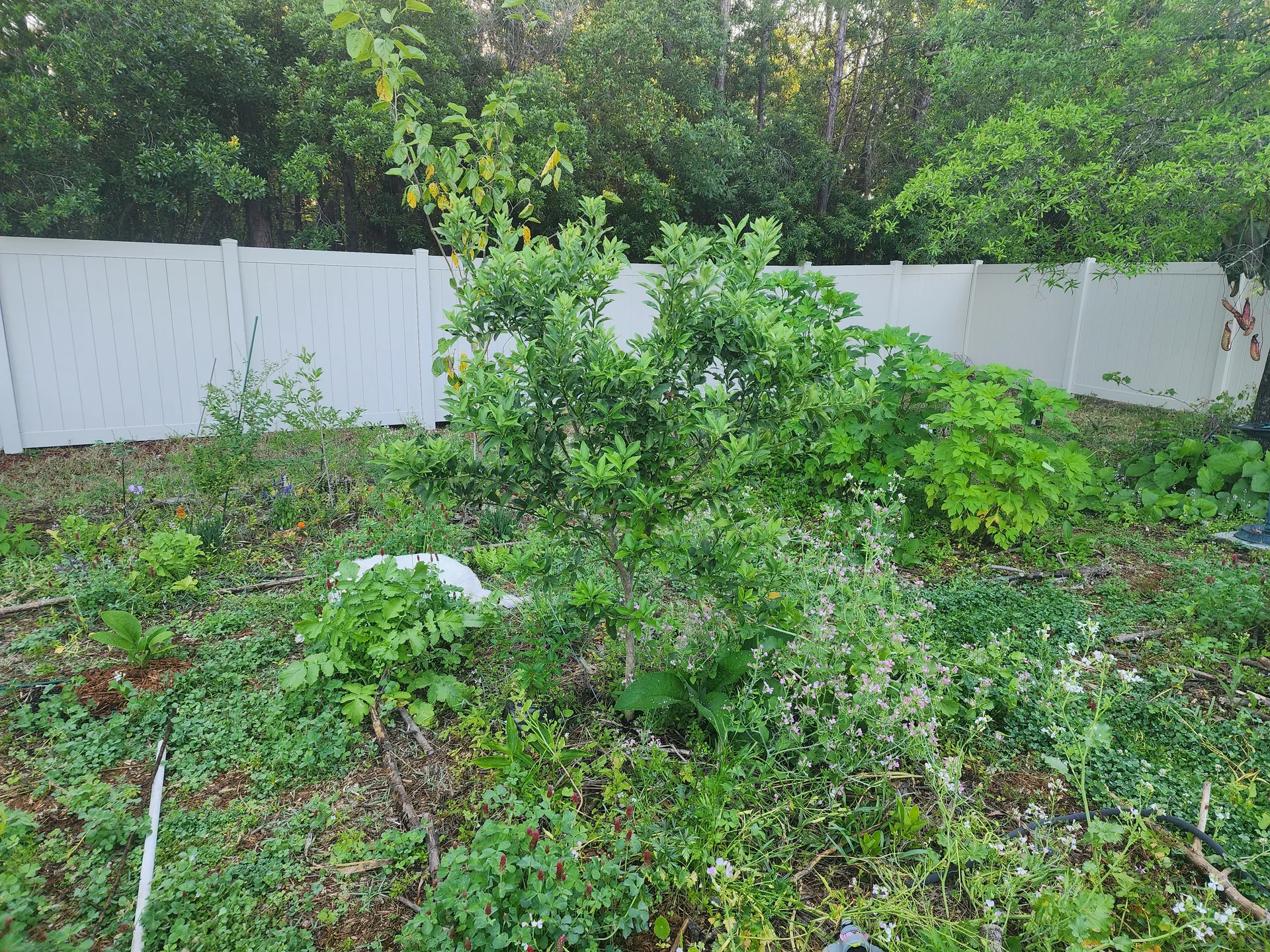
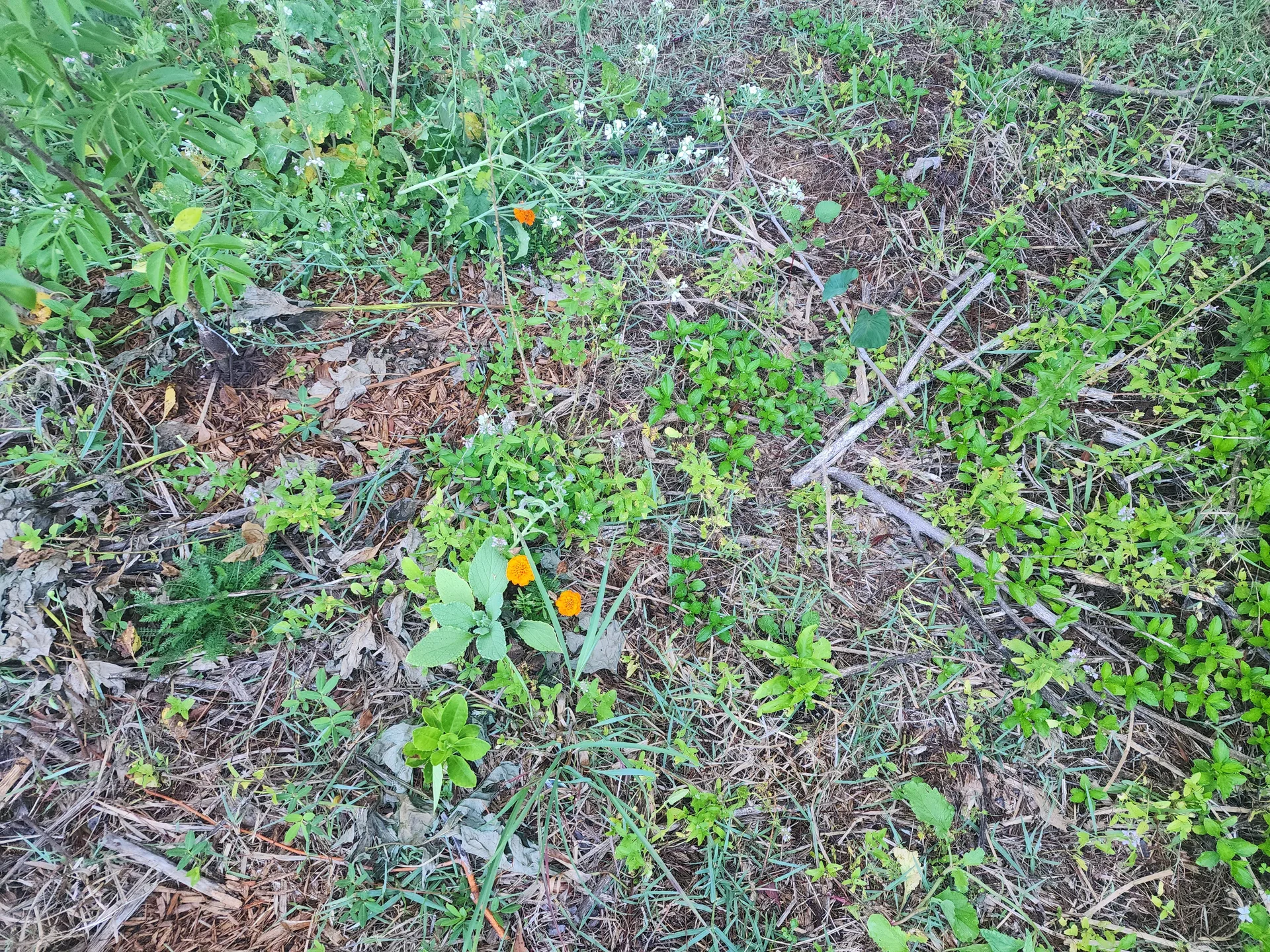
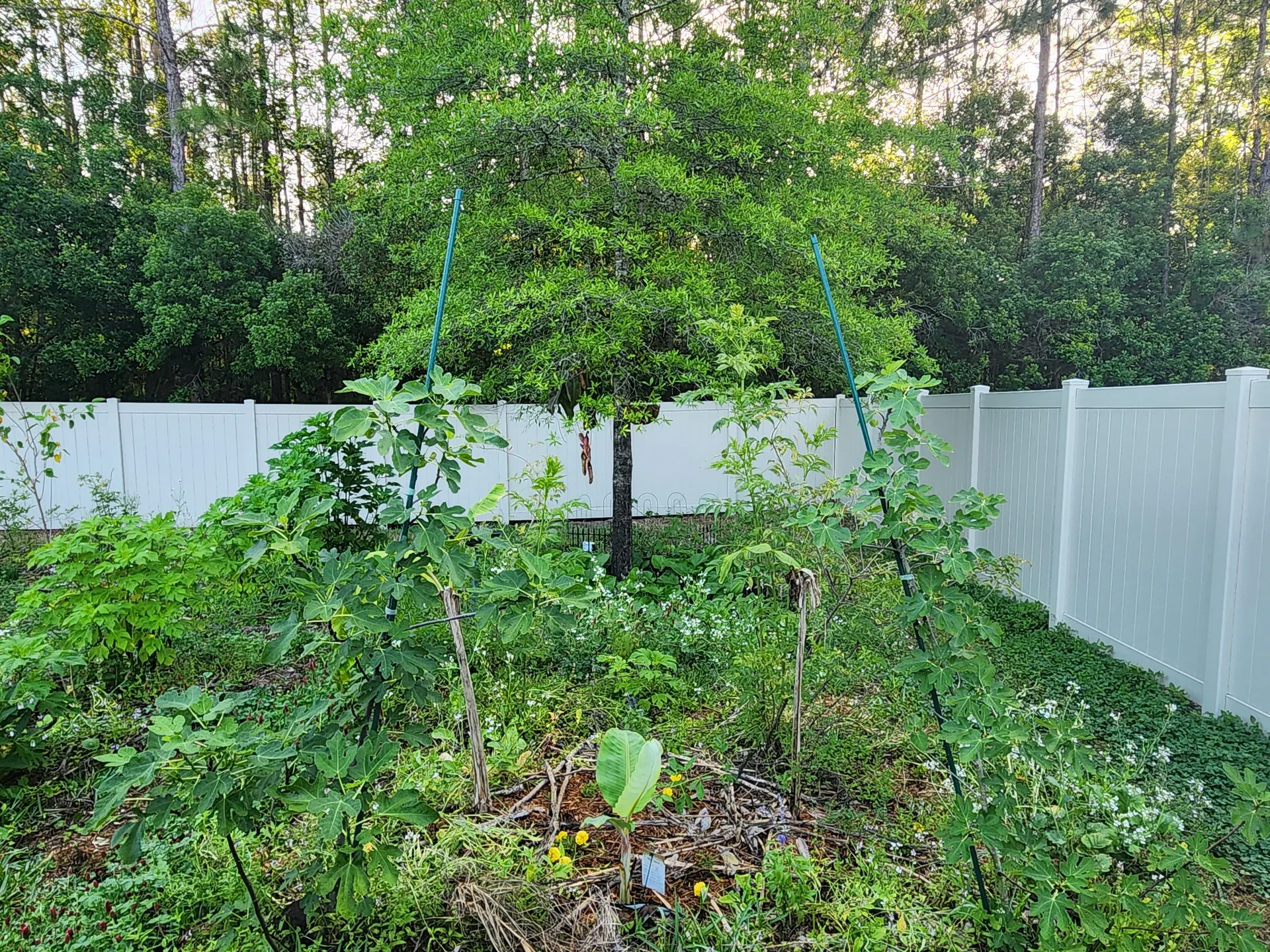
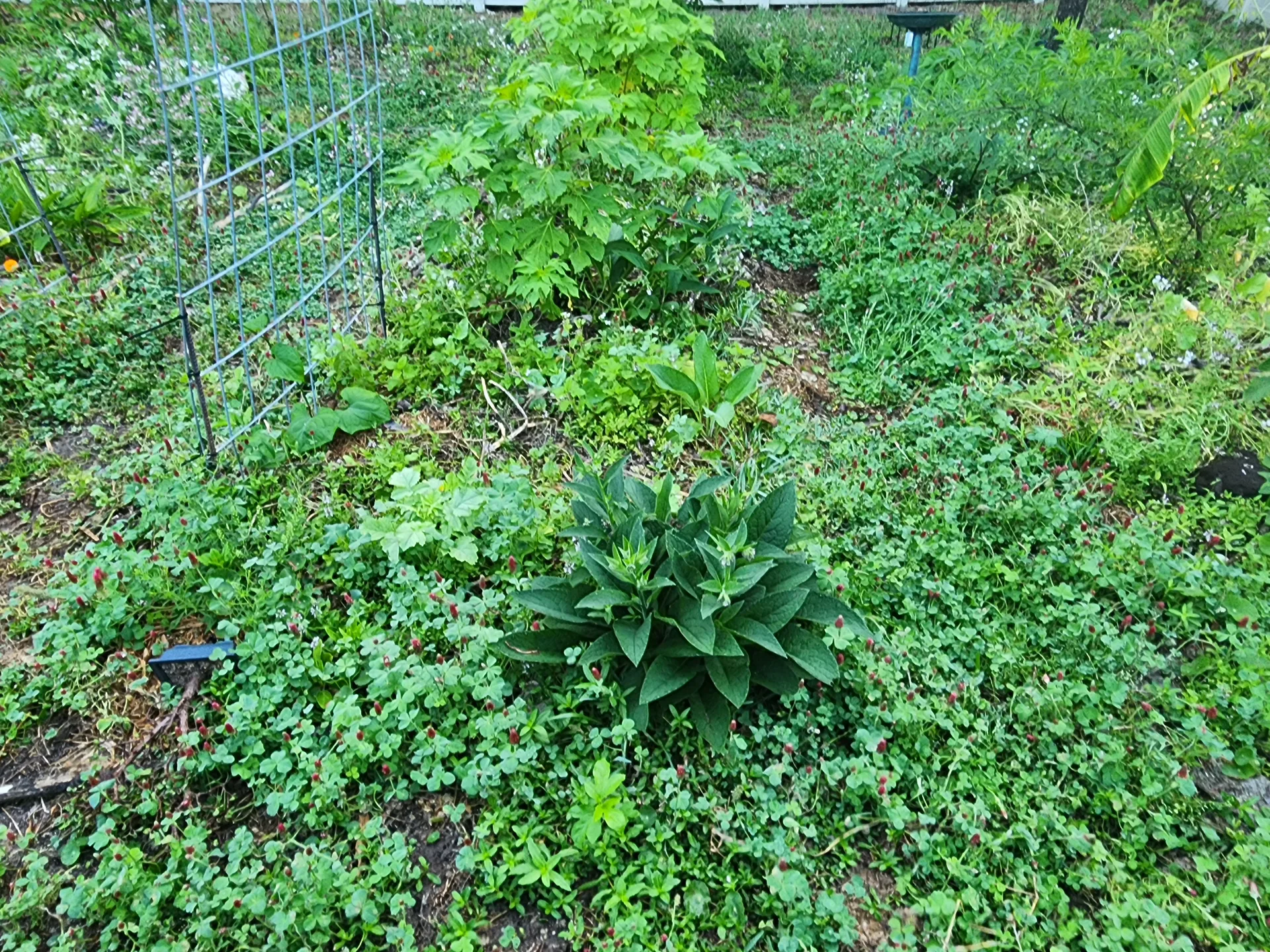
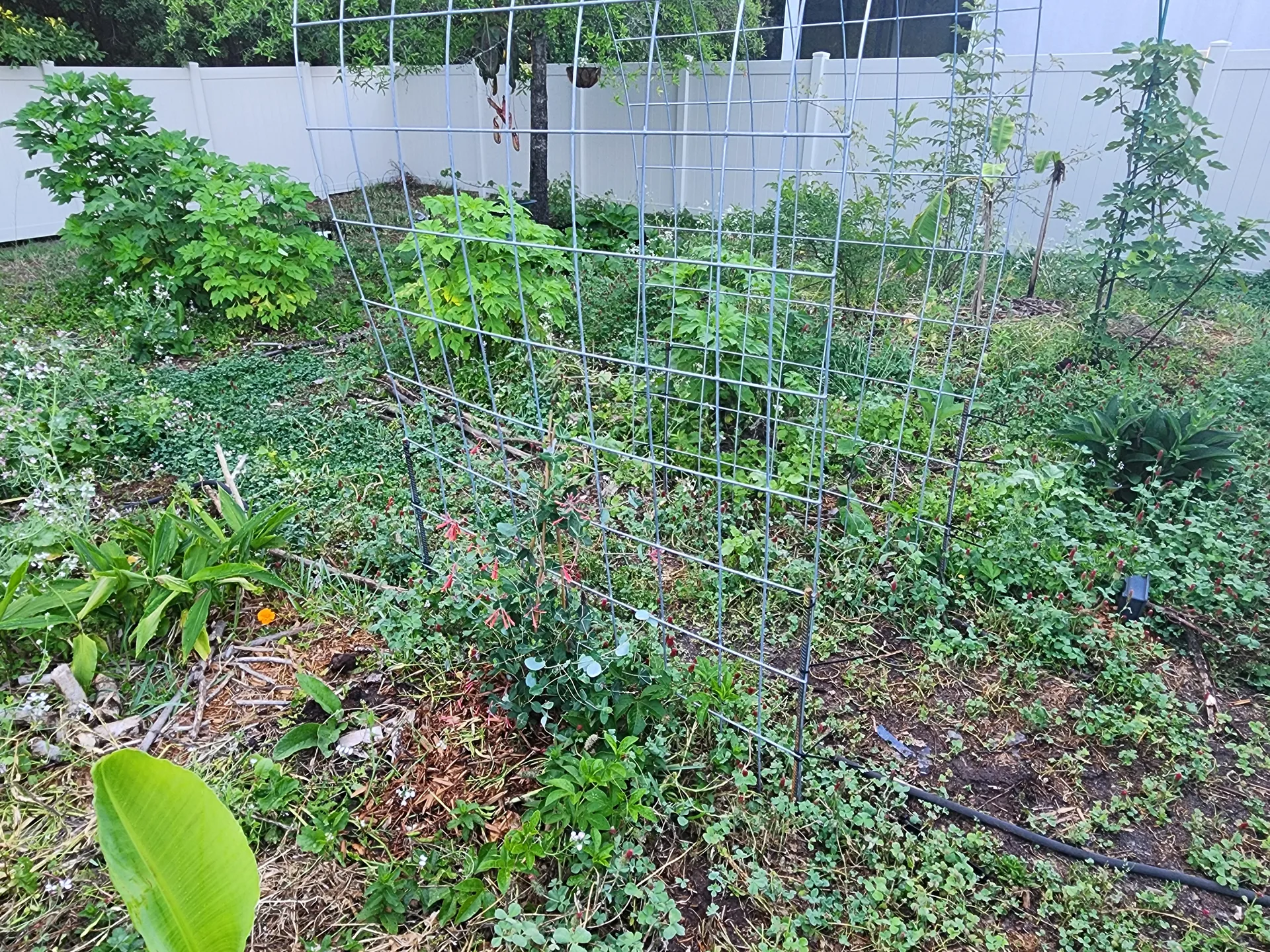
Late April and everything came back at once. The crimson clover was everywhere. Added three banana trees to the grove. The frog pond ecosystem survived the snow intact — minnows and all.
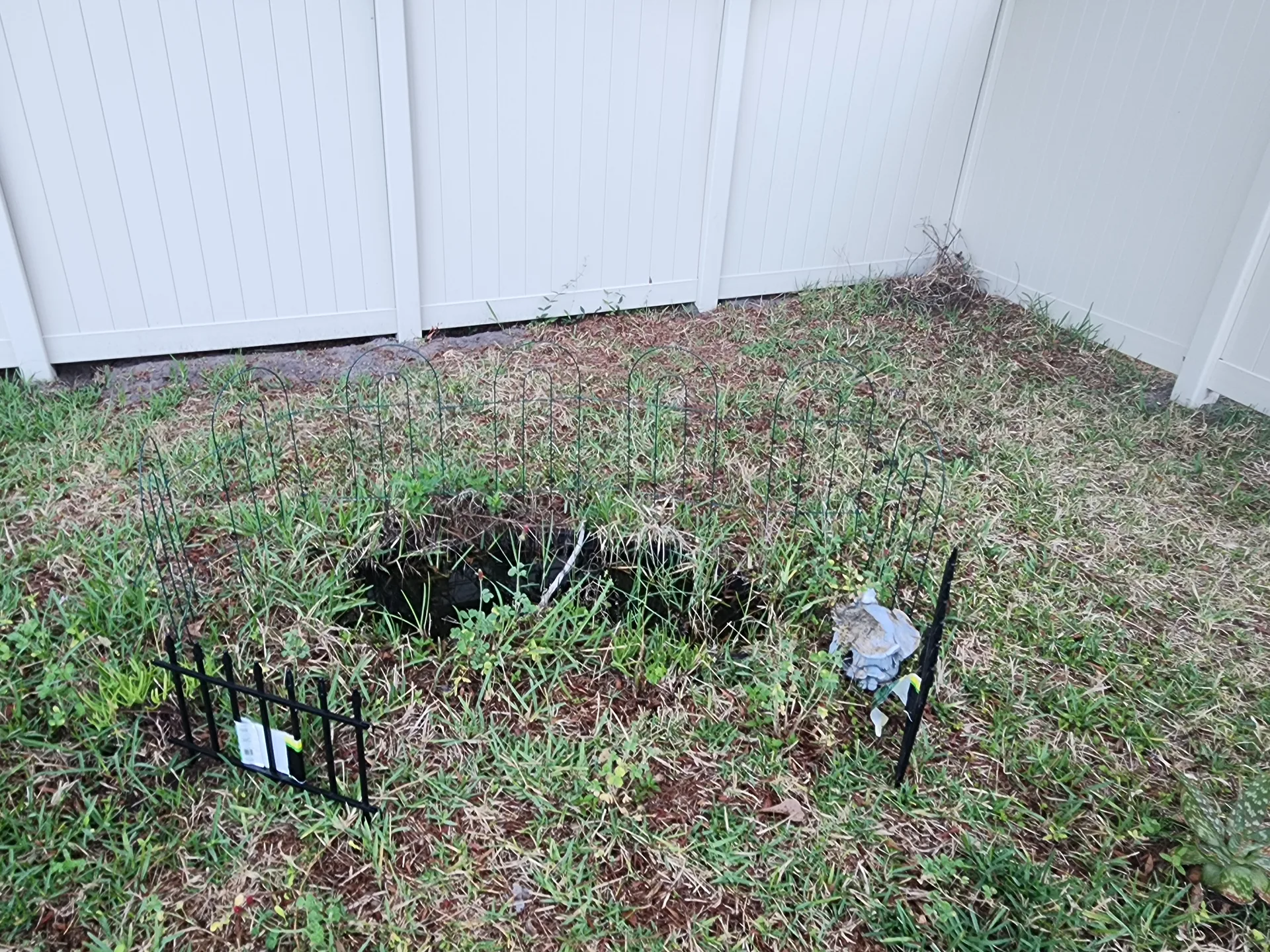
Year 3 — May 2025
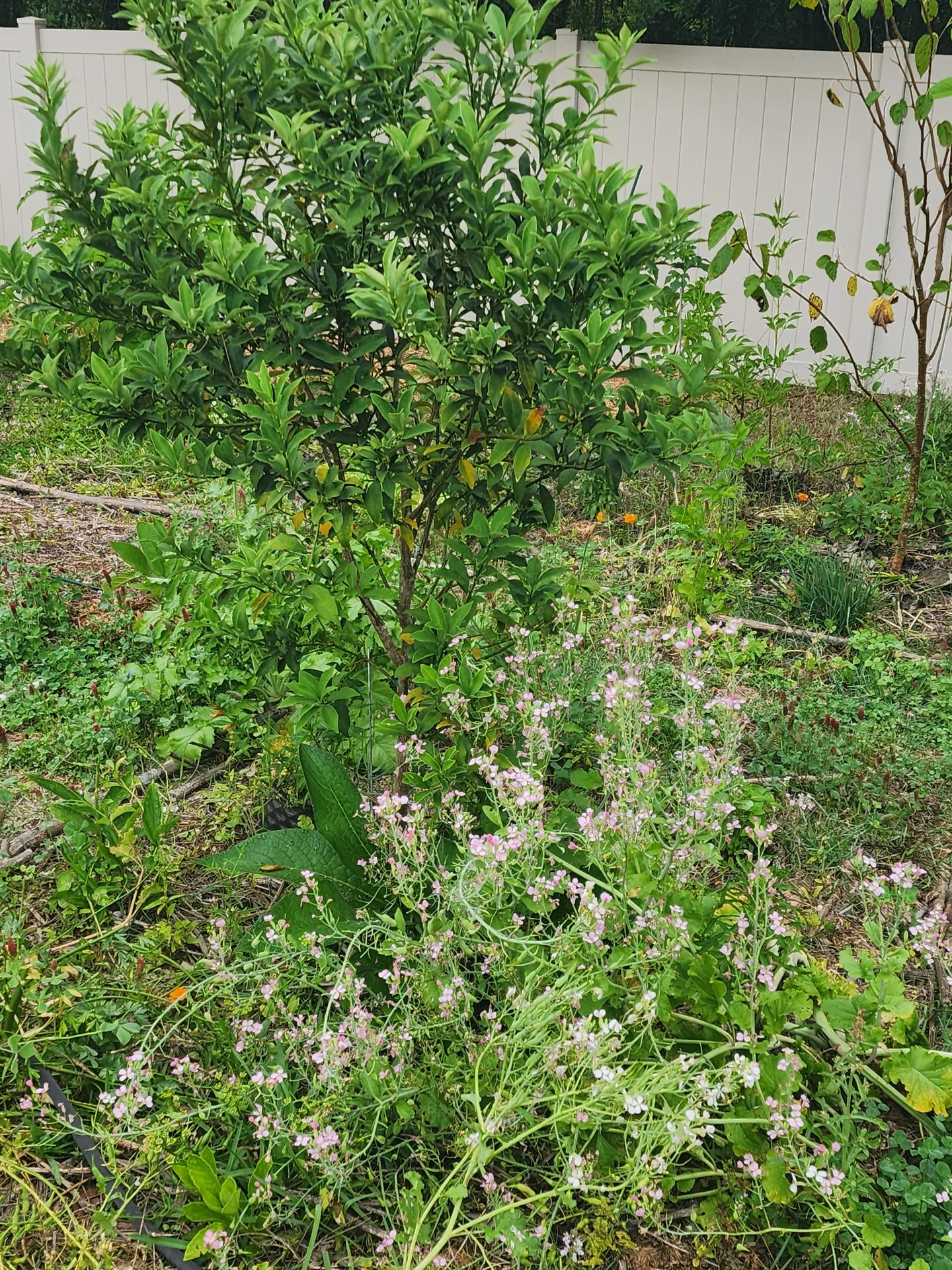
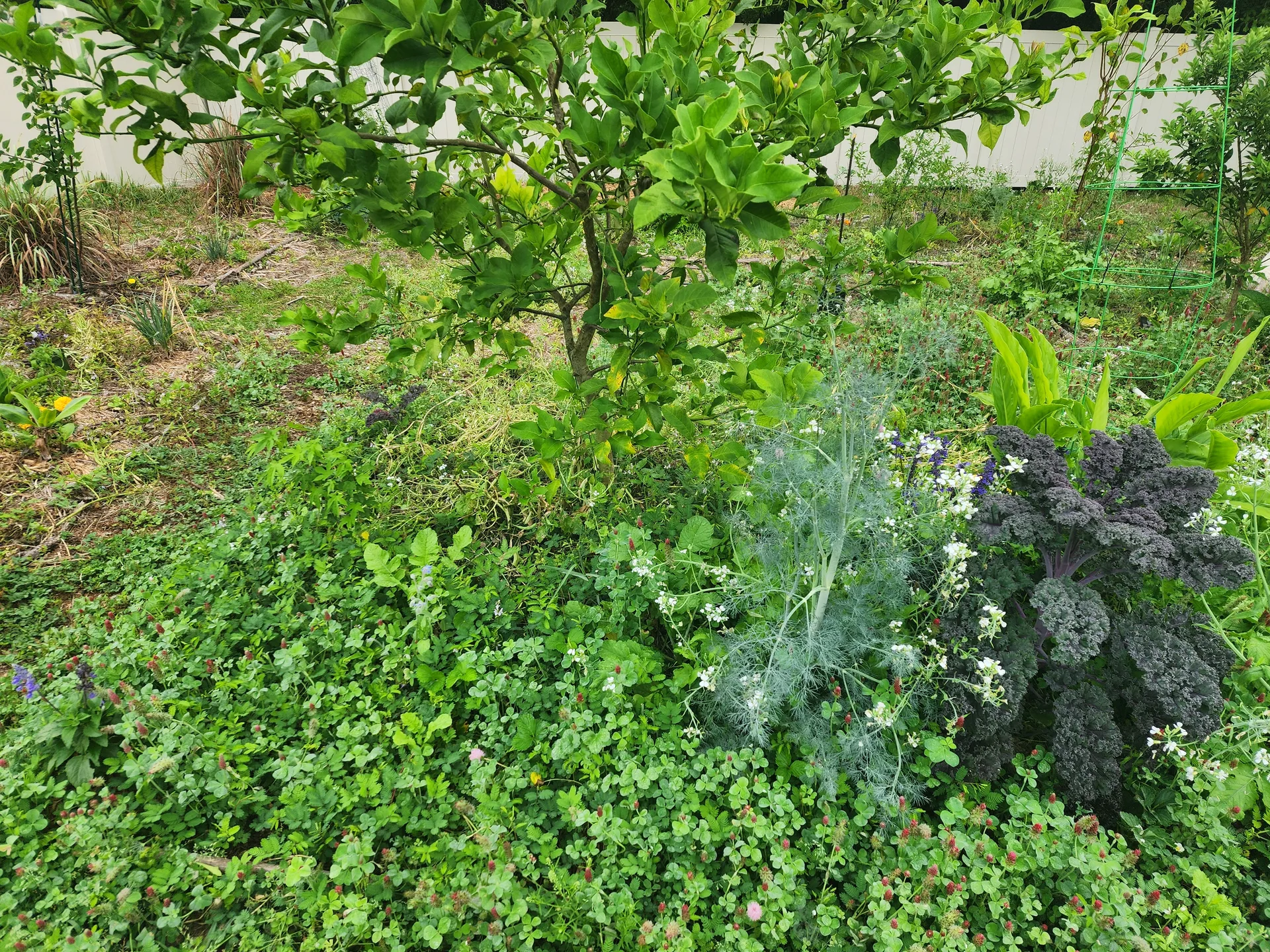
Everything Flowering
May and the whole system was in bloom. Daikon, clover, Sunshine Mimosa all flowering at once. The nitrogen fixing stack around the Lemon Tree was clearly paying off.
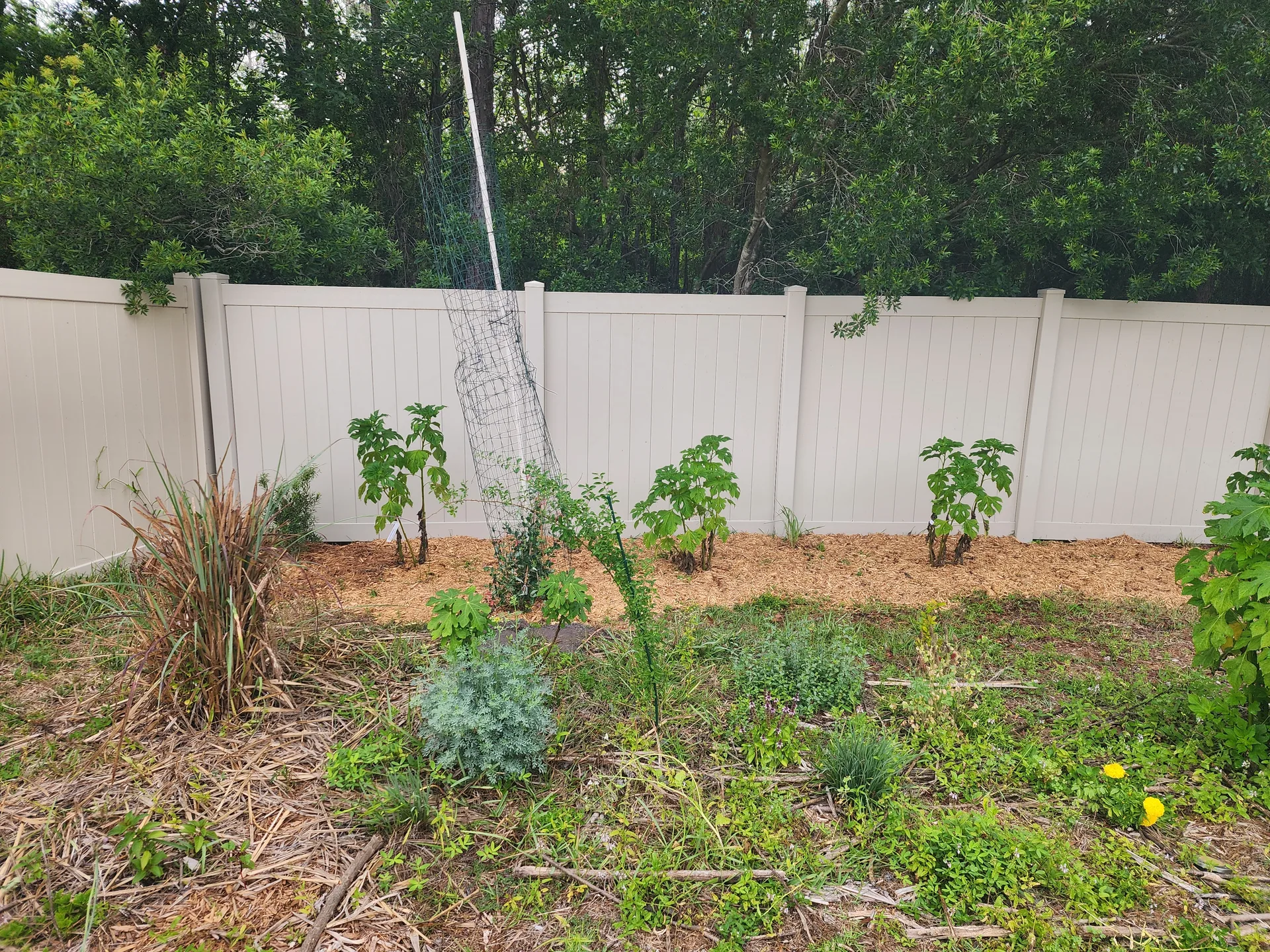
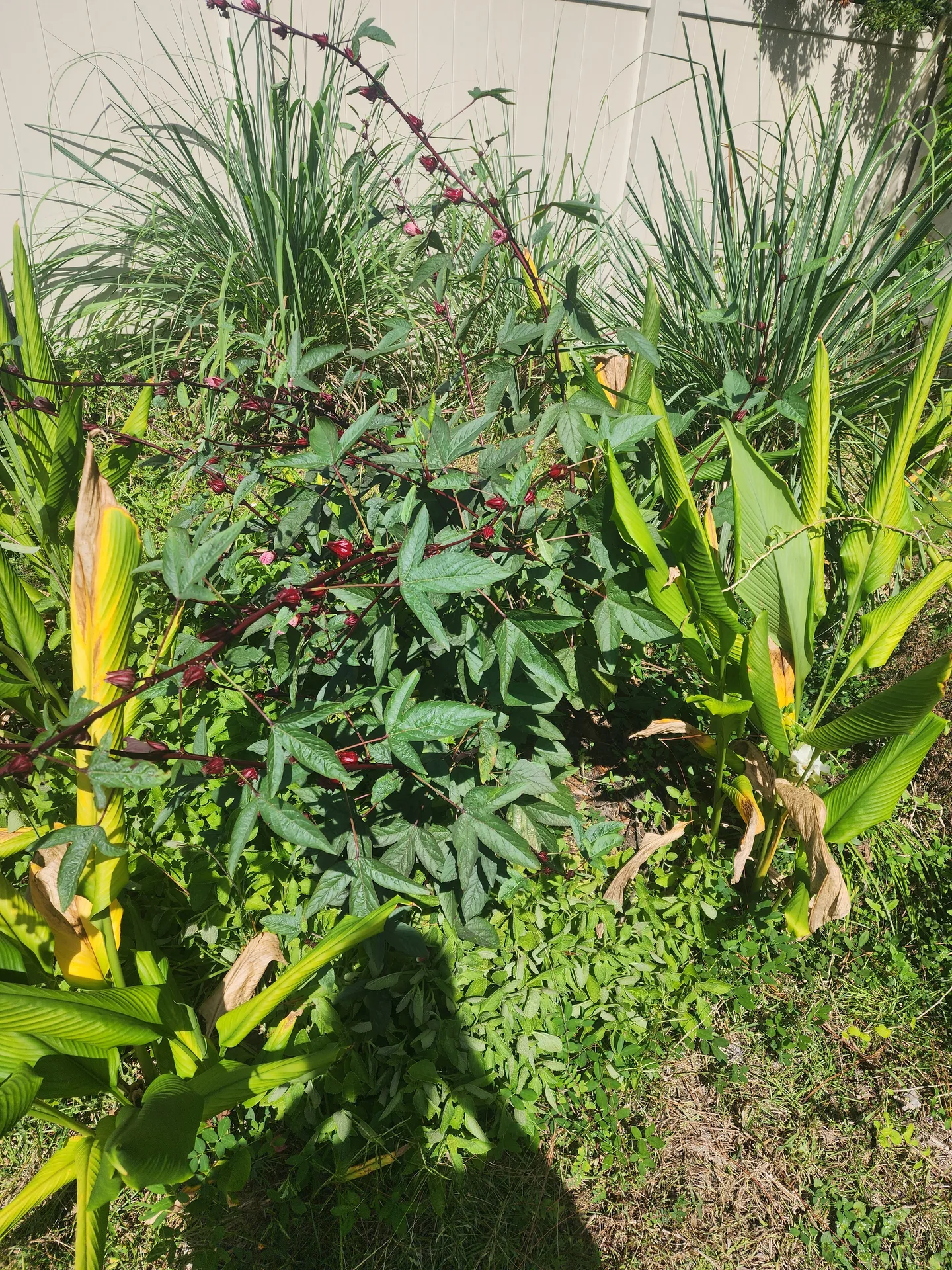
Year 3 — November 2025
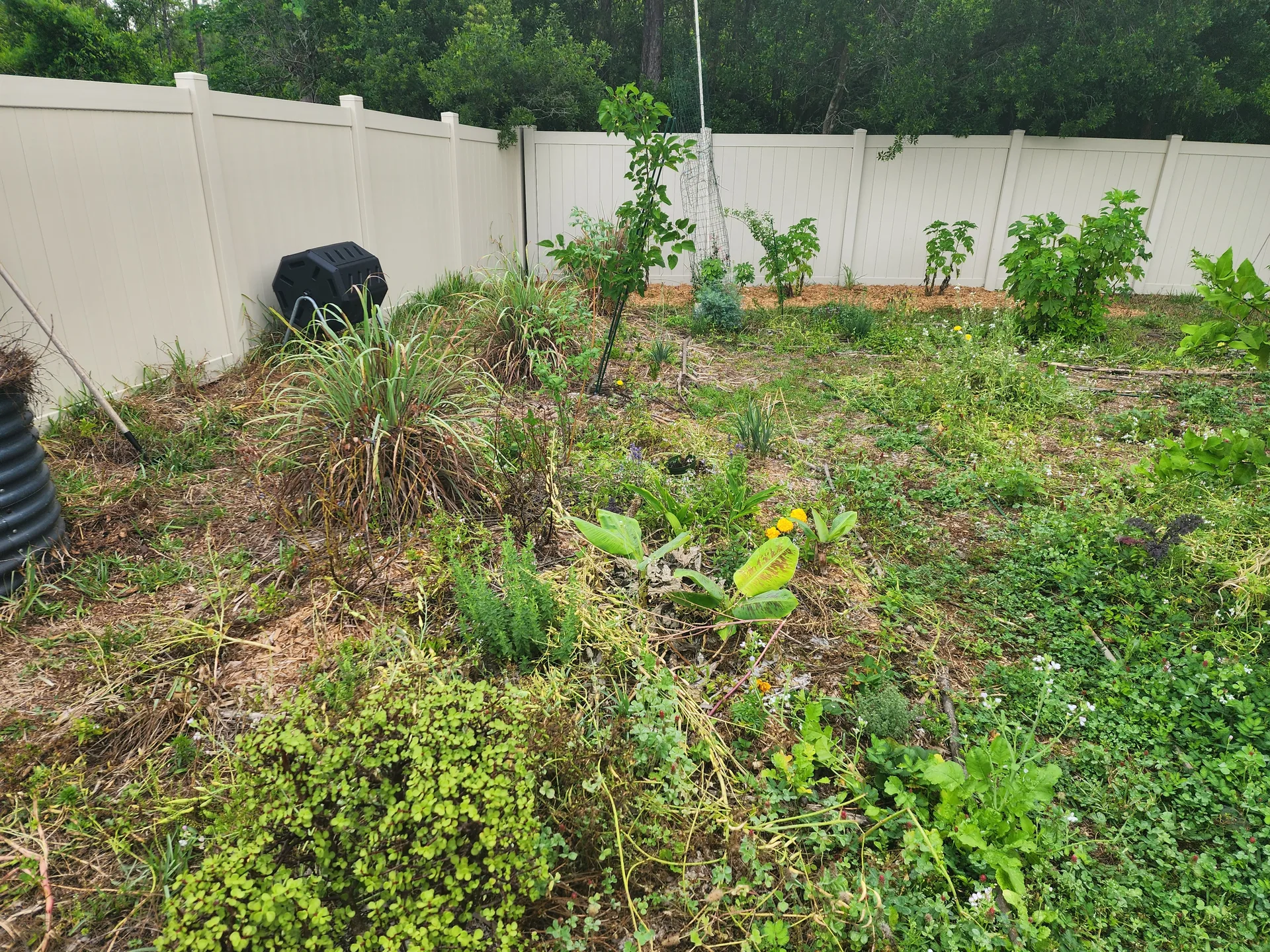
Thriving on Neglect
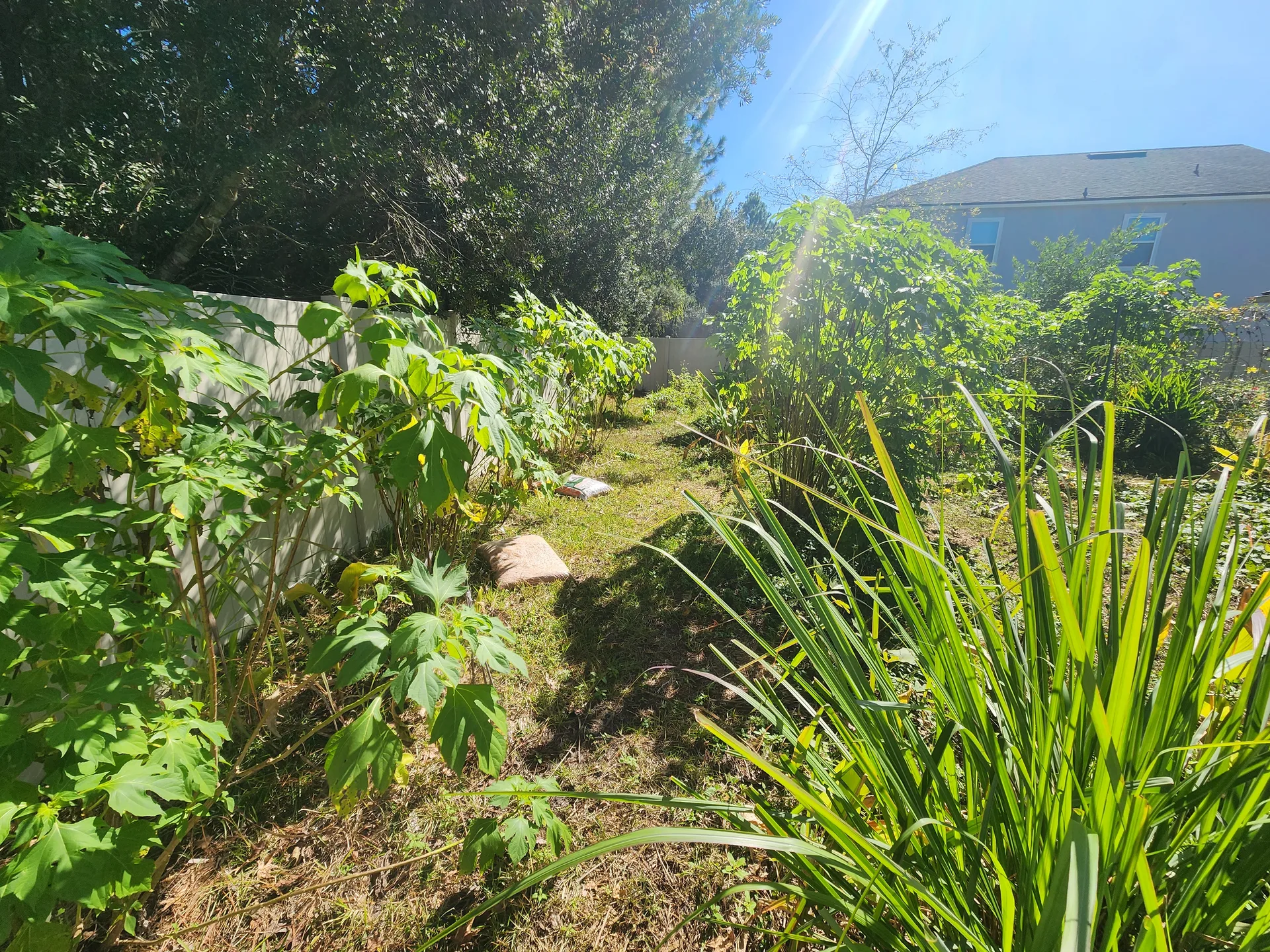
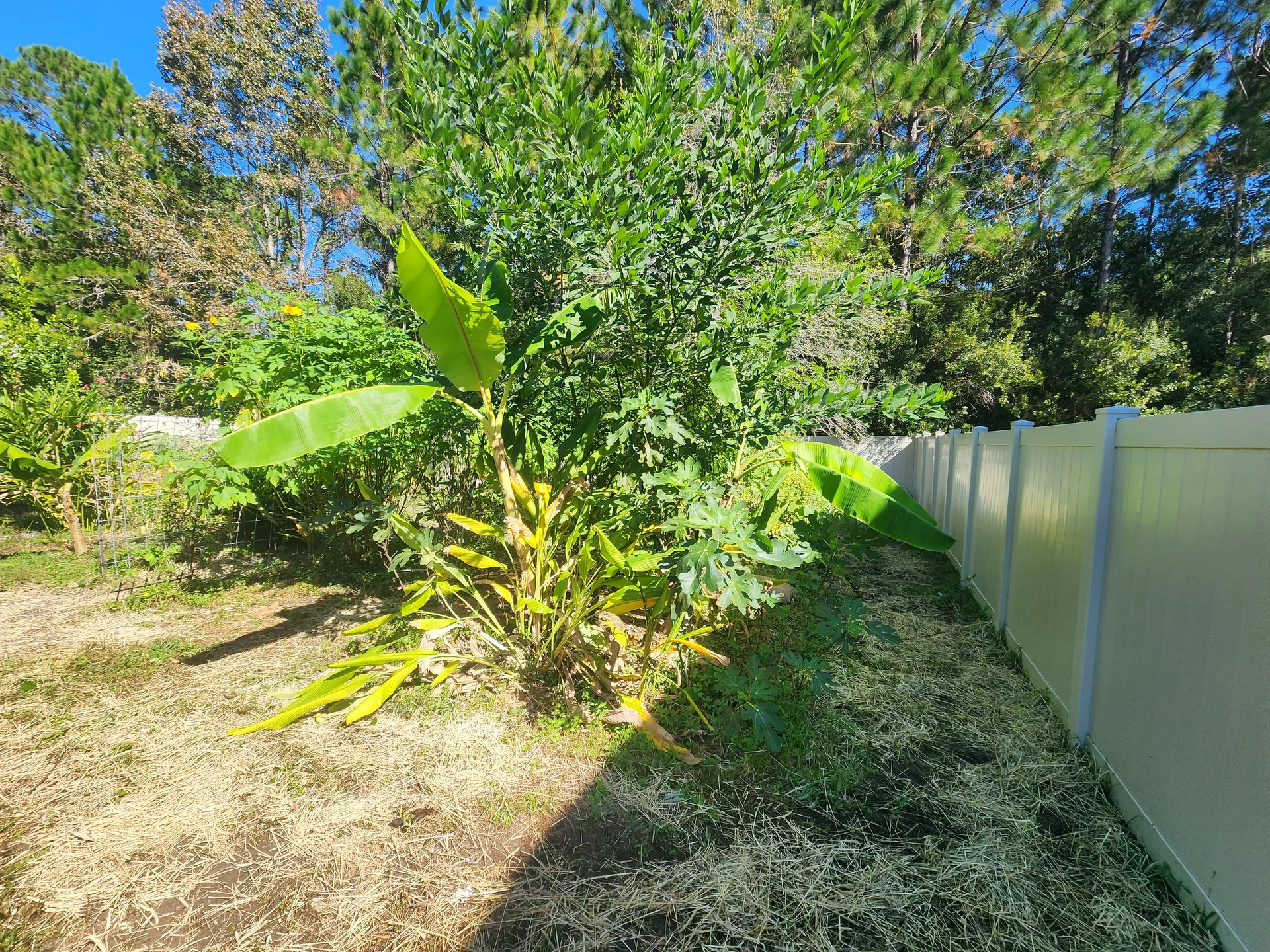
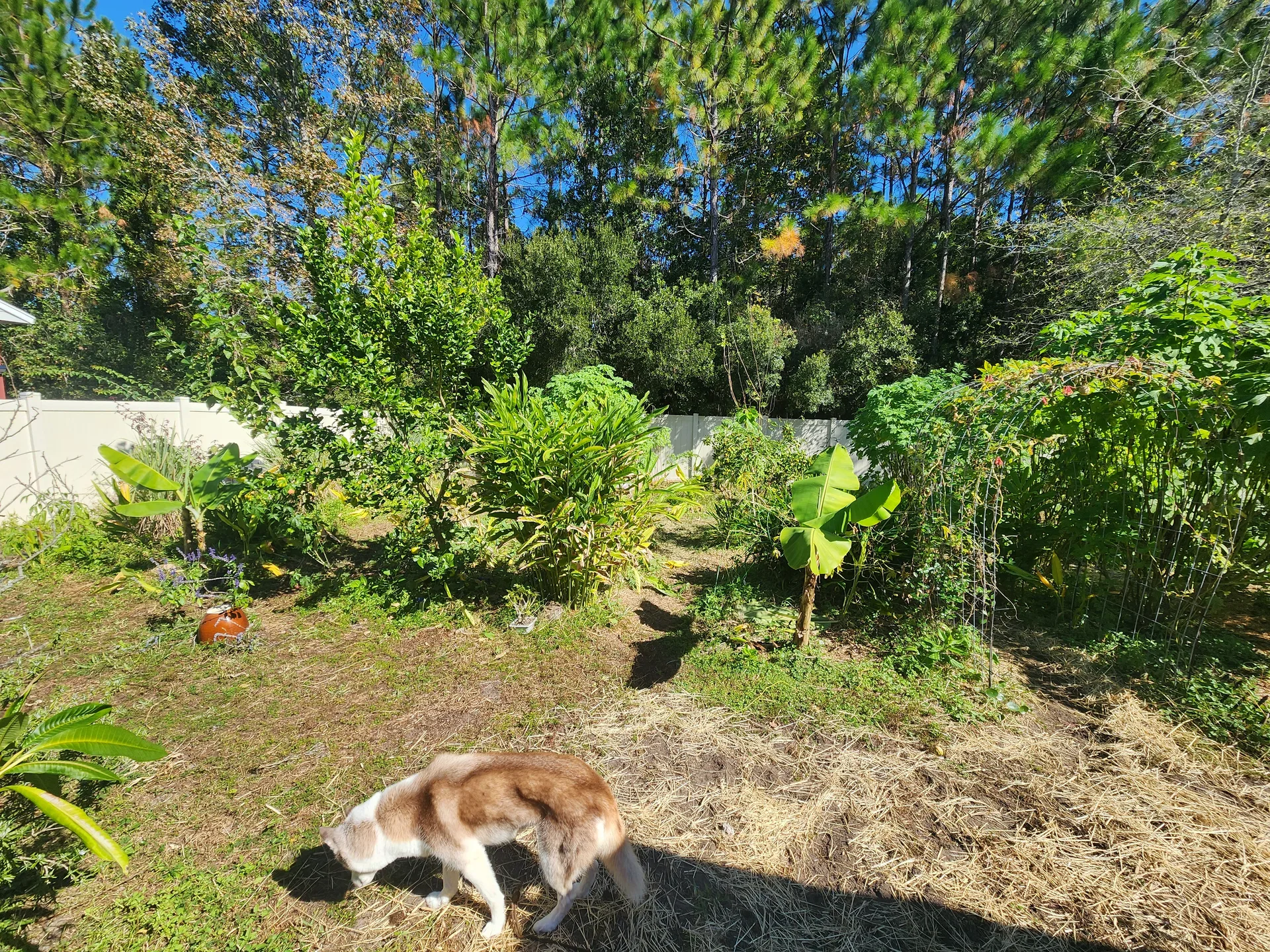
By fall 2025 the strategy had shifted: feed the system with the system. Almost every Tithonia used as chop-and-drop. Lemongrass too. No more buying mulch. No more inputs. The nitrogen fixers stacked around the Lemon Tree were visibly paying off — it got massive. The drought conditions that summer were handled better than expected.
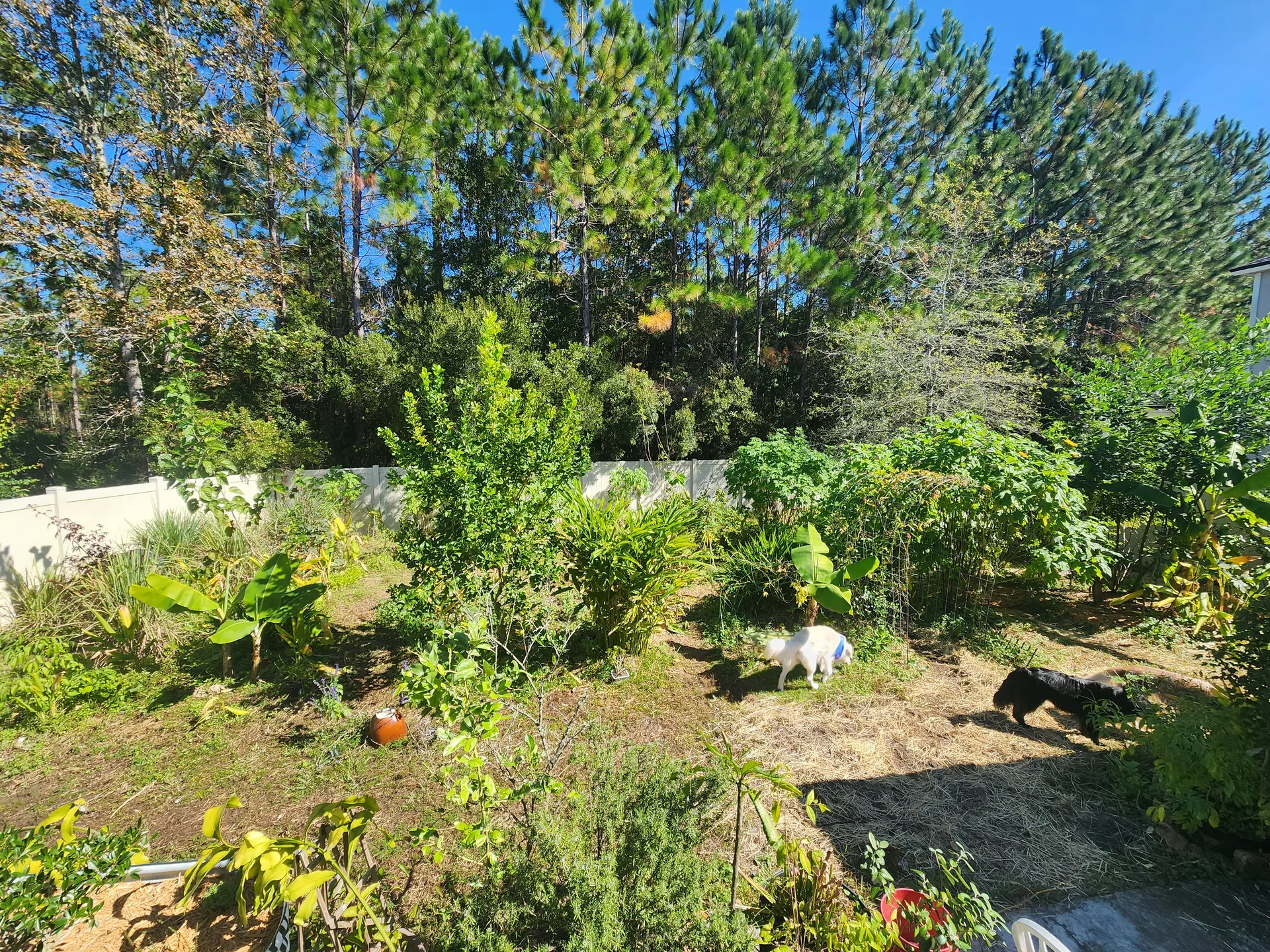
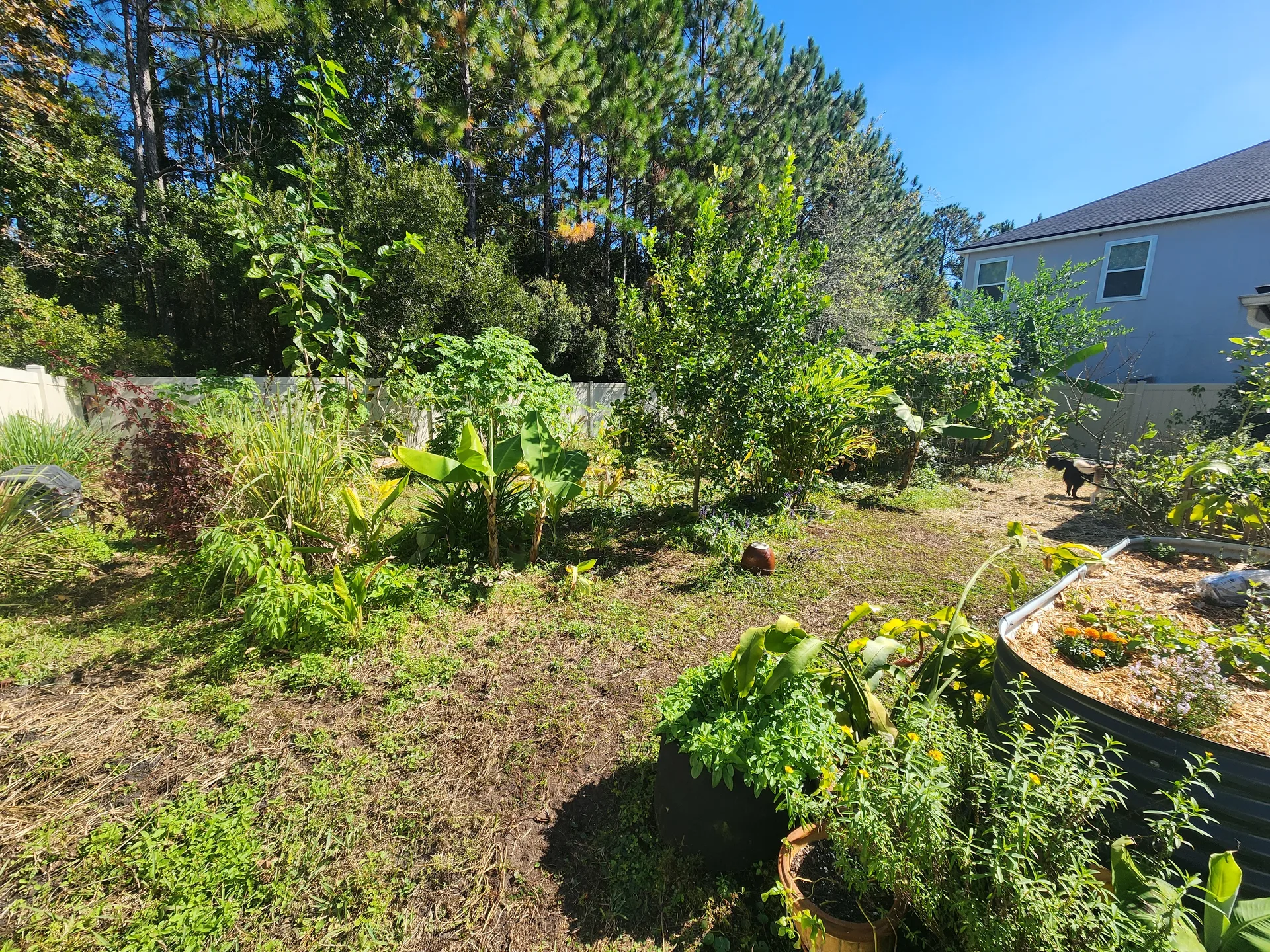
Current — April 2026
Year 3 State of the System
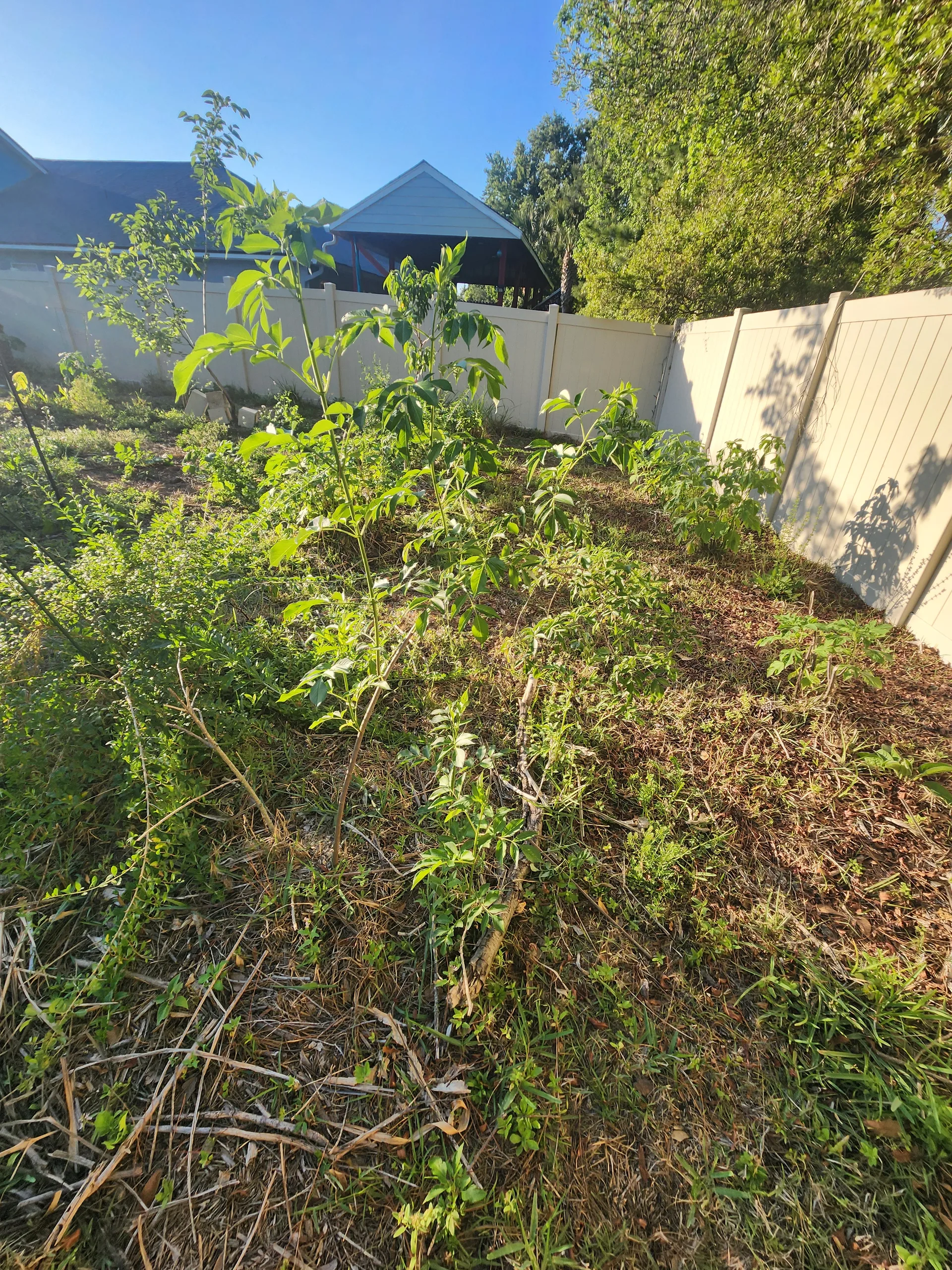
Spring flush after another cold winter for this area. Goji and Elderberry doing great the Goji got massive. The Tithonia rows are all making a comeback and I can see the starts of the Okinawa and Longevity Spinach coming back. All of my Lemongrass clumps are making a comeback. It will be a slow creep until summer.
The Record
Monthly Timeline
75 photos across 3 years. The full record of what happened, when, and why.
What's Growing
Species List
3 worm bins
Compost system
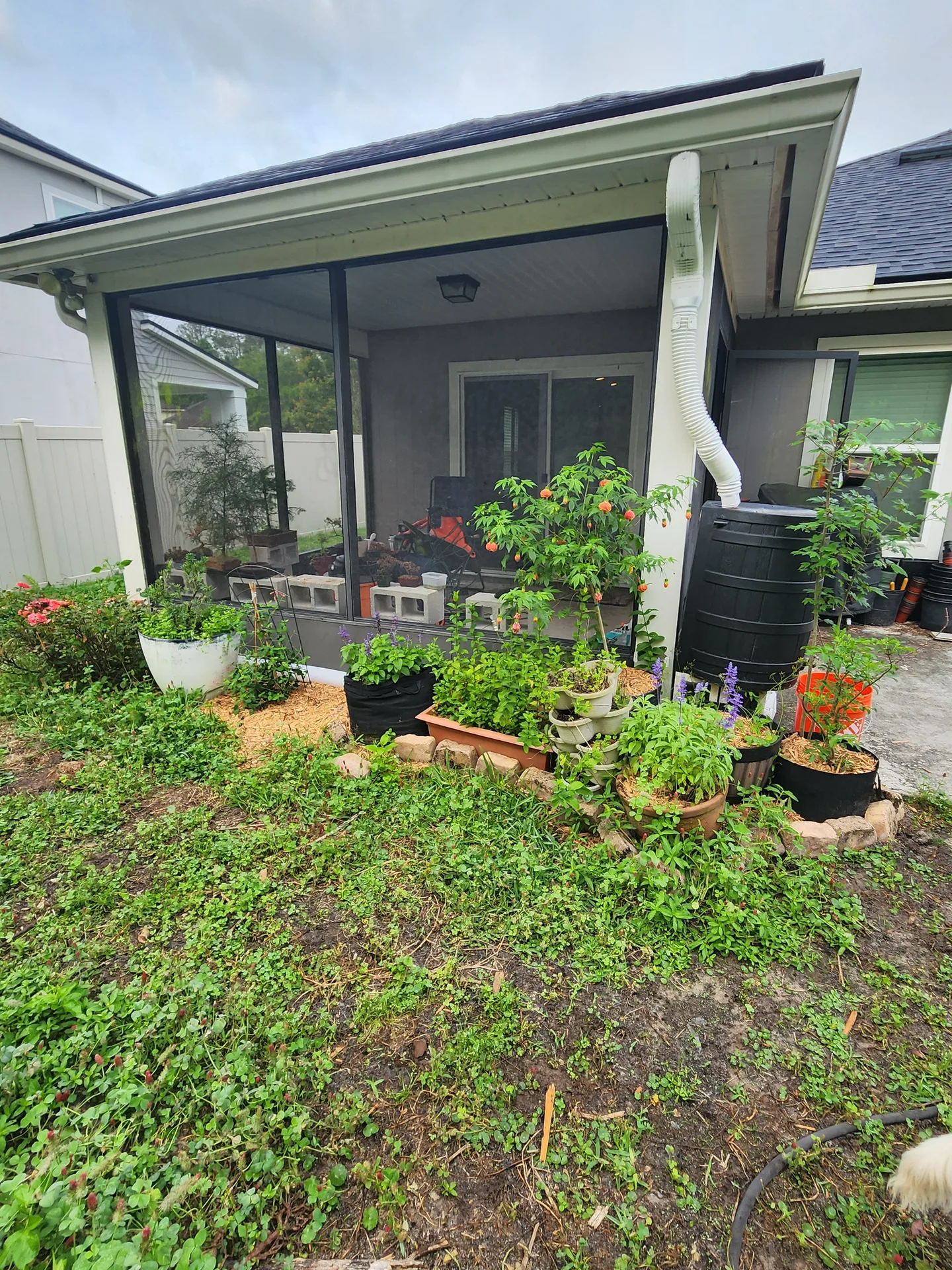
Rainwater collection
* Singapore Daisy — invasive, not recommended
The Honest Part