About
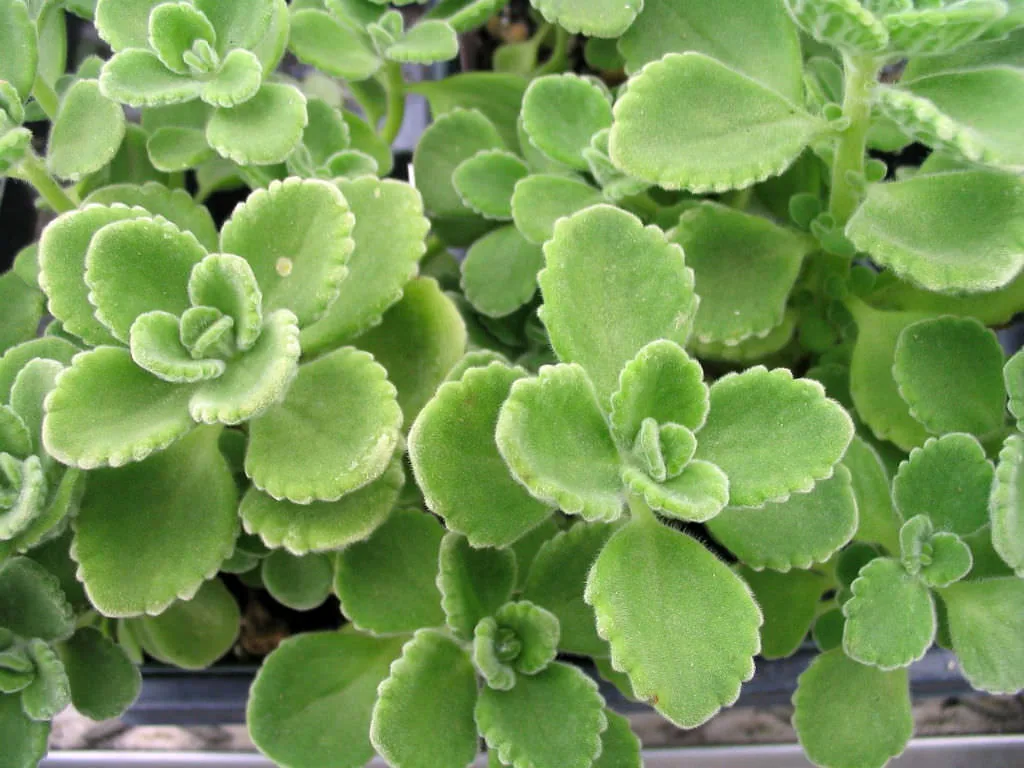
Cuban oregano (*Coleus amboinicus*) is a semi-succulent perennial herb native to southern and eastern Africa. It features thick, fleshy, and aromatic leaves covered with fine hairs, emitting a strong fragrance reminiscent of oregano with hints of thyme and turpentine. The plant typically grows up to 45 cm in height and spreads widely, making it suitable as a ground cover or container plant. It produces small, tubular flowers in shades of pink, white, or lavender. Cuban oregano thrives in well-drained soil with full sun to partial shade and requires protection from frost, as it is sensitive to cold temperatures. Sun: Prefers full sun but tolerates partial shade; in hot climates, some afternoon shade can prevent leaf scorching. Water: Requires well-drained soil; water sparingly once established, allowing the soil to dry out between waterings to prevent root rot. Stem Cuttings: Take 10-15 cm cuttings from healthy, non-flowering stems. Remove the lower leaves and plant the cuttings in well-draining soil. Keep the soil moist until roots develop, typically within 2-3 weeks. Division: Mature plants can be divided in spring. Carefully separate the root ball into sections, ensuring each section has healthy roots and shoots, then replant immediately. Harvest leaves as needed throughout the growing season. For the best flavor, pick leaves in the morning after the dew has dried. Regular harvesting encourages bushier growth and prevents flowering, which can alter the flavor of the leaves.
Permaculture Functions
- Edible: Coleus amboinicus leaves are thick, succulent, and carvacrol-heavy -- one leaf perfumes a whole pot of black beans; fry briefly to tame turpentine top-notes before wrapping fish in banana leaf.
- Medicinal: Indian borage leaf poultice shows up in Caribbean and African kitchens for coughs and minor skin irritation -- high volatile oil means do not mirror those recipes on infants or broken skin without modern safety review.
- Pollinator: Pink to lavender two-lipped tubes on mature stems feed honeybees in dry-season mornings when humidity drops -- plants bloom more if you stop tip-pruning for two weeks and accept softer flavor in those leaves.
- Ground Cover: Succulent stems layer eighteen inches (45 cm) high on dry berms, shading soil where true oregano would crisp -- frost nips top growth in zone 8; mulch crowns after first yellowing if you want spring return from roots.
Field Observations
- No field observations yet
Threats & Pressure