About
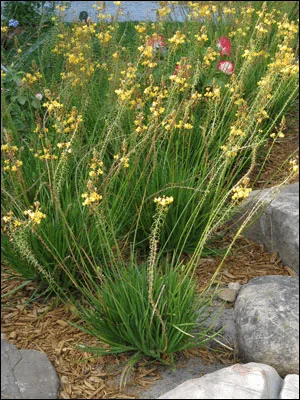
Bulbine frutescens is a succulent perennial native to South Africa, forming dense clumps of fleshy, grass-like leaves. It produces tall flower stalks adorned with star-shaped yellow or orange flowers, blooming primarily in spring and late summer. The plant's resilience and low-maintenance nature make it a popular choice for xeriscaping and ornamental gardens. Prefers full sun but can tolerate partial shade. Drought-tolerant once established; requires well-drained soil to prevent root rot. Propagation is typically done through division of clumps or by planting seeds. Divisions can be made during the active growing season. Leaves can be harvested year-round for medicinal uses. Flowers can be picked during their blooming periods for ornamental purposes.
Permaculture Functions
- Edible: Bulbine frutescens leaf gel slips into salads in small amounts -- where South African kitchens treat it like mild cucumber, not a bulk calorie crop.
- Medicinal: Mucilage from split leaves cools fresh burns and chigger bites in field first-aid the same afternoon you scrape yourself on wire, test skin patch first -- if you are reactive.
- Ground Cover: Succulent clumps spread by short stolons in zone 10 rock gardens -- tolerating weeks without rain once rooted between agaves.
- Wildlife Attractor: Yellow or orange star flowers on wiry spikes feed honeybees all warm season -- if you deadhead spent racemes monthly.
Threats & Pressure