About
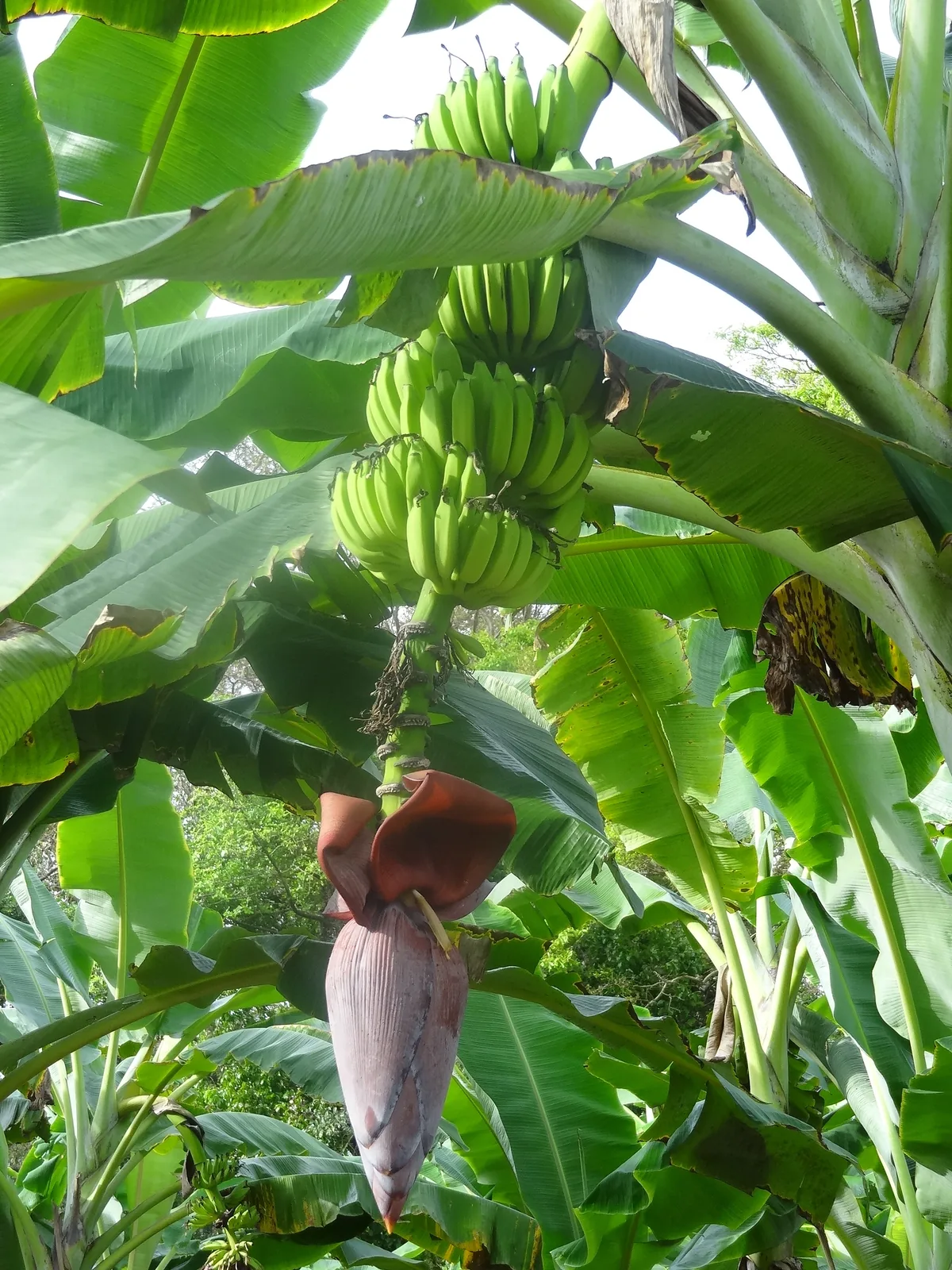
The banana (*Musa* species) is a fast-growing, herbaceous perennial native to tropical regions. Despite its tree-like appearance, it is classified as the world's largest herb. The plant features a pseudostem formed by tightly packed leaf bases, reaching heights of 2–9 meters (6.5–30 feet), depending on the variety. Large, oblong leaves can grow up to 3.5 meters (11.5 feet) long and 1 meter (3.3 feet) wide. The inflorescence, known as the banana heart, develops into clusters of fruits called hands, each comprising numerous fingers (bananas). Suckers (Pups): The primary method of propagation is through suckers that emerge from the base of the mother plant. Select healthy pups approximately 1 meter (3.3 feet) tall with well-developed roots. Carefully separate them from the mother plant and transplant them to the desired location. Division: In some cases, division of the rhizome can be employed. This involves cutting sections of the underground rhizome, each containing at least one bud, and planting them separately. Sun: Bananas thrive in full sun, requiring at least 12 hours of direct, bright sunlight daily. While they can tolerate partial shade, optimal fruit production occurs with maximum sun exposure. Water: These plants have high water requirements due to their large, moisture-rich leaves. Maintain consistently moist soil, ensuring it is well-drained to prevent waterlogging. Inadequate watering can lead to reduced growth and fruit quality. Fruits: Bananas are typically ready for harvest 75–80 days after flowering. The fruit bunches are harvested when the individual bananas are plump and the ridges have rounded off, but while still green. Post-harvest, they ripen off the plant. Regular monitoring is essential to determine the optimal harvest time, as environmental factors can influence the maturation period.
Permaculture Functions
- Edible: Dessert hands finish ripening off the stalk after the flowering stem fruits; starchy cooking types stay firm for boiling, frying, or twice-cooking while still green or yellow -- flavor depends on cultivar, not just color.
- Mulcher: Whole leaves longer than a person shred into mulch that knits a humid microclimate under ginger, turmeric, or young fruit trees -- rots to dark organic matter within one wet season in the tropics.
- Animal Fodder: Pseudostem pith and chopped leaves are standard roughage for cattle and pigs across humid lowlands -- potassium-rich sap replaces part of the mineral lick where importing hay is costly.
- Windbreaker: Clumps planted on the windward row deflect salt spray and steady trade-winds across low vegetables -- fills the gap for the first years before slower hardwood windbreaks mature.
- Border Plant: Suckering mats screen sheds, tanks, and neighbors within two seasons -- each fruiting trunk is replaced by a chosen pup at ground level after harvest.
Field Observations
- No field observations yet
Companion Planting
Threats & Pressure