About
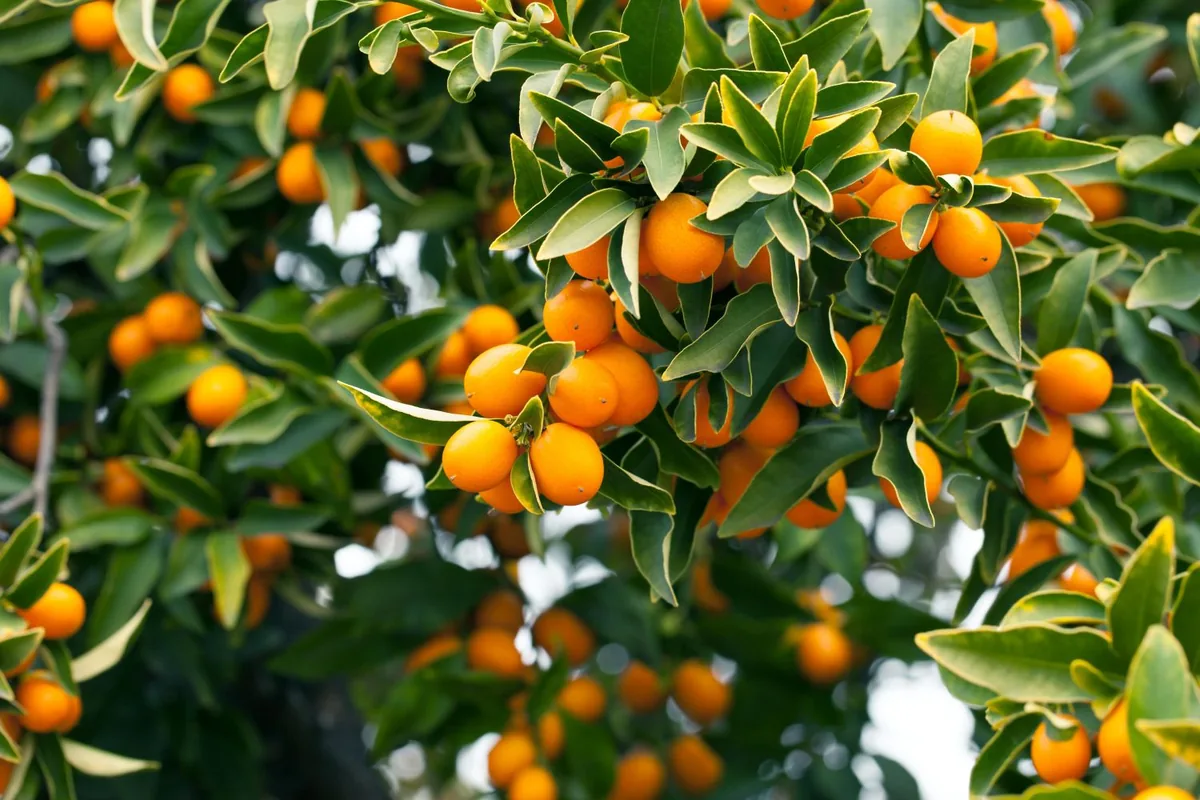
The Kumquat is a small, evergreen tree or shrub, typically reaching heights of 2.4 to 3.6 meters (8 to 12 feet). It features glossy, dark green leaves and bears fragrant white flowers, either singly or in clusters. The bright orange-yellow fruits are oval or round, measuring about 2.5 centimeters (1 inch) in diameter. Unique among citrus, the sweet, edible peel contrasts with the tart flesh, and the fruit is often consumed whole. Kumquats thrive in well-drained, sandy soils with a slightly acidic to neutral pH. Kumquats require full sun exposure, needing at least 6 to 8 hours of direct sunlight daily. They prefer consistent moisture but are sensitive to waterlogged conditions. Regular watering is essential, especially during dry periods, to maintain soil moisture without oversaturation. Propagation is commonly achieved through grafting onto compatible rootstocks to ensure desired fruit characteristics and disease resistance. Seed propagation is possible but may not produce true-to-type plants and can result in variable fruit quality. Harvesting typically occurs from late fall to early spring, depending on the variety and local climate. Fruits are ready to pick when they have developed full coloration and detach easily from the branch with a gentle twist.
Permaculture Functions
- Edible: Whole one-inch fruit pops sweet peel then sour pulp -- marmalade with sliced rounds shows cross-section stars; ‘Nagami’ elongate, ‘Meiwa’ rounds run sweeter with less acid snap.
- Medicinal: Peel oil is gentler than lemon for some upset-stomach teas -- still watch citrus-drug interaction lists if you are on statins or calcium channel blockers at prescription doses.
- Pollinator: Single white perfumed flowers along twigs open before spring vegetables need bees -- giving early forage between January citrus bloom waves in central Florida.
- Wildlife Attractor: Sparrows pick split fruit after freeze-thaw cycles -- dense small canopy gives winter cover for songbirds along fencerows thinner than orange blocks.
- Border Plant: Naturally compact habit eight to twelve feet fits espalier wires on tight suburban lots -- where standard orange would eat the sidewalk in a decade.
Field Observations
- No field observations yet
Companion Planting
- Walnut
Threats & Pressure