About
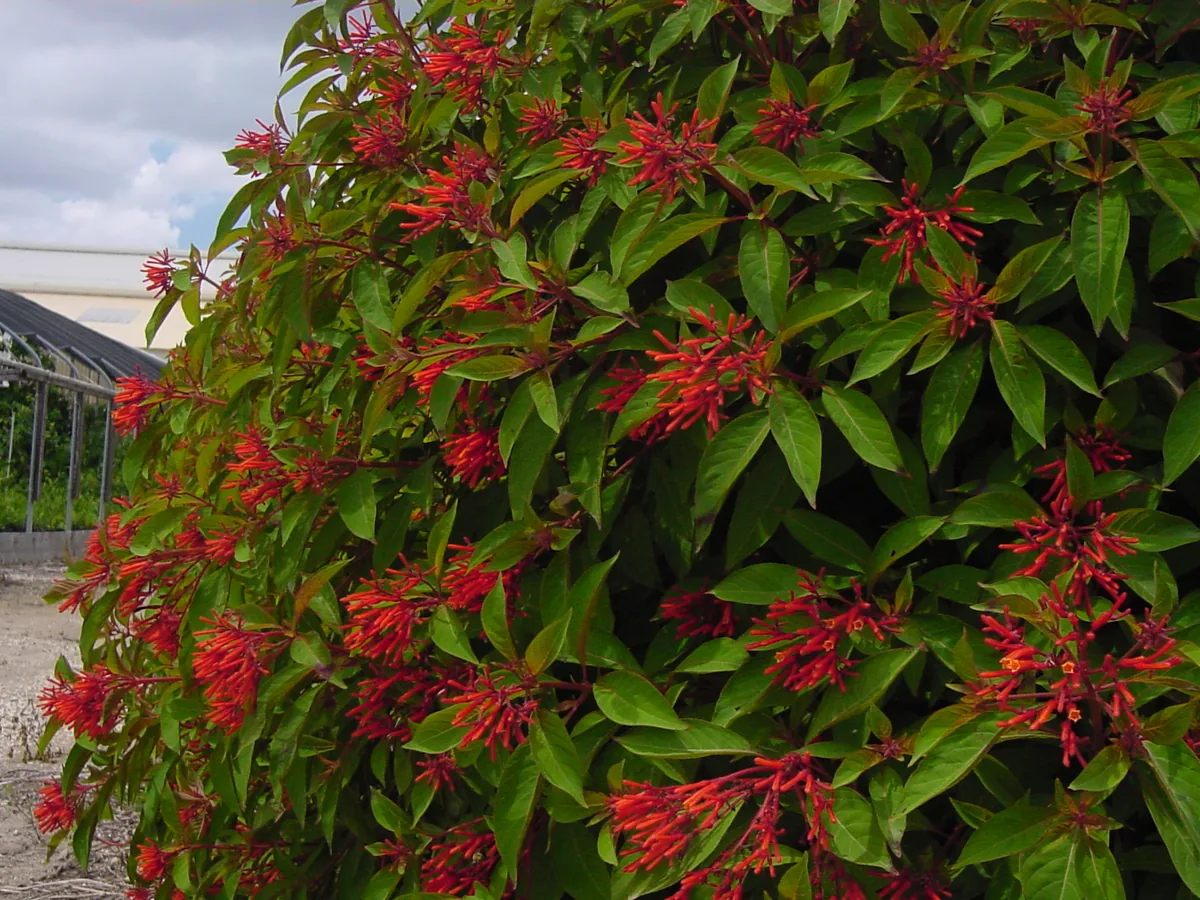
Firebush (*Hamelia patens*) is a fast-growing, evergreen shrub native to Florida, the West Indies, and parts of Central and South America. It typically reaches heights of 6 to 12 feet (1.8 to 3.6 meters) and spreads 5 to 8 feet (1.5 to 2.4 meters) wide. The plant features whorled, ovate leaves that are 4 to 8 inches (10 to 20 centimeters) long, displaying a green color with red or purple speckles, especially in new growth. Its vibrant orange-red tubular flowers, measuring 1 to 1.5 inches (2.5 to 3.8 centimeters) in length, bloom profusely at the tips of branches throughout the year in warm climates. These flowers are highly attractive to hummingbirds and butterflies. Following the flowering period, small, glossy, dark red to black berries develop, which are favored by various bird species. Seeds: Sow fresh seeds in well-draining soil. Germination typically occurs within a few weeks. Cuttings: Semi-hardwood cuttings taken in late spring or early summer can root successfully when placed in a humid environment. Air Layering: This method can be employed during the growing season to encourage root development on the plant before detaching the new specimen. Sun: Prefers full sun for optimal flowering but can tolerate partial shade, though with reduced blooms. Water: Once established, firebush is moderately drought-tolerant. Regular watering promotes lush growth, but the plant can withstand occasional dry periods. Flowers and Leaves: Can be harvested as needed throughout the year for medicinal uses. Fruits: Berries ripen to a dark red or black color and can be harvested when fully mature, typically in late summer to fall.
Permaculture Functions
- Pollinator: Orange-red tubular corollas run nectar all year in frost-free sites -- ruby-throats and black-chinned hummingbirds defend individual shrubs like toll booths on migration flyways.
- Wildlife Attractor: Glossy black berries ripen after heavy bloom cycles and feed mockingbirds and catbirds -- while dense branching gives small birds escape cover from hawks near feeders.
- Medicinal: Leaf poultice shows up in Caribbean folk practice for minor fungal skin annoyances -- latex can irritate cuts; do not self-treat open wounds when heat and humidity already favor infection.
- Border Plant: Responds to hard shearing into formal hedge in coastal HOA plantings or grows loose six-to-twelve-foot fountain of bronzy new growth and year-round red tubes -- if you skip hedge clippers and accept wider footprint.
Field Observations
- No field observations yet
Companion Planting
Threats & Pressure