About
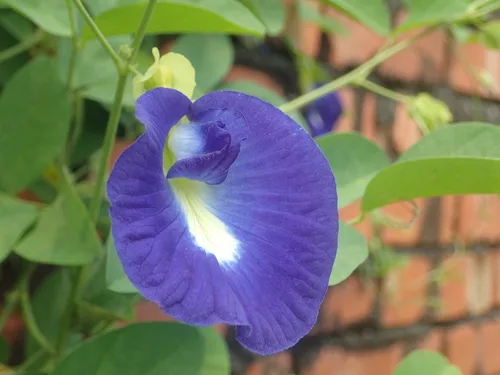
Butterfly pea (Clitoria ternatea) is a twining legume vine from tropical and subtropical Asia, now widely grown across the Americas for electric-blue flowers, tender shoots, and protein-rich flowers used in drinks and rice coloring. Compound leaves and slender stems reach roughly 2–3 meters (6–10 feet) on a trellis in one warm season, with daily blooms that age from deep indigo toward violet. It earns a spot in food forests and kitchen gardens as a nitrogen partner, pollinator magnet, and conversation piece that still behaves like a crop if you harvest on a rhythm. Full sun for heaviest flowering; light partial shade is tolerated in hottest subtropical summers. Moderate water during establishment; somewhat drought-tolerant once roots run deep but not a desert specialist. Well-drained, fertile loam suits it best; cold, wet crowns invite decline anywhere frost lingers. Seeds: nick or soak overnight, then sow after soil stays above roughly 65°F (18°C); germination often in 1–2 weeks in warm media. Cuttings: semi-hardwood tips in warm wet season root quickly under humidity domes or mist. Direct transplant of peat-grown seedlings once frost risk is past in marginal areas treated as annual production. Pick open flowers early in the day for peak color in teas and syrups; frequent picking extends the flush. Young tips and small leaves can enter stir-fries like other legume greens where culinary tradition supports it. Dry flowers on screens out of direct sun for pantry-stable dye jars through the off-season.
Permaculture Functions
- Edible: Clitoria ternatea flowers blanch rice electric blue -- while young tips stir-fry like bean sprouts if you harvest before vines lignify in late summer.
- Medicinal: Aerial parts steep into Malay -- and Thai cool teas marketed for memory support, still a food-tea dose unless labs standardize your backyard batch.
- Nitrogen Fixer: Root nodules on twining stems fix enough nitrogen for the vine’s own rank growth -- showing up as dark green leaf color when inoculum is present in warm soil.
- Pollinator: Open banner-and-keel flowers reset daily -- so carpenter bees work the same trellis all morning during humid tropical bloom months.
- Wildlife Attractor: Pea blue and long-tailed skipper larvae chew leaflets on sunny trellis faces -- so leave a sacrificial vine end if you want butterflies more than perfect foliage.
- Ornamental: Indigo vines with white eye markings climb 3 m bamboo poles in one season -- giving vertical color without waiting years for passionflower wood.
Field Observations
- Flowers fade from sapphire toward mauve naturally—if your product pitch needs neon forever, you are marketing against biology.
- Overfed vines push leaves over flowers; a leaner diet often reads as more blooms in humid tropics and subtropics.
- Rotate climbing supports every few years if old twine traps moisture against wood posts.
Companion Planting
- Heavy self-seeding in frost-free years can demand deadheading if you dislike volunteers.
Threats & Pressure