About
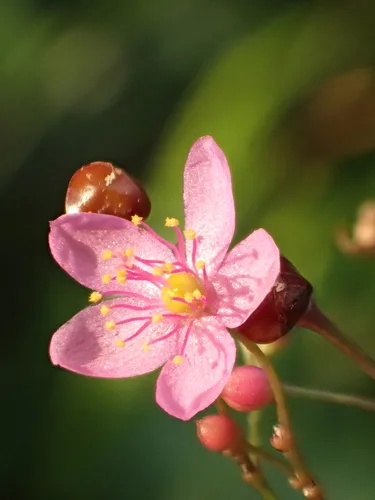
Jewel of Opar (Talinum paniculatum) is a succulent-flavored herbaceous perennial from Central America and the southern United States, beloved for lime-green leaves, airy panicles of tiny pink flowers, and jewel-like seed pods that catch light like beads on a string. Plants form loose mounds roughly 30–60 cm (12–24 inches) tall and wider with age in lean, sunny beds. Young leaves read like mild purslane in texture; mature plants shift energy into showy inflorescences that belong in the ornamental-edible border where drought honesty is a virtue. Full sun keeps stems stiff and flowering honest; shade invites lank growth and fewer sparkles. Drought-tolerant once established; water deeply then let soil approach dry between irrigations rather than misting daily. Sharp drainage is non-negotiable—gritty mix or raised beds beat soggy clay that cooks crowns in warm wet winters. Seeds: surface sow in warm trays; light aids germination, usually within 1–2 weeks at roughly 70–80°F (21–27°C). Soft tip cuttings in warm months root in perlite or sand with gentle bottom heat. Division of older clumps after the dry season break resets woody bases and multiplies planting stock. Snip young leaves before flowering for the tenderest kitchen trials; flavor intensifies as plants age. Harvest decorative seed stems when capsules color but before they shatter if you want clean arrangements or saved seed. Shear spent inflorescences in long-season climates to encourage another flush before short days slow growth.
Permaculture Functions
- Edible: Talinum paniculatum young leaves taste mildly of purslane -- nibble small amounts from known plants because Talinum spp. vary in oxalate load and positive ID matters before salad scale-ups.
- Ornamental: Lime foliage, pink mist inflorescences, and copper seed capsules catch low sun through summer -- reads jewelry-like on dry berms where thirsty annuals crisp.
- Pollinator: Minute pink flowers offer nectar to small halictid bees and syrphid flies -- bloom bridges the gap between spring bulbs and autumn asters in xeric borders.
- Wildlife Attractor: Dense insect traffic draws crab spiders and predatory wasps into the same bed -- good guild chemistry if you want biocontrol without buying insects by mail.
- Border Plant: Loose mounds edge paths at knee height without shading neighbors -- shear woody bases every few years so centers do not hollow out in frost-free climates.
- Ground Cover: Fibrous roots spread laterally in gritty soil, knitting mulch without turf -- fails in wet winter clay that rots succulent crowns overnight.
Field Observations
- If leaves taste soapy to you, skip the salad chapter—plenty of people keep it purely ornamental without filing complaints with the plant.
- Seedpods photograph metallic; harvest stems before full shatter or you will find babies in every crack next wet season.
- Older wood at the base looks ugly before it looks wise—divide when the center goes bald.
Companion Planting
Threats & Pressure