About
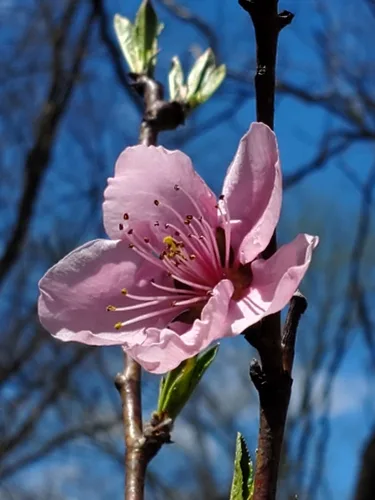
The peach tree (Prunus persica) is a deciduous stone fruit species from northwest China, naturalized and bred across temperate to warm-temperate belts of the Americas for juicy drupes with fuzzy skin (or smooth in nectarine forms). Standard trees may reach roughly 4–6 meters (13–20 feet) on seedling roots, while modern rootstocks keep crowns smaller for ladders, light, and spray-threshold honesty. Bark is glossy reddish-brown when young; spring bloom is pink to rose before leaves fully expand, making peaches a seasonal signal in orchards and backyard rows alike. Full sun drives fruit sugar and disease recovery—shade yields leafy disappointment. Deep, infrequent irrigation beats chronic sprinkle patterns that only flirt with roots. Well-drained loam limits phytophthora drama; heavy soils demand berming or species honesty about replant stress. Grafting onto labeled rootstocks is the practical path for known cultivars, chill requirement, and tree size. Budding in late summer pairs scion wood with active cambium on compatible Prunus understocks. Seeds grow trees but fruit quality roulette is real—use for rootstock experiments, not promised dessert. Pick when background color lightens and fruit yields slightly to gentle pressure; aroma beats Instagram gloss for flavor truth. Process windfalls fast—peaches wait for no one's calendar. Summer prune after harvest in humid climates to reopen canopy and reduce brown-rot microclimate.
Permaculture Functions
- Edible: Prunus persica melting and non-melting flesh types ripen from background color break and slight yield for canning, drying, grilling, and out-of-hand juice bombs -- thin fruitlets hard so remaining peaches size beyond brown-rot magnets.
- Medicinal: Peach kernel preparations supply amygdalin controversies in folk cancer lore while flowers appear in Chinese cooling teas -- keep internal medicinal use inside professional toxicology guidance because cyanogenic compounds are not kitchen seasoning.
- Pollinator: Pink five-petaled flowers mass before full leaf expansion, feeding honeybees and orchard mason bees during early warm snaps -- avoid dormant oil on open bloom unless you enjoy zero fruit set jokes.
- Wildlife Attractor: Ground drops feed raccoons, opossums, and wasps unless picked daily -- combine tree skirts with livestock poultry for cleanup crews or accept larval surprises in windfalls.
- Mulcher: Summer pruning pulls pounds of leafy biomass for alley compost while autumn leaf drop mulches own roots if mowers stay away from trunks -- chip twigs fine so termites find dinner elsewhere.
- Dynamic Accumulator: Fine feeder roots explore drip-line mulch bands returning potassium to surface litter from subsoil moisture lenses -- pair with comfrey outside the collar rot zone to lift complementary minerals.
- Border Plant: Dwarfing rootstocks line driveways and food-forest shoulders at human scale while standard seedlings mark field corners -- thornless selections still need scaffold spacing so ladders and deer fences coexist.
Field Observations
- No field observations yet
Companion Planting
- Black Walnut — juglone and related allelopathy from walnut-family neighbors stress many Prunus roots; keep separation literal.
Threats & Pressure