About
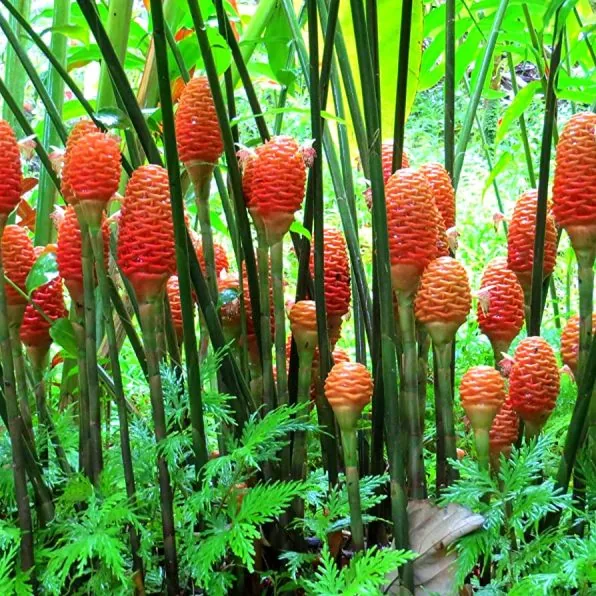
Shampoo Ginger (*Zingiber zerumbet*) is a tropical perennial native to Southeast Asia, recognized for its lush, lanceolate leaves and distinctive, pinecone-shaped inflorescences. The plant typically grows to heights of 1.2 to 1.8 meters, forming dense clumps. In late summer to early fall, it produces green cone-like bracts that mature to a vibrant red, exuding a fragrant, soapy liquid traditionally used as a natural shampoo. The plant thrives in warm, humid environments and prefers nutrient-rich, well-draining soil with consistent moisture. Propagation is primarily achieved through division of rhizomes. Sections of the rhizome with at least one bud are planted in well-draining soil during the spring. Prefers partial shade but can tolerate full sun in areas with high humidity. Requires consistently moist soil; regular watering is essential, especially during dry periods. The rhizomes can be harvested in late fall when the above-ground parts begin to die back. The red inflorescences, used for their aromatic liquid, are best harvested when fully matured and vibrant in color.
Permaculture Functions
- Medicinal: Zingiber zerumbet aromatic cone bracts ooze fragrant juice still bottled as hair rinse across Pacific islands -- topical use differs from chewing rhizomes for digestive bitters, so separate folk streams before dosing.
- Edible: Young rhizomes grate into sharper ginger substitute -- while mature pinecone heads dye vinegar pink in Hawaiian kitchen trials.
- Ground Cover: Tall pseudostems shade rhizosphere weeds along pond margins -- without forming a monoculture sod.
- Mulcher: Broad ginger leaves shred into fast-decaying mulch -- feeds turmeric and bananas planted in the same humid guild within one wet season.
- Wildlife Attractor: Red cone bracts dripping nectar lure honeybees and sphinx moths -- blooms through late-season understory gaps when shade plants have finished.
Field Observations
- No field observations yet
Threats & Pressure