About
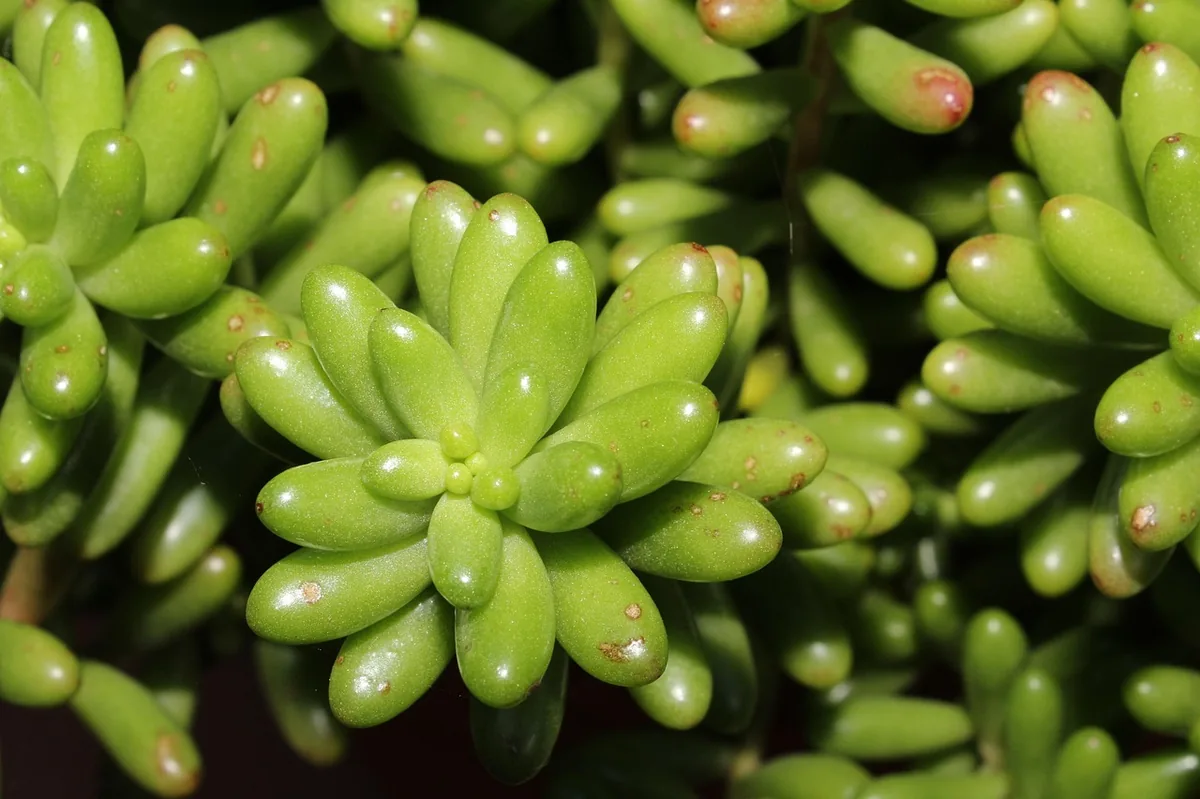
Sedum, commonly known as Stonecrop, comprises a diverse genus of succulent plants characterized by their fleshy leaves and clusters of star-shaped flowers. These plants vary in form, ranging from low-growing ground covers to upright varieties, making them versatile choices for various garden settings. Sedums are renowned for their drought tolerance and ability to thrive in poor, well-drained soils. Their foliage colors range from light green to blue-gray and reddish-bronze, depending on the species and cultivar. Bloom times vary, with some species flowering in late summer to autumn, attracting bees and butterflies to the garden. Sedums prefer full sun to partial shade, requiring at least 6 hours of direct sunlight daily for optimal growth. They are highly drought-tolerant once established and require minimal watering. Overwatering should be avoided to prevent root rot. Sedums can be propagated through division, stem cuttings, or leaf cuttings. Division is best done in spring or fall, while stem and leaf cuttings can be taken during the growing season and rooted in well-drained soil. As ornamental plants, sedums are not typically harvested. However, cuttings for propagation can be taken during the growing season.
Permaculture Functions
- Ground Cover: Sedum spp. mats of bead leaves tile rockery gaps -- weeds lose light before they sprout on thin alpine soils.
- Pollinator: Flat umbels of starry pink-to-yellow blooms open late summer on many stonecrops -- short-tongued bees walk the platforms while butterflies pick the taller telephium types.
- Ornamental: Breeders stack colors from lime gold to mahogany cherry on ground-hugging rosettes -- reads intentional beside stepping stones in dry rockery designs.
Companion Planting
Also mentioned as companions:
- Salvia
Not yet profiled in PermiePortal
- Ornamental Grass