About
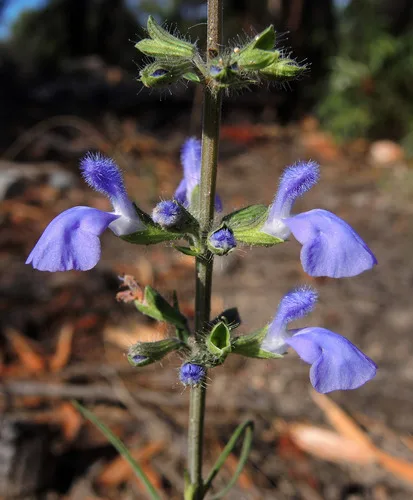
Purple salvia here refers to mealycup sage (Salvia farinacea), a mint-family perennial treated as a tender perennial or seasonal annual depending on winter lows. Upright spikes of violet-blue flowers rise above powdery, often whitish stems that signal its common name, reaching roughly 45–60 cm (18–24 inches) in rich soils and holding shorter in lean ones. It is a workhorse for pollinator strips, pot clusters, and dry borders from warm-temperate through subtropical gardens where humidity does not instantly melt every sage fantasy. Full sun for densest spikes; light partial shade only where afternoon heat is brutal. Moderate water with dry-down between events; soggy winter pots are root-rot receipts. Well-drained soil; tolerates lean mixes better than heavy feeding schedules. Seeds: start indoors 6–8 weeks before stable warm nights or direct sow after frost risk in annual rotations. Softwood cuttings in late spring to early summer root under intermittent mist. Division of older clumps in early wet season where winters are mild resets woody bases. Cut flower spikes for bouquets when two-thirds of florets are open; later cuts hold less stem strength. Harvest edible flowers sparingly with positive mint-family ID if you serve them—aroma, not hype, is the safety cue. Shear after first big flush in long-season climates to force a secondary wave before daylength shuts the party.
Permaculture Functions
- Edible: Salvia farinacea flowers garnish drinks sparingly like other mint-family ornamentals -- culinary value is mild; verify pesticide-free sourcing before any internal use because municipal beds get sprayed without asking you.
- Ornamental: Powdery white stems and saturated blue spikes hold color through humid subtropical summers where many salvias melt -- use in municipal massings or patio pots with sharp drainage.
- Pollinator: Narrow violet tubes fit honeybee tongues and migrating hummingbirds along Gulf Coast plantings -- deadhead spent spikes to force weaker rebloom before first hard frost ends the show.
- Wildlife Attractor: Hoverflies and predatory wasps hunt aphids on neighboring crops while nectaring farinacea spikes -- position bands upwind of brassica rows so scent plume overlaps pest search paths.
- Border Plant: 45–60 cm upright clumps edge paths and parking islands without swallowing sidewalk if spaced at 30 cm centers -- shear lightly after first wave if stems stretch from over-fertilized soil.
- Pest Management: Volatile leaf oils confuse some flea beetles when low hedges border solanums -- scout undersides weekly because aroma helps odds, not guarantees, under heavy flight pressure.
Field Observations
- Farinacea means mealy—if leaves look sugar-dusted, you probably have the right plant, not a pesticide drift mystery.
- Overwatered sages rot quietly; lift pots or improve slope before the center goes hollow.
- Deer opinions vary by hunger and neighborhood; fence first, philosophy second.
Companion Planting
Threats & Pressure