About
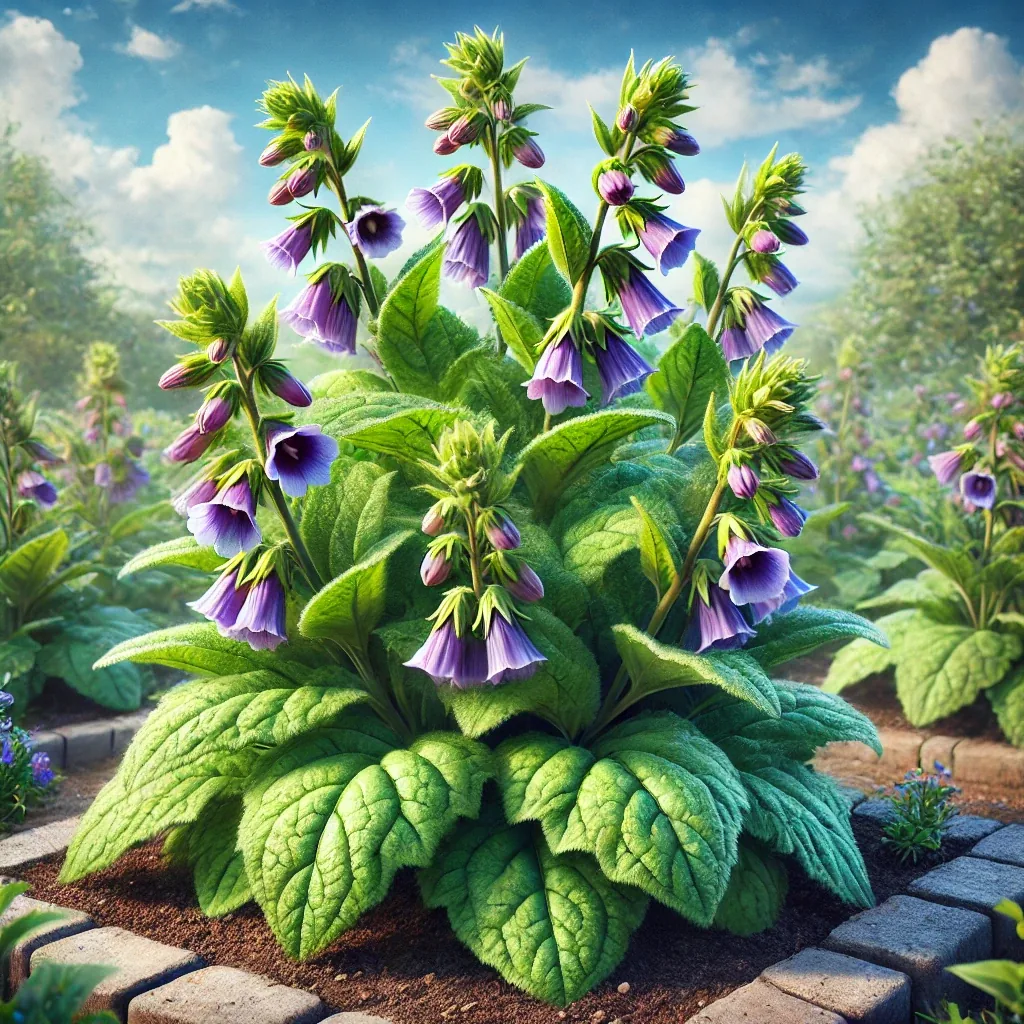
Comfrey (Symphytum officinale) is a fast-growing herbaceous perennial known for its deep roots and high biomass production. It grows up to 1.2 meters (4 feet) tall and has large, rough, lance-shaped leaves covered in fine hairs. The plant produces clusters of bell-shaped purple, pink, or white flowers that attract pollinators. Comfrey thrives in moist, well-drained soil and can tolerate a range of conditions, including poor soil. It is often used in regenerative agriculture and permaculture systems due to its ability to mine nutrients from deep within the soil and cycle them back into the upper layers. Prefers full sun but tolerates partial shade. Thrives in well-drained, moist soil but can adapt to drier conditions. Requires moderate watering; deep roots allow it to be drought-resistant once established. Root Cuttings: The most effective method, as comfrey propagates easily from root fragments. Crown Division: Dividing established plants in spring or fall helps spread the plant. Seeds: Rarely used, as most cultivated comfrey varieties (such as Russian Comfrey) are sterile. Leaves can be harvested multiple times per season, every 4–6 weeks. Cut back to 5 cm (2 inches) above the ground for regrowth. Roots can be harvested in late fall for medicinal preparations.
Permaculture Functions
- Medicinal: Allantoin-rich leaf is traditional as a poultice for sprains, scrapes, and overworked joints -- internal use of Symphytum is restricted in several regions because of pyrrolizidine alkaloids; coarse leaf hairs irritate bare arms during big harvests.
- Wildlife Attractor: Purple, pink, or white tubular bells give bumblebees and other long-tongued pollinators a steady nectar run through summer -- when many low herbs have finished bloom.
- Mulcher: A hard midsummer cut on established Bocking lines drops several pounds of rough leaf per crown -- tissue is high in protein and potassium and breaks down fast when tucked under apple or plum drip lines.
- Dynamic Accumulator: A thick taproot pulls calcium, potassium, and phosphorus from subsoil horizons shallow feeder roots never touch -- leaf harvest is how you export that bank to the topsoil.
- Erosion Control: Dense root mats bind steep orchard terraces and pond banks -- where mower traffic would otherwise expose bare clay after storms.
- Animal Fodder: Wilted leaf mixed into pig, poultry, and rabbit rations raises protein and mineral intake -- limit fresh bulk grazing until animals are accustomed because alkaloid load varies by line and cut timing.
- Border Plant: Sterile Russian comfrey stays along compost bins, paths, and poultry yards as a living edge -- that does not seed into neighboring beds the way common comfrey will.
Field Observations
- Russian Bocking lines spread only from root crowns—common comfrey seeds everywhere; know which you planted before offering divisions.
- Harvest before flowering for highest leaf protein—after bloom, fiber jumps and chop-and-drop quality drops.
- Slugs rasp young leaves in wet springs—diatomaceous refresh after rain saves first cuts.
- Wear long sleeves—hairs irritate some people; wash tools before touching face mid-harvest.
Companion Planting