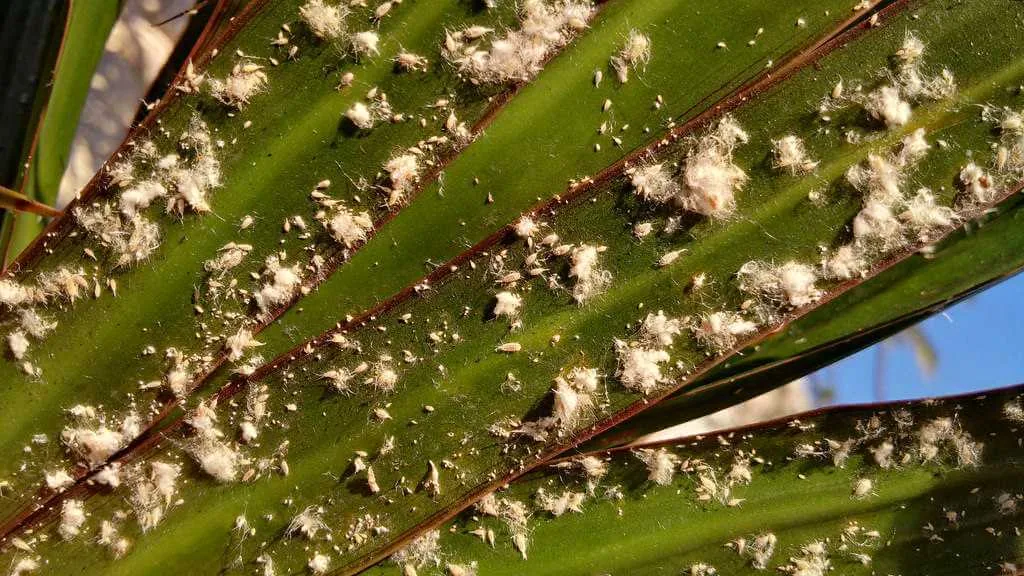
Field Identification
If new growth is curling, yellowing, sticky, or chewed, mealybugs may already be on the plant. This pest often builds quietly, then damage appears all at once. Feeding stress weakens growth, reduces yield, and opens the door to secondary disease. Early cleanup is much easier than fighting a full population surge later.
Inspect the newest growth first: leaf undersides, flower buds, stem joints, and tender tips where pests gather. Look for body shape, color, eggs, cast skins, honeydew, webbing, or fresh puncture marks. A hand lens and a white paper tap test help reveal small life stages. Matching visible pests with fresh plant damage confirms active infestation.
Not sure what you have? Use the symptom diagnosis tool →
How to Deal With It
Organic Control Methods
Cryptolaemus montrouzieri (the mealybug destroyer) is a small ladybug that specifically eats mealybugs and can be purchased and released successfully — one of the few commercially available beneficials that works reliably. Release 2-5 per infested plant in the evening, mist the plant first for humidity, and do not spray anything for 3 weeks. Parasitic wasps in the Leptomastix and Anagyrus genera also target mealybugs — attract them with dill, fennel, and sweet alyssum flowers nearby. Like scale, ants protect mealybug colonies from predators — managing ant access with sticky trunk barriers dramatically improves natural control effectiveness.
Mealybugs spread almost exclusively through infested plant material — inspect every new plant carefully, especially in leaf axils, root crowns, and where leaves meet stems. They hide in protected crevices. Sticky white cottony masses in leaf joints are the obvious sign, but check roots too — root mealybugs live underground and are missed until the plant mysteriously declines. Mealybugs thrive in warm, humid conditions with excess nitrogen — overfed plants in warm greenhouses are highest risk. Quarantine all new plants for 2 weeks before placing them near established plants.
Remove heavily infested plant parts immediately and bag them — mealybugs survive composting and will re-infesarming mealybugs must be controlled: sticky trunk barriers prevent ant access and allow natural predators to reach mealybug colonies. Space plants for air circulation — crowded conditions favor rapid spread. For potted plants, check root zones at repotting: root mealybugs look like white cottony material on roots and require soil drench treatment, not surface sprays.
Rubbing alcohol on a cotton swab kills mealybugs on contact and penetrates the waxy coating — the most precise tool for light infestations on houseplants or in plant crevices where sprays cannot reach. Dab directly on each white cottony mass. A strong water spray dislodges mobile crawlers before they settle. For heavy infestations, physically removing and disposing of the most infested parts before spraying improves spray effectiveness dramatically — sprays cannot penetrate deep into thick mealybug colonies.
Rubbing alcohol diluted 1:1 with water as a spray dissolves the waxy coating and kills mealybugs on contact — more effective than soap alone for this pest. Test on a few leaves first, as some plants are alcohol-sensitive. Neem oil mixed with castile soap (1 tablespoon neem plus 1 teaspoon soap per quart warm water) disrupts mealybug hormone systems and prevents reproduction — apply every 7 days, coating leaf undersides, stem joints, and all crevices thoroughly. Insecticidal soap alone is less effective on mealybugs than on softer pests because the waxy coating resists penetration. Always spray at dusk to avoid harming beneficials.
Let Nature Handle It
Natural Enemies
- Ladybugs
- Lacewings
- Parasitic Wasps
Threat Map