About
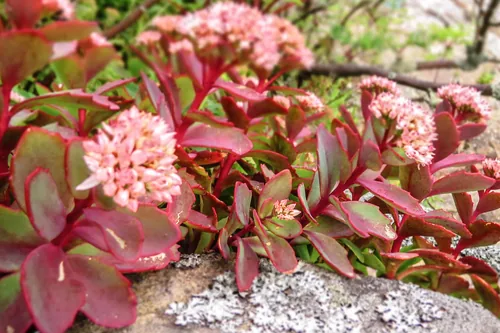
Allegheny stonecrop (Hylotelephium telephioides) is a hardy succulent perennial of rocky eastern North American outcrops, forming clumps of blue-green, toothed leaves and broad flat heads of pale pink to white flowers that pull late-season pollinators. Plants typically stay under 18 inches (45 cm) in flower with a slowly spreading base—useful on lean soil where thirsty ground covers throw tantrums. In permaculture it is a low-input filler for sun-baked edges, green roofs, and stonework where organic matter accumulates slowly but steadily. Full sun to light partial shade; dense shade stretches stems and reduces flowering. Extremely drought-tolerant once rooted; prefers gritty, well-drained soil and tolerates poor, shallow substrates. Winter wet on heavy clay without slope or amendment can rot crowns—add gravel or plant higher. Divide clumps in spring as new shoots emerge or after flowering in early fall while soil remains warm. Detach rosette offsets with a bit of stem and root; pot briefly if the bed is not ready. Stem-tip cuttings taken in summer root quickly in sharp sand under bright indirect light. Not a primary food crop for most systems—value is ecological and visual. If experimenting with edible uses, research species-specific guidance first; focus harvest timing on leaving plenty for pollinators during peak bloom.
Permaculture Functions
- Ground Cover: Hylotelephium telephioides rosettes tile thin soil on ledges and green roofs where thirsty turf cooks -- winter wet on heavy clay still rots crowns, so gravel collars beat sympathy watering.
- Ornamental: Blue-green toothed leaves and broad pink-white cymes give late-season structure after spring bulbs fade -- copper seedheads linger into winter if you skip deadheading for bird perches.
- Pollinator: Flat nectar platforms stay open late when goldenrod crowds fade -- feeds small bees and syrphid flies that need easy landing pads on cool afternoons.
- Erosion Control: Fibrous roots grip rock chips and wall bases where rain would otherwise strip fines -- pair with structural stone, not pure mud, so freeze-thaw does not pop whole mats loose.
- Dynamic Accumulator: Succulent leaves capture wind-blown dust and trace minerals from thin pockets -- recycled when frost knocks foliage into the crevice soil below.
Companion Planting
- Over-irrigation on clay — winter-saturated crowns rot while labels still say drought tolerant