About
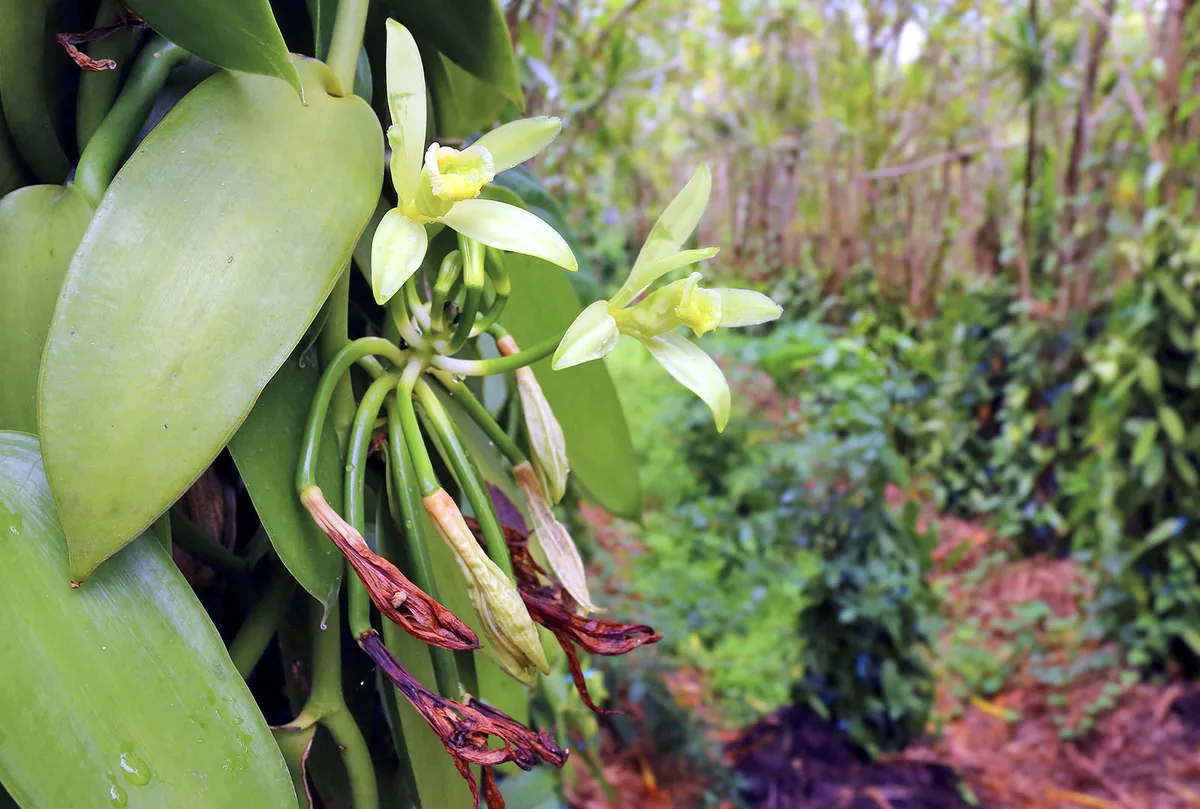
Madagascar Vanilla (*Vanilla planifolia*) is a perennial climbing orchid native to Mexico and Central America, now extensively cultivated in Madagascar. This vine can reach lengths of up to 15 meters (49 feet), featuring thick, fleshy stems and succulent, oblong leaves. It produces greenish-yellow, fragrant flowers that bloom briefly, each lasting only a day. The plant thrives in warm, humid tropical climates and requires a support structure to climb, often utilizing host trees or trellises. The fruit, known as vanilla beans, are long, slender pods that contain numerous tiny seeds. These pods are harvested and cured to develop the characteristic vanilla flavor and aroma. Cuttings: Propagation is typically achieved through stem cuttings. Select healthy, mature stems and cut sections approximately 30 centimeters (12 inches) long. Allow the cut ends to dry for a day to prevent rot, then plant them in a well-draining, humus-rich substrate. Maintain high humidity and indirect light to encourage root development. Sun: Prefers partial shade; direct sunlight can cause leaf scorching. An environment with filtered light, mimicking its natural understory habitat, is ideal. Water: Requires consistent moisture but not waterlogged conditions. Water regularly to keep the soil evenly moist, and ensure adequate drainage to prevent root rot. High humidity levels (80% or above) are beneficial for optimal growth. Pods: Vanilla pods are typically harvested 8 to 9 months after flowering, when they begin to turn yellow at the tips. The pods are then hand-picked and undergo a curing process involving blanching, sweating, and drying, which develops their distinctive flavor and aroma.
Permaculture Functions
- Edible: Vanilla planifolia pods cure into vanillin-rich beans after sun-wilting, sweating, and drying -- hand-pollinate each orchid flower within hours of opening or the bean aborts, which is why commercial vanilla is labor-expensive.
- Medicinal: Vanillin shows mild antioxidant and calming notes in folk teas -- evidence is thin for clinical claims, but food-dose extract in warm milk still settles nerves without pretending to replace prescriptions.
- Pollinator: Wild Mexican meliponines pollinate relatives in habitat -- outside range, growers transfer pollen with toothpicks because no local bee matches the flower’s lip mechanics.
Companion Planting
Threats & Pressure