About
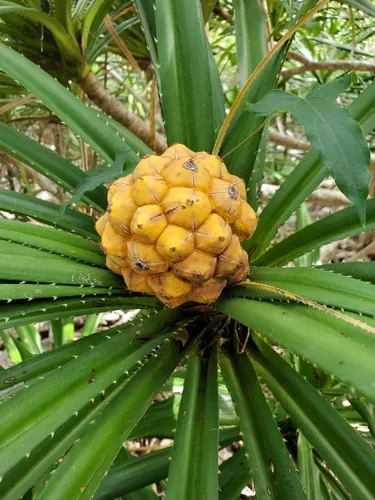
Pandanus (Pandanus tectorius) is a coastal tropical workhorse with stilt-like aerial roots, rosettes of long strap leaves armed with marginal spines, and pineapple-ish syncarps that announce themselves with scent. Heights vary with ecotype; many forms become small trees or large shrubs that laugh at salt spray while stabilizing sand. Leaves become weave, thatch, and flavoring; roots remind bare feet that respect is voluntary. subtropical and tropical Americas: Common in Puerto Rico and the Keys landscape where drainage is decent; inland Florida needs frost protection and humility—cold snaps turn leaves to expensive compost. Full sun for tight crowns along coasts; some inland forms accept light shade while young. Sandy, well-drained soil; tolerates brackish wind but not chronic root drowning—swales must exit water, not hoard it. Suckers and offsets from mature clumps root when partially buried in warm wet seasons. Seed is viable but slow; clean and sow fresh in warm, humid propagation houses if you enjoy delayed gratification. Leaf harvest for fiber follows mature-leaf cycles; wear gloves—the margin teeth are not decorative. Prop roots may be managed for paths; consult local practice before sculpting like a topiary tyrant.
Permaculture Functions
- Fiber: Pandanus tectorius leaves strip into weft for mats, hats, and roof thatch that survives salt spray decades longer than plastic imitations -- harvest mature outer leaves with gloved hands because serrated margins draw blood honest and fast.
- Ornamental: Stilt roots and spiral rosettes of sword leaves sell tropical shorelines, hotel berms, and collector yards -- dioecious clones mean male show plants never fruit; plan pairs if you want syncarp display.
- Windbreaker: Dense strap foliage shreds onshore wind into eddies so leeward bananas and beach sunflower stop sand-blasting -- spacing matters; crowns still need airflow so internal rot does not hollow big clumps.
- Erosion Control: Prop roots dive through shifting dune sand and hurricane wrack, knitting shoreline profiles where pure grass would wash -- bury toes on purpose during restoration so architecture matches natural flare angles.
Companion Planting
Threats & Pressure