About
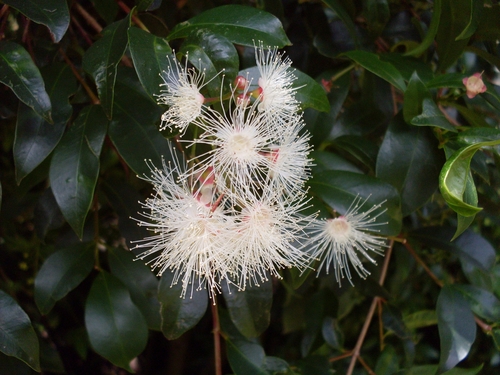
Lilly pilly (Syzygium paniculatum) is an Australian rainforest margin tree or large shrub, widely planted in humid subtropical landscapes for glossy evergreen leaves, cream fluffy flowers, and magenta to crimson pear-shaped fruit. Heights of 15–40 feet (4.5–12 m) occur unless hedged. It is a Myrtaceae hedge and fruiting screen where psyllids are managed and frost is rare. ☀️💧 Sun and Water Requirements: Full sun to bright part shade; dense shade reduces flowering and fruit. Rich, well-drained soils with steady moisture in the warm season; mulch buffers surface roots. Wind protection reduces leaf tatter on exposed lots. ✂️ Propagation: Sow fresh seed after cleaning; cuttings root under humidity for uniform hedges. Shear formally after major flowering if hedge shape matters more than fruit. Open up interior wood periodically for airflow. 🌾 Harvest / Best Use Timing: Pick fruit when deep colored and slightly yielding for jams and fresh eating—flavor varies by selection. Monitor new flush for psyllid curl—early water or biological control beats panic. Leave some fruit for birds if diplomacy matters.
Permaculture Functions
- Edible: Fruit supports jams and fresh eating where selections prioritize taste over hedge density alone.
- Ornamental: Glossy foliage and colorful fruit give year-round landscape structure in humid climates.
- Wildlife Attractor: Flowers and fruit engage birds and pollinators where planting goals include sharing.
- Border Plant: Tolerates clipping into formal or informal screens.
Practitioner Notes
- “Lilly pilly” is a nickname storm—verify Latin on the tag before designing orchards.
- Hedge shears versus fruit load is a lifestyle choice—pick one primary goal.
- Copper new growth photographs well; psyllids agree—inspect early.
- Fruit stains driveways—harvest or accept polka dots.
Companion Planting
- Brush Cherry — related Syzygium neighbor with overlapping cultural needs in mixed screens
- Wax Apple — complementary Myrtaceae fruiting tree at staggered spacing for light
- Lemongrass — herbaceous perimeter along drip lines with distinct harvest timing
- Psyllid leaf curl — humid coastal plantings need monitoring, not neglect dressed as permaculture
- Frost — damage near 26°F (-3°C) on exposed tender growth
Pest Pressure