About
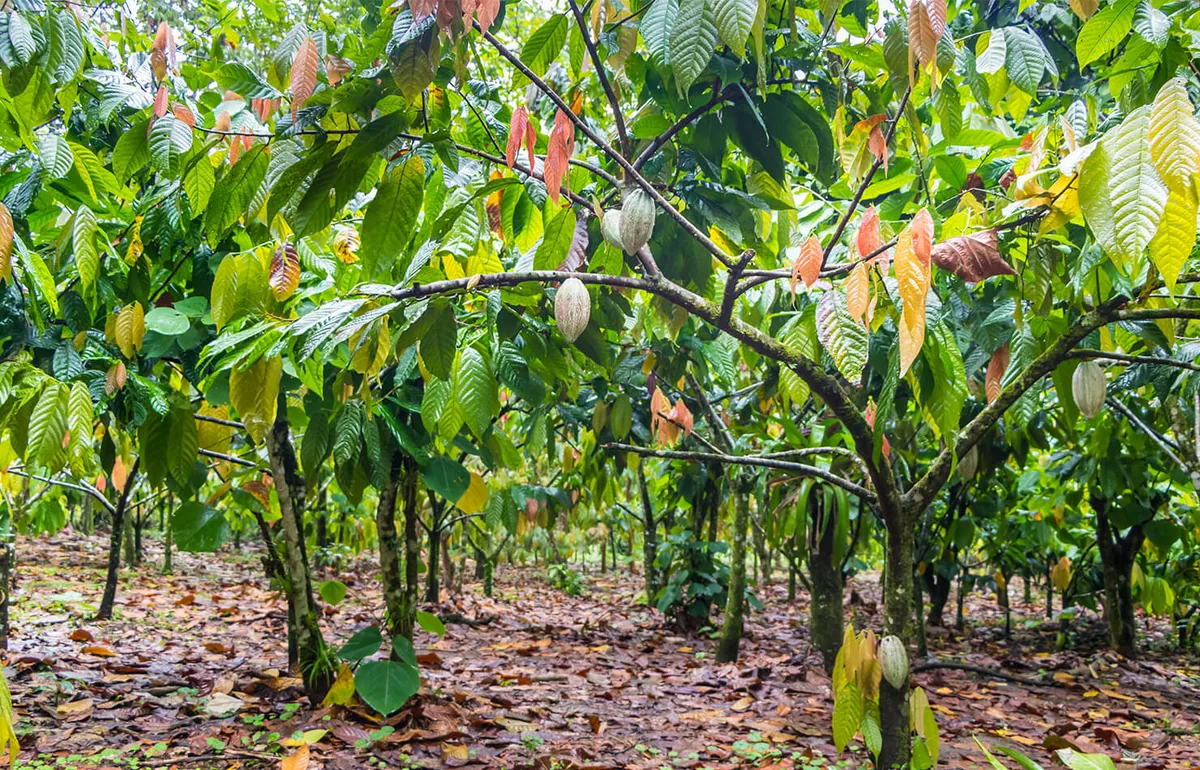
Cacao (*Theobroma cacao*) is a small evergreen tree native to the tropical regions of Central and South America. It typically grows between 4 to 8 meters in height and features glossy, leathery leaves that start as reddish in color before maturing to green. The tree produces small, pinkish-white flowers directly on its trunk and older branches—a phenomenon known as cauliflory. These flowers develop into large, ovoid pods containing numerous seeds, commonly known as cocoa beans. Seeds: Sow fresh seeds in a well-draining, humus-rich substrate. Germination occurs within a week under optimal conditions. Seedlings should be kept in a shaded environment with high humidity. Cuttings: Semi-hardwood cuttings can be taken and rooted in a controlled environment with high humidity and consistent temperatures. Sun: Prefers partial shade, especially during the early stages of growth. Mature trees can tolerate more light but still benefit from some shade. Water: Requires consistent moisture; regular watering is essential, but ensure the soil drains well to prevent waterlogging. Pods: Harvesting occurs when the pods turn a yellow or orange color, approximately 5 to 6 months after flowering. Pods are typically harvested twice a year, with peak seasons varying by region.
Permaculture Functions
- Edible: seeds inside large pods are fermented and dried into cocoa nibs, cocoa butter, and chocolate -- after removing sweet mucilage from fresh beans.
- Medicinal: pulp and nibs carry methylxanthines and polyphenols used in traditional tonics -- dose matters because theobromine is toxic to dogs and risky for some people.
- Wildlife Attractor: Tiny cauliflorous Theobroma cacao flowers depend on biting midges and other small pollinators in humid shade, and ripe pods draw mammals and insects -- to fallen fruit.
Companion Planting
Threats & Pressure