About
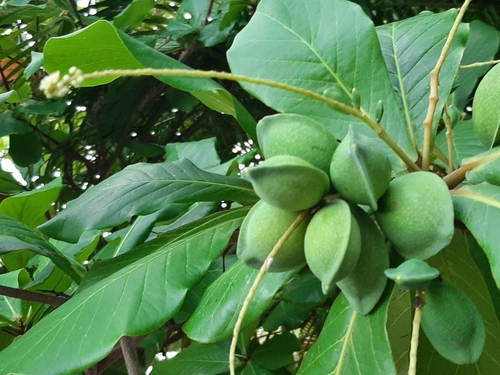
Indian almond is a wide-canopied tropical shoreline tree with massive horizontal branches, leathery obovate leaves that flame red before abscission, and fibrous drupes enclosing an edible kernel with an almond-adjacent crunch. Mature trees can exceed 40 feet spread along beaches and roadsides from West Africa through Asia to the Pacific. In subtropical and tropical Americas it is a familiar salt-tolerant shade tree for coastal yards, schoolyards, and food-forest overstory—roots handle sandy drought once established, while wet-season humidity rarely troubles foliage if drainage is not zero. Kernels need correct processing awareness; focus permaculture use on shade, mulch drop, and stabilizing dunes with ethics about local native priorities. ☀️💧 Sun and Water Requirements: - Full sun for broad crown development and heavy leaf drop mulch. - Tolerates sandy, saline, and compacted coastal soils; still benefits from organic mulch at establishment. - Deep, infrequent irrigation while young; mature trees are drought-tolerant near the ocean. ✂️ Propagation: - Seeds from fallen fruit: clean, dry briefly, sow in deep pots or nursery beds in warm wet season. - Air-layering selected mother trees for predictable form and fruit quality. - Transplant vigorous seedlings before taproot locks into ground cloth. 🌾 Harvest / Best Use Timing: - Collect fruit when husks yellow-redden and begin to dry; extract kernels and follow reliable preparation guidance before eating. - Rake leaves during dry windows for compost or sheet mulch under understory guilds.
Permaculture Functions
- Edible: Kernels are a calorie-dense beach food where cultural knowledge and safe processing exist.
- Shade Provider: Huge umbrella lowers understory temperature for poultry, people, and tender shrubs.
- Windbreaker: Flexible wood and dense foliage blunt onshore gales along exposed lots.
- Erosion Control: Surface roots knit sand while leaf litter builds organic matter in otherwise sterile berms.
Indian almond is coastal infrastructure with snacks:
Practitioner Notes
- Morning picks hold turgor; afternoon heat steals shelf life even if the cooler feels honest.
- Watch the plant’s own signals first—catalog zone numbers do not replace your site’s microclimate truth.
- Blanch or process within hours if you are freezing—enzymes keep chewing while paperwork waits.
- Soil smell and root color tell more than gadget overload—dig a small hole twice a season.
Companion Planting
- Coconut Tree — shares coastal wind exposure and salt spray while occupying higher canopy space without root trench warfare.
- Beach Strawberry — low ground layer uses leaf mulch and dappled edge light under the drip line.
- Pandanus — spiral roots and different stature reduce direct root competition while reinforcing dune aesthetics.
- Casuarina
- Eucalyptus
Pest Pressure