About
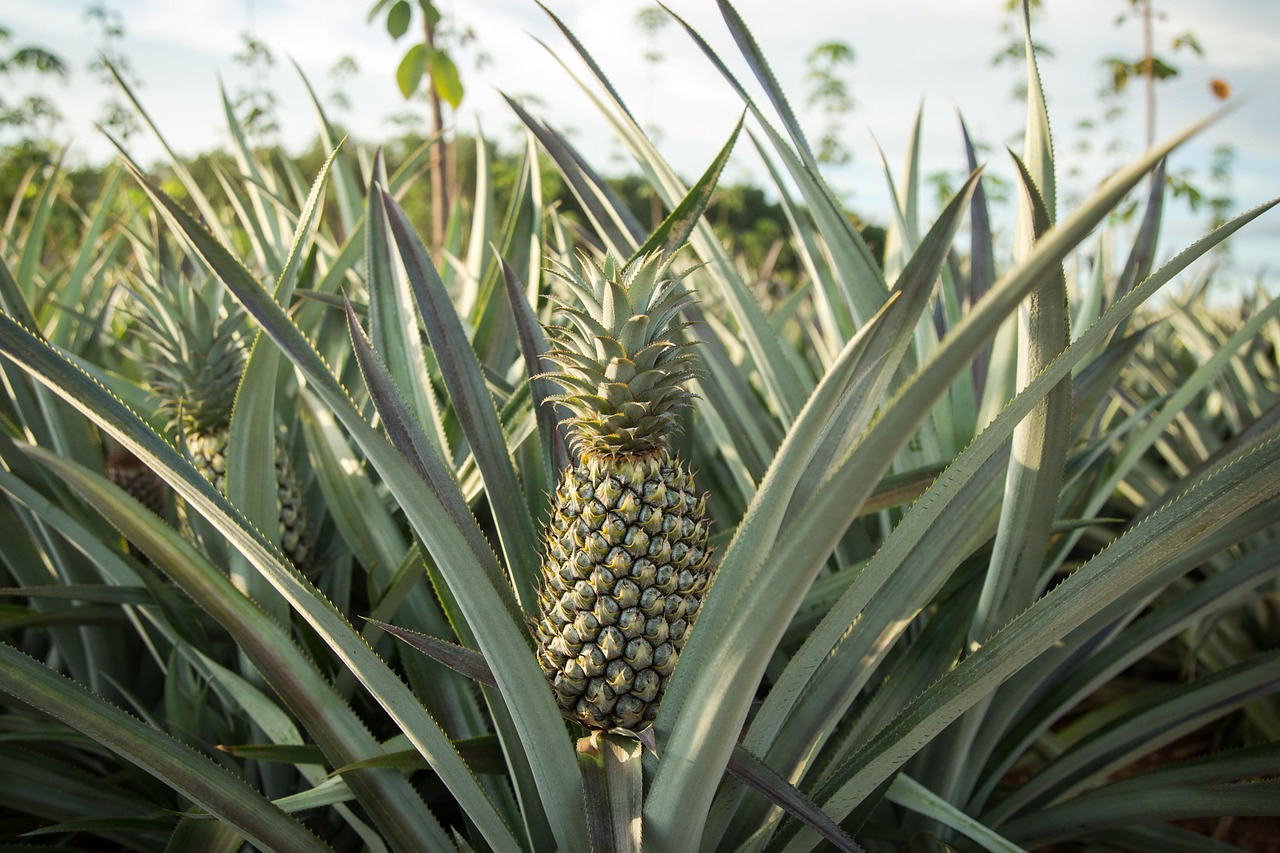
Pineapple (Ananas comosus) is a tropical plant with a rosette of stiff, waxy leaves and a central flower stalk that eventually produces a single compound fruit. The fruit is known for its juicy, sweet-sour flavor and distinct spiny crown. Pineapples grow close to the ground and can reach heights of 1.0–1.5 meters (3–5 feet), with a spread of about the same. What makes pineapple unique is its growth pattern — it produces only one fruit per plant and can take 18 to 24 months to mature. It does not require pollination to produce fruit, which makes it ideal for consistent, seedless fruiting. 🌞💧 Sun and Water Requirements: Pineapple requires full sun (at least 6 hours daily) and well-drained sandy or loamy soil. It is drought-tolerant but performs best with regular, moderate watering. Overwatering or poor drainage can cause root rot. It thrives in humid environments with good air circulation. ✂️🫘 Methods to Propagate: Propagation is typically done by planting the leafy crown of the fruit, suckers from the base, or slips from the flowering stalk. Let cuttings dry for a day or two before planting to reduce the risk of rot. Crowns take the longest to fruit (up to 2 years), while slips and suckers may bear fruit sooner. 🧑🌾👩🌾 When to Harvest: Pineapples are ready to harvest when the outer skin turns golden-yellow and emits a fragrant, sweet aroma. This typically occurs 5–6 months after flowering. The fruit does not continue to ripen once picked, so timing is crucial for flavor and sweetness.
Permaculture Functions
- Edible: The fruit is a rich source of vitamins, enzymes (like bromelain), and fiber, making it a highly valued food crop in tropical and subtropical agroforestry systems.
- Medicinal: Used traditionally to reduce inflammation, support digestion, and aid in healing wounds. Bromelain has recognized anti-inflammatory properties.
- Wildlife Attractor: The sweet scent and fruit attract pollinators, especially bees and small mammals in its native range.
- Ground Cover: Dense foliage can suppress weeds and protect the soil in sunny areas.
Practitioner Notes
- Harvest texture changes faster than color—nip one sample before you commit the whole row to a pick date.
- Weigh small test batches before scaling tinctures—solvent ratio mistakes are expensive at gallon ambition.
- Edge containment beats regret—runners respect metal or deep trench more than promises.
- Watch the plant’s own signals first—catalog zone numbers do not replace your site’s microclimate truth.
Companion Planting
- Comfrey
- Lemon Balm
- Sweet Potato
- Potato
- Onion
- Garlic
Pest Pressure