About
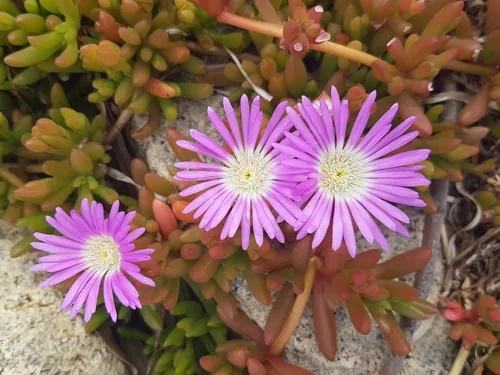
New Zealand ice plant (Disphyma australe) is a succulent ground cover native to coasts of New Zealand and used in mild climates of the Americas as a salt-tolerant mat for rockeries, green roofs, and beach-adjacent plantings. Cylindrical leaves store water; magenta-purple flowers appear generously in favorable seasons. It fills the same aesthetic slot as larger carpobrotums but with a finer texture where scale matters. Full sun for compact growth and heaviest bloom. Drought tolerant; occasional deep watering beats chronic misting that rots crowns. Extremely well-drained soil or sand; tolerates coastal salt spray. Tip cuttings allowed to callus briefly, then stuck in sharp sand. Division of mats in warm weather; keep dry for a few days after splitting. Seed is possible but variable in cultivation—cuttings are standard. Leaves and fruit are eaten in some traditions; trial cautiously and confirm ID against toxic look-alikes where other ice plants grow. For ornamental harvest, trim winter-damaged patches in spring before new growth. Reduce irrigation in wet season to prevent internal rot in humid subtropical winters.
Permaculture Functions
- Edible: Salty-succulent Disphyma australe leaves and mucilaginous fruit appear in some Māori-adjacent coastal traditions as nibble or pickle material after blanching -- confirm ID against larger toxic Carpobrotum look-alikes before casual tasting on vacation beaches.
- Ornamental: Magenta-purple daisy flowers and jelly-cylinder leaves read as finer-scale living mulch than chunky Mesembryanthemum on green roofs, rockeries, and salt-spray balconies -- full sun keeps mats tight; shade etiolates and rots crowns in humid winters.
- Erosion Control: Prostrate stems root at nodes, locking dune sand and roof media against sheet flow -- pair with deeper-rooted dune shrubs landward so the ice plant sheet is not the only structural line in a storm surge.
Companion Planting
- Do not confuse with unrelated toxic garden plants called “ice plant” in other regions
Threats & Pressure