About
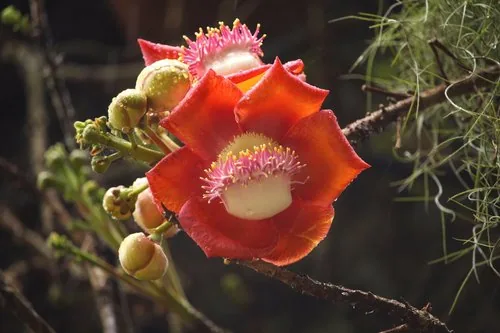
Cannonball tree (Couroupita guianensis) is a large tropical tree of northern South America and parts of Central America and the Caribbean, famous for spherical woody fruits resembling cannonballs and fragrant flowers borne on trunk and branches (cauliflory). It reaches 80–115 feet (24–35 m) in forest openings with a spreading crown. In botanic gardens and spacious tropical landscapes it is a spectacle and bat-pollination case study—not a tree for tiny lots or people who park cars under anything that drops multi-pound spheres. Full sun for flowering; young trees appreciate wind protection. Prefers deep, fertile, well-drained soils with steady moisture in the warm season. Drought during establishment stunts growth; mature trees tolerate short dry periods with leaf shed. Frost near 32°F (0°C) damages soft growth. Sow fresh seed; viability drops if seed dries too long. Provide heat and humidity for germination. Prune for clearance under fruiting zones; wear hard hats where fruits mature overhead—physics does not negotiate. Fruits are not human snacks; value is ecological and ornamental. Traditional medicinal references exist—follow trained guidance, not tourism blogs. Remove fallen fruit from paths to prevent ankle disputes with gravity.
Permaculture Functions
- Ornamental: shows cauliflorous night-fragrant flowers and woody cannonball-sized fruits that become signature specimens only -- where frost-free space and hard-hat setbacks exist.
- Wildlife Attractor: bat-pollinated blooms open after dusk -- while fallen syncarps feed large mammals in native neotropical ranges where managers clear paths for safety.
- Shade Provider: spreads a very broad humid-tropical crown that cools understory crops and walkways -- once the tree reaches mature height in open forest gaps.
- Mulcher: drops large leaves and floral bracts steadily -- feeding soil mesofauna when litter is left under the dripline instead of paved over.
- Medicinal: bark and flower lore appear in Amazonian ethnomedical references -- where legal status and trained preparation still gate any topical or internal use.
Companion Planting
- Falling fruit hazard — plant away from paths, vehicles, and fragile egos
- Sap and plant chemistry — handle unknown tissues with respect and gloves
Threats & Pressure