About
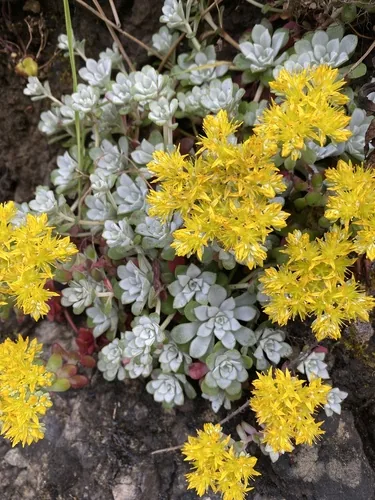
Broadleaf stonecrop (Phedimus kamtschaticus), still sold as Sedum kamtschaticum, is a mat-forming succulent perennial from East Asia widely planted in temperate gardens for scalloped evergreen leaves and yellow star flowers in summer. Plants spread modestly to form weed-suppressing carpets 4–8 inches (10–20 cm) tall, rooting lightly at nodes. In permaculture it covers dry strip edges, green roof trays, and rockwork where thirsty turf would demand irrigation apologies. Full sun to light partial shade; dense dry shade thins coverage. Drought-tolerant once established; prefers gritty, well-drained soil. Winter wet on heavy clay without slope can rot crowns—add drainage or raise beds. Divide mats in spring or early fall; reset pieces with contact to soil for rooting. Detach rooted offsets anytime during the growing season. Soft tip cuttings in summer root quickly in sharp sand. Primarily ornamental and ecological; not a staple food crop for most systems. If experimenting with edible uses, verify species guidance—harvest timing should leave plenty for pollinators during bloom peaks.
Permaculture Functions
- Ground Cover: Phedimus kamtschaticus scalloped leaves root lightly at nodes, forming evergreen carpets 10–20 cm tall -- that crowd chickweed on dry wall caps.
- Ornamental: Yellow star clusters in July read bright against blue spruce mulch -- giving a succulent look without tender annual ice-plant replanting.
- Pollinator: Small halictid bees pack pollen from five-petaled blooms during the summer dearth -- after spring bulbs finish.
- Erosion Control: Fibrous roots grip thin scree on slopes where deeper rooted grasses fail -- until you add more soil depth.
- Border Plant: Low edge along pavers stops mower drift without hedging shears because mats stay below blade height -- if you skip fertilizer.
Companion Planting
- Over-irrigation on clay — winter crown rot follows misplaced kindness