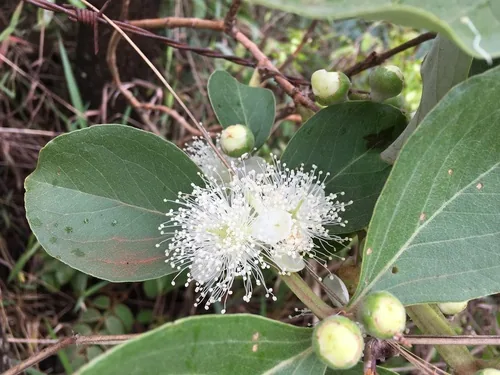
About
Psidium guajava is the backyard workhorse of subtropical fruit: scrappy enough for warm-margin microclimates if you dodge the worst freezes, absurdly productive once happy, and beloved by every fruit fly within county lines. Fragrant flowers, rough bark, and fruit that runs from white to pink pulp depending on cultivar. Full sun for heaviest fruiting; young plants appreciate light shade during brutal heat. Deep, well-drained soil; steady moisture in fruit fill, but not boggy roots. Mulch hard to buffer soil temps and cut weed competition. Seeds: fresh seed germinates quickly; offspring variable. Cuttings and air-layering: clone a known good cultivar — do not roll dice on seedling fruit quality. Grafted or named varieties from nurseries: fastest path to dessert. Pick when fruit gives slightly under gentle pressure and aroma develops — guavas are masters of the 'one day perfect, next day mush' timeline.
Permaculture Functions
- Edible: Psidium guajava fruits run from white to pink pulp with strong aroma at full slip -- eat fresh, reduce into paste, or juice for vitamin C when fruit flies are not staging a county convention on the peel.
- Wildlife Attractor: Ripe guavas draw fruit flies, bats where present, and every fruit-eating bird within hearing -- bag clusters, harvest green-ripe for cooking, or accept tithe at the canopy edge.
- Windbreaker: Multiple stems and dense foliage take edge out of steady sea breezes when trained as a low tree -- protect young plants from desiccating wind until bark thickens.
- Mulcher: Rough, exfoliating bark and constant leaf shed give coarse chop-and-drop material under the drip line -- rake debris into guild beds instead of letting mats smother its own surface roots.
Companion Planting
Also mentioned as companions:
- Legume Tree
Not yet profiled in PermiePortal
- Low frost pockets with no protection for young trees
- Overhead irrigation that keeps foliage wet all night
Threats & Pressure