About
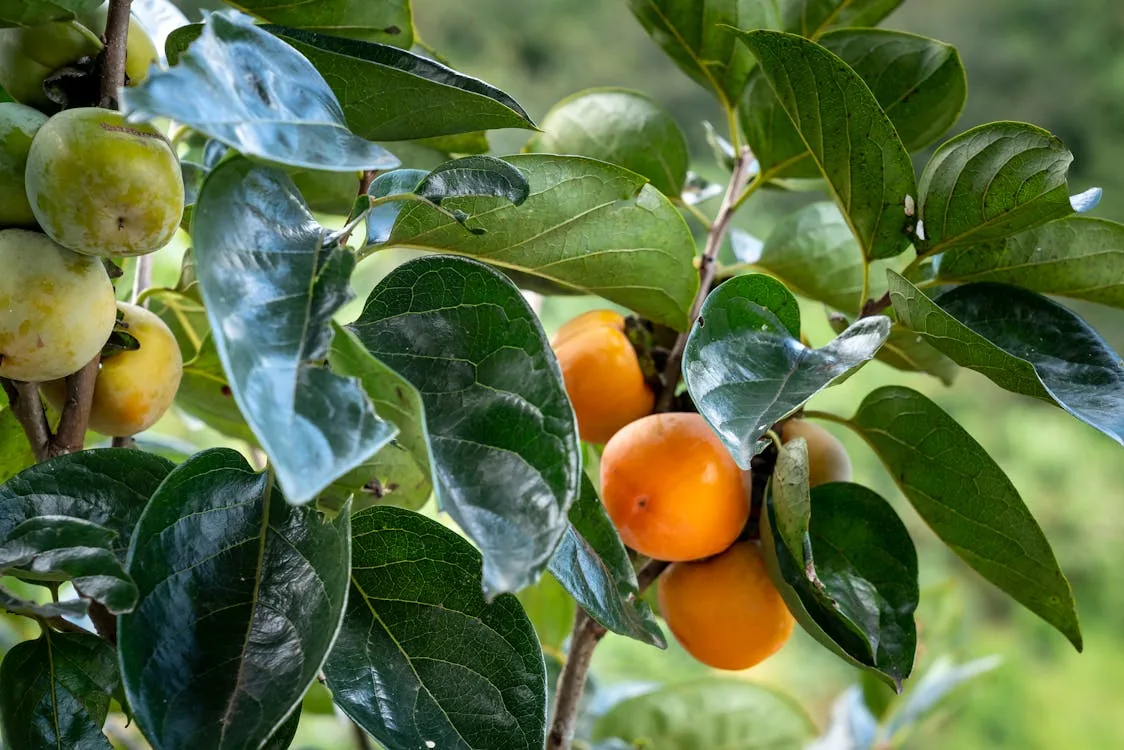
The Persimmon Tree (Diospyros spp.) is a deciduous fruit tree known for its sweet, vibrant orange fruits. The tree can grow between 4.5-20 meters (15-65 feet) tall, with a dense canopy and glossy, dark green leaves that turn orange in autumn. The fruit matures in late fall, with astringent varieties needing full ripening before consumption. Persimmons are high in vitamins A and C. Requires full sun for optimal growth and fruit production. Prefers well-drained, loamy soil with a slightly acidic to neutral pH. Drought-tolerant once established but benefits from occasional deep watering. Seed: Can be grown from seed, but offspring may vary from parent. Grafting: Commonly grafted onto rootstocks for faster production and better disease resistance. Cutting: Hardwood cuttings may be used for propagation with proper care. Harvest season ranges from late fall to early winter. Astringent varieties must be fully soft before consumption. Non-astringent varieties can be eaten when firm.
Permaculture Functions
- Edible: American-type Diospyros virginiana fruit must go fully soft and jelly-like before astringency clears -- kaki types range from crisp non-astringent slices to soft Hachiya-style eating; dry pulp or hoshigaki extends storage when glut hits after leaf fall.
- Wildlife Attractor: Orange globes hang into winter when little else is sweet on the branch -- deer, opossum, and songbirds clean drops fast; leave lower limbs for wildlife tithe if you are not netting every fruit.
- Windbreaker: Wide-spreading deciduous canopy slows winter wind across vegetable tunnels and berry rows -- while summer leaves still allow underplanting of shade-tolerant herbs near the drip line.
- Border Plant: Single-trunk or open-vase forms read as a formal orchard edge along lanes yet still read as native edge forest where virginiana runs wild -- spacing at 15 to 25 feet keeps airflow high enough to limit foliar disease pressure.
- Erosion Control: Deep taproot and wide lateral plate anchor terrace fills and road cuts where surface irrigation would otherwise polish clay bare -- leaf drop each autumn adds a steady litter layer that catches rainfall impact on the slope face.
Companion Planting
Also mentioned as companions:
- Mulberry
- Clover
Not yet profiled in PermiePortal
- Walnut
- Fennel
Threats & Pressure