About
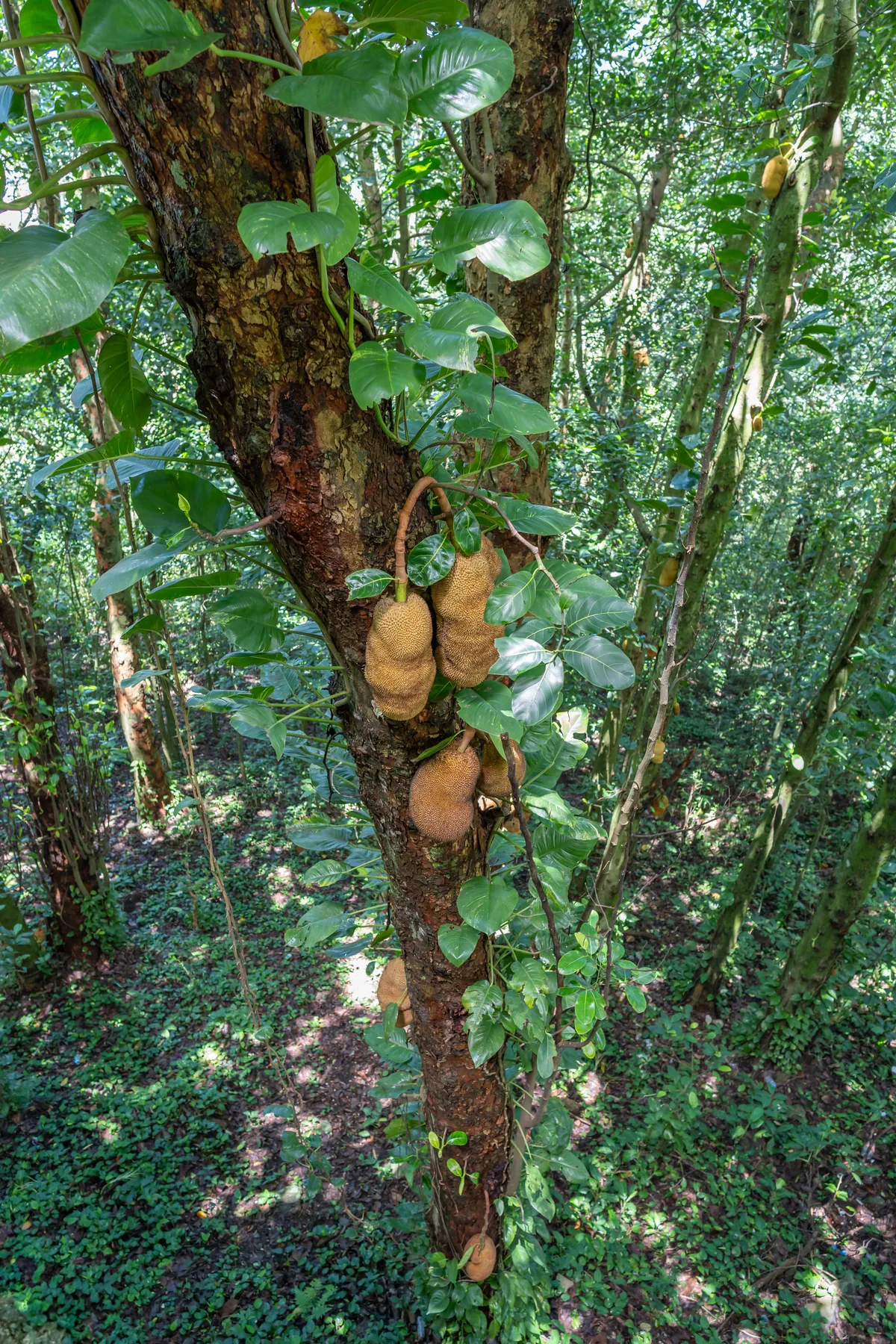
Jackfruit is the largest tree-borne fruit that shows up in memes and Southeast Asian kitchens—sticky latex, enormous syncarps, and a growth rate that laughs at modest lot sizes. Evergreen in the tropics; smaller ‘compact’ selections exist for people who read labels. True tropical species; warm subtropical growers push margins; north of that you are in greenhouse or “one winter away from heartbreak” territory unless you are very lucky with microclimate. Full sun for fruit. Deep, regular watering when young; established trees take some drought but not limestone desert cosplay. Grafting onto seedling rootstock for known fruit types; seeds grow fast but quality varies; air-layering possible for some selections. Harvest mature fruit for ripe eating; cut young pods for vegetable-stage curries before latex turns bitter—timing follows culinary use.
Permaculture Functions
- Edible: Artocarpus heterophyllus bears the largest tree fruits on Earth -- eat ripe aromatic bulbs fresh, pickle young green syncarps as vegetable meat, and oil your knife because latex sticks to everything including patience.
- Animal Fodder: Fallen segments feed pigs and cattle in tropical smallholdings -- limit access to fermented piles so livestock do not founder on sugar loads after storms.
- Windbreaker: Huge evergreen leaves and scaffold branches strip momentum from trade winds across banana and papaya rows -- site with crown room because mature spread shades whole paddocks.
- Mulcher: Continuous leaf drop and pruned wood chips build fungal mulch under durian and coffee -- heavy trimmings need chipping; whole branches smother understory if you leave them in place.
Companion Planting
Threats & Pressure