About
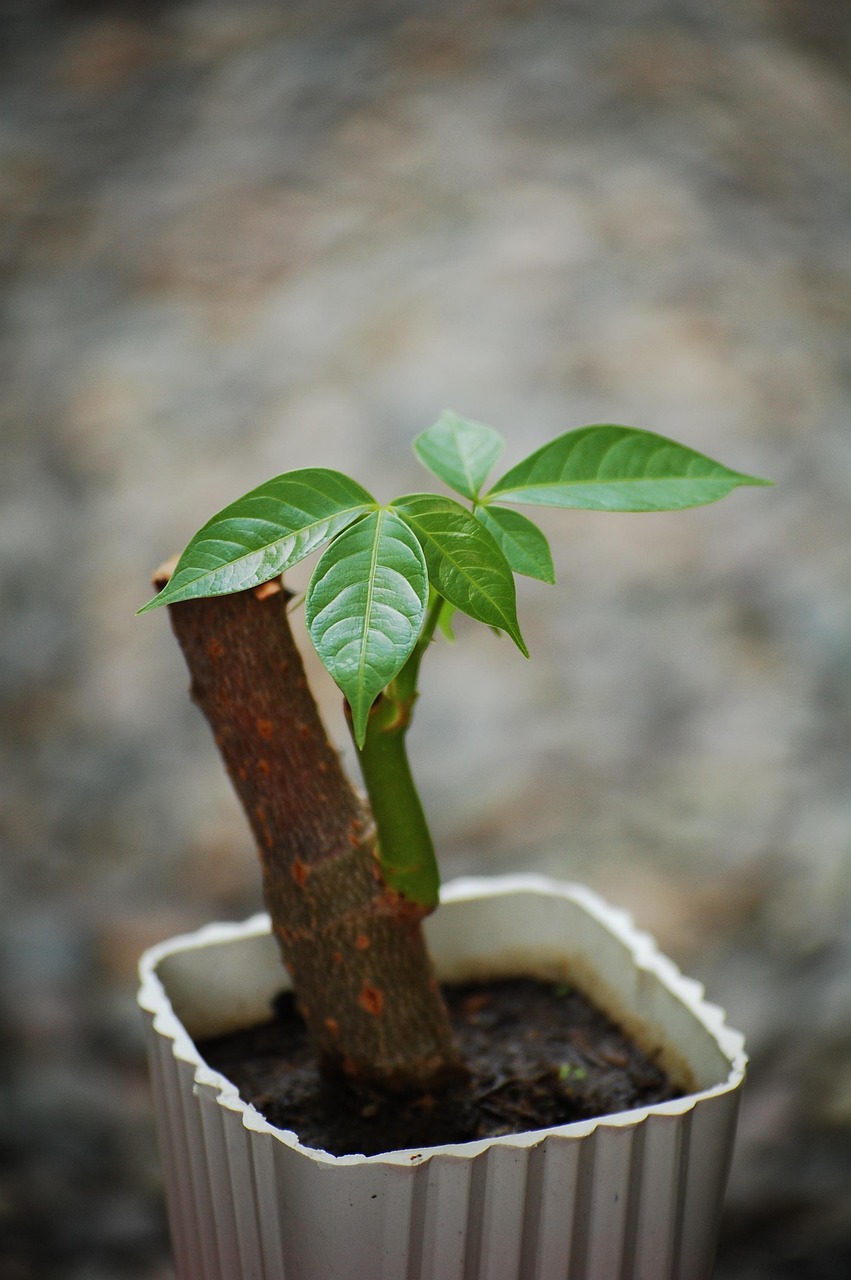
The Money Tree (*Pachira aquatica*) is a tropical wetland tree native to Central and South America. It can grow up to 18 meters (60 feet) in the wild but is commonly kept as a much smaller indoor plant. The tree features shiny, palmate leaves and smooth green bark. Its flowers are large, with long, narrow petals that curl back to reveal clusters of long, thread-like stamens. The plant produces large, woody seed pods containing edible nuts. 🌞💧 **Sun and Water Requirements:** Prefers bright, indirect light but can tolerate low light conditions. Requires regular watering to keep the soil moist but not waterlogged; overwatering can lead to root rot. ✂️🫘 **Methods to Propagate:** Propagation is typically done through seeds or cuttings. Seeds should be planted fresh, while cuttings should be taken from semi-hardwood branches and rooted in moist soil. 🧑🌾👩🌾 **When to Harvest:** In its native habitat, nuts are harvested when the seed pods mature and split open. As an indoor plant, it is primarily grown for ornamental purposes.
Permaculture Functions
- Edible: The seeds, flowers, and leaves are edible and can be consumed raw or cooked.
- Medicinal: Traditionally used to treat headaches and stomachaches.
- Wildlife Attractor: Flowers attract pollinators such as bats and insects.
- Indoor Plant: Popular as a decorative houseplant believed to bring good luck and prosperity.
Practitioner Notes
- Harvest texture changes faster than color—nip one sample before you commit the whole row to a pick date.
- Dry aerial parts fast with airflow, not slow plastic bags—mold reads as ‘aged’ only in marketing copy.
- Sharp tools and clean cuts beat torn stems; disease spores love frayed tissue more than rhetoric.
- Harvest flowering tops at first full open for many mint-family herbs; past-brown is mulch grade.
Companion Planting
- Fern
- Philodendron
- Pothos
- Spider Plant
- Peace Lily
Pest Pressure