About
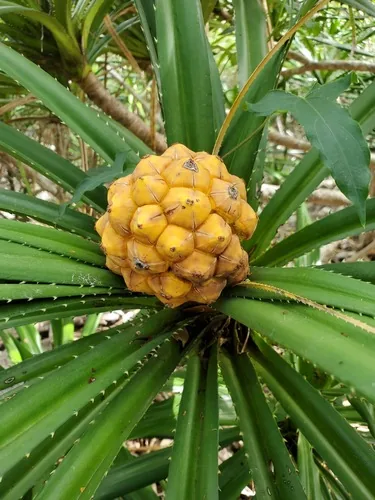
Screw pine (Pandanus utilis) is a tropical monocot tree with a stout, often prop-rooted trunk and spiral crowns of long, strap-like, spiny-margined leaves—hence the common name despite not being a true pine. Native to Madagascar and widely planted in the tropics, it reaches 20–40 feet or more, with aerial prop roots that thicken into buttresses at the base, giving storm resistance on coastlines. Full sun for dense crowns; tolerates coastal exposure and salt spray. Moderate to generous water in the warm season; drought-tolerant once established but grows faster with steady moisture. In Florida and Puerto Rico, plant with room for roots and prop roots—avoid paving tight against the trunk. Suckers/offshoots: remove well-rooted shoots from the base during the warm wet season and replant immediately. Cuttings: large terminal cuttings are used in the tropics by skilled growers; keep humid until roots anchor. Collect mature fruits for their fibrous keys; leaves are harvested for weaving and thatch when fully hardened. Wear gloves—margins are sharply serrated.
Permaculture Functions
- Edible: Pandanus utilis cone keys yield soft basal flesh in Indian Ocean cuisines where ripeness decides between sweet chew and corky bait -- glove your hands against spiky bracts before processing.
- Fiber: Fully hardened strap leaves strip into weft for mats, hats, and roof thatch -- once blades toughen beyond the succulent stage.
- Erosion Control: Stilt roots thicken into woody buttresses that clasp beach sand -- manages storm surge scour the way riprap never quite achieves biologically.
- Windbreaker: Spiral crowns flex in salt wind yet stay leaf-full enough -- to blunt trade breezes behind coconut understory guilds.
- Ornamental: Screw-leaf silhouette reads dinosaur-formal along avenues and lagoon edges -- where symmetry beats flower color.
Companion Planting
Threats & Pressure