About
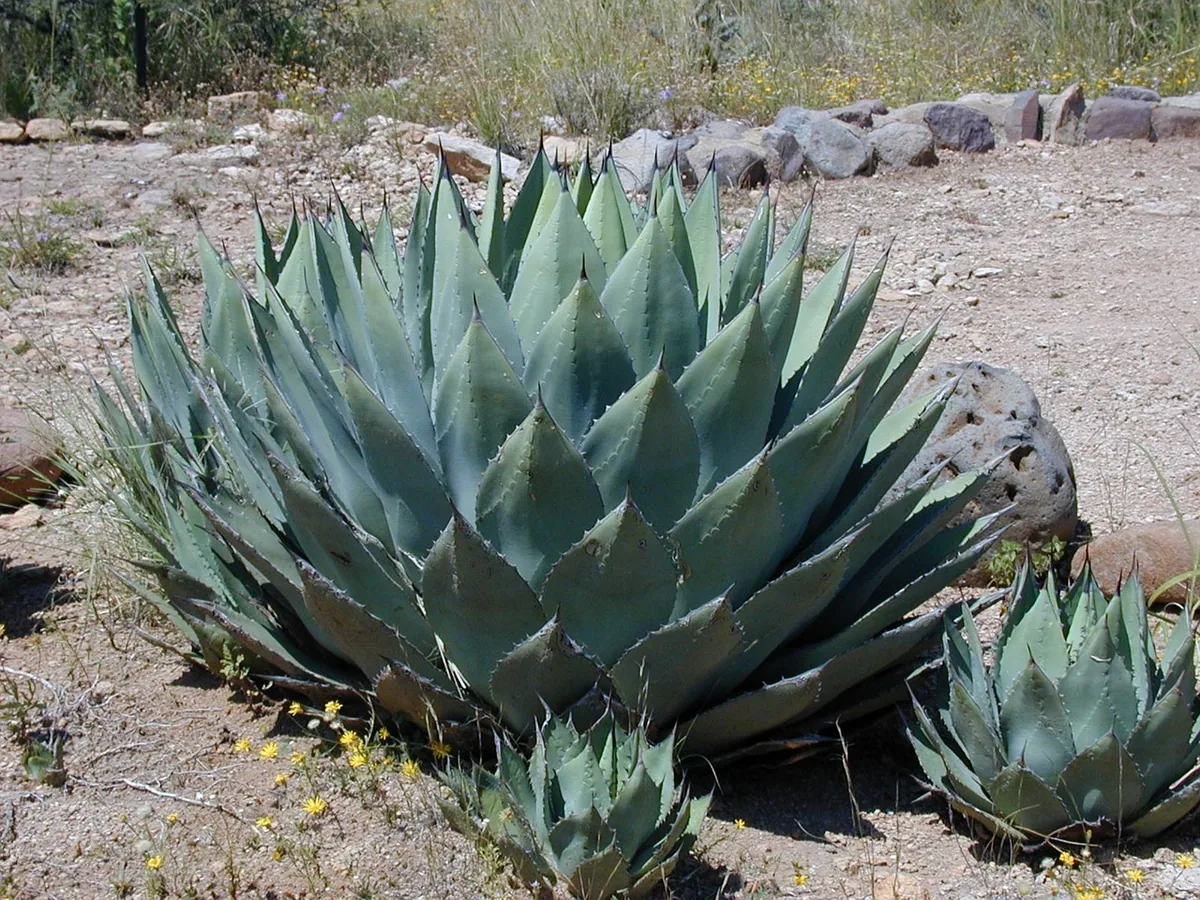
Agave is a genus of succulent plants known for their rosette of thick, fibrous leaves that end in sharp points. Sizes vary from small species measuring 30 cm (1 foot) to larger ones reaching up to 2.5 meters (8 feet) in height. Agaves are monocarpic, flowering once at the end of their life cycle, which can range from 8 to 30 years. The flowering stalk can grow several meters tall, bearing numerous tubular flowers. After flowering, the main plant dies, but it often produces offsets or "pups" around its base. Agaves thrive in full sun and well-drained soils. They are drought-tolerant and require minimal watering once established. Overwatering can lead to root rot. :contentReference[oaicite:2]{index=2} Agaves are commonly propagated by: Offsets (Pups): Small plants that grow around the base can be removed and replanted. Bulbils: Some species produce bulbils on the flowering stalk, which can be planted after detachment. For species used in fiber or biofuel production, leaves are harvested from mature plants, typically before flowering. In species like *Agave tequilana* (used for tequila), the central "piña" is harvested after 7 to 14 years.
Permaculture Functions
- Biofuel: Agave tequilana and related taxa store fructans in the swollen piña for years before harvest roasts convert sugars toward distillery streams -- species choice and climate matter because cold-wet crowns rot long before the sugar payoff.
- Fiber: Sisal-type species yield long leaf fibers for rope, matting, and erosion-control wattles once leaves are decorticated and dried -- wear gloves because raphides and saponins make sloppy stripping an itchy lesson.
- Ornamental: Rosettes of thick glaucous leaves give sculptural focal points in xeric beds where other perennials fry -- remember the plant is monocarpic so the flowering mast signals replacement planning from pups or bulbils.
Companion Planting
- Aloe
Threats & Pressure