About
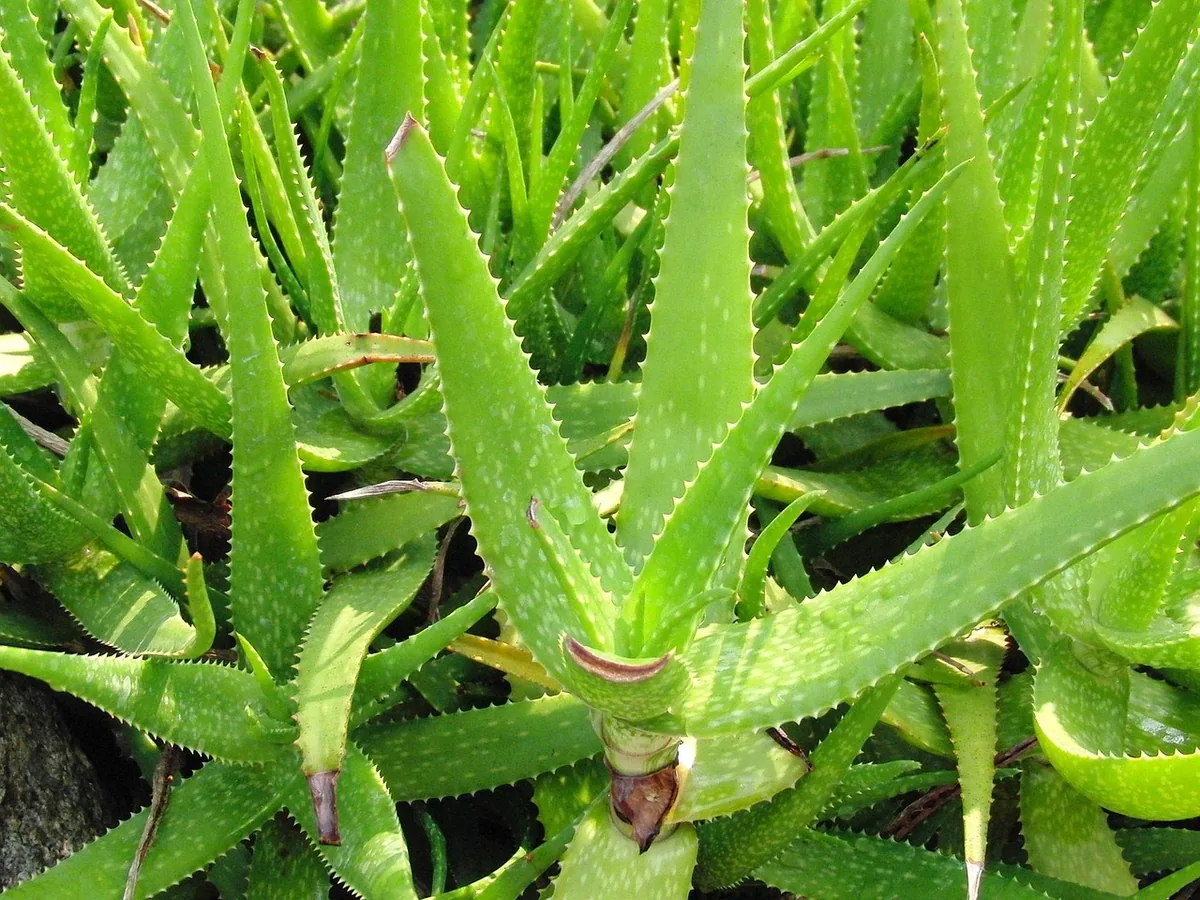
Aloe vera is a succulent plant forming a rosette of lance-shaped, fleshy leaves with serrated edges. The leaves are green to gray-green and can grow up to 60 cm (24 inches) long. Mature plants produce a tall spike of tubular yellow or orange flowers. Aloe vera is renowned for the gel contained within its leaves, which has various medicinal and cosmetic applications. The gel is composed of water, vitamins, enzymes, and amino acids, giving it anti-inflammatory, antimicrobial, and wound-healing properties. Aloe thrives in sandy, well-drained soils and can survive in arid conditions due to its water-retentive leaves. Aloe vera prefers bright, indirect sunlight but can tolerate some direct sun. It requires well-drained soil and should be watered deeply but infrequently, allowing the soil to dry out between waterings to prevent root rot. Overwatering is a common cause of failure. Aloe vera is easily propagated by: Offsets (Pups): Small offshoots that grow at the base can be removed and replanted. Leaf Cuttings: Although less common, leaf cuttings can be used but have a lower success rate due to high moisture content. Aloe leaves can be harvested year-round, but it's best to wait until the plant is mature (usually 2-3 years). Harvest the outer leaves by cutting them at the base, allowing the plant to continue growing.
Permaculture Functions
- Medicinal: Aloe vera filet gel from mature outer leaves soothes minor burns and abrasions because polysaccharides hold moisture on skin -- slice lengthwise and scoop the clear gel, not the bitter latex layer next to the rind, unless you enjoy dermatitis cosplay.
- Ornamental: Gray-green rosettes with toothed margins read as sculptural xeric punctuation beside agaves and yuccas -- flowering spikes rocket upward on mature plants, signaling the rosette may decline after seed set unless pups replace it.
- Ground Cover: Offsetting colonies tile dry berms and rock mulch where irrigation is honest about scarcity -- winter rain on cold heavy soil still rots hearts faster than summer drought, so crown drainage is the real design rule.
Companion Planting
Threats & Pressure