About
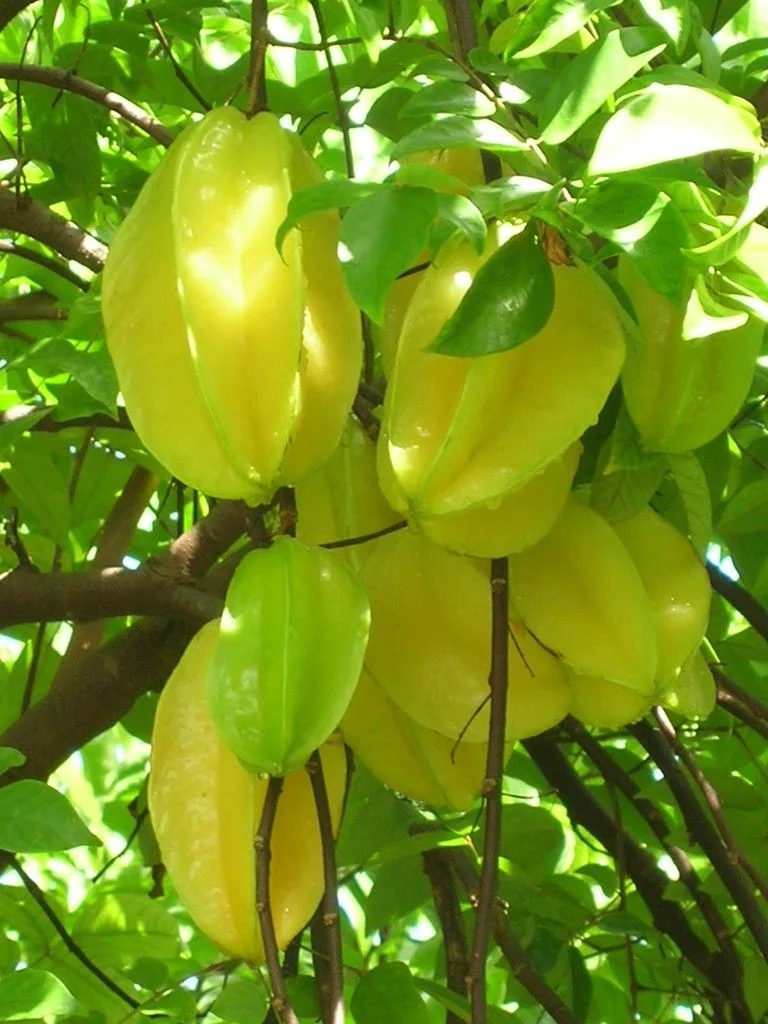
Carambola, commonly known as star fruit, is a tropical evergreen tree native to Southeast Asia. It typically reaches heights of 6–9 meters (20–30 feet) with a bushy, rounded canopy. The tree produces distinctive, star-shaped fruits when sliced crosswise, measuring 5–15 centimeters (2–6 inches) in length. The fruit's skin is thin, waxy, and turns from green to yellow upon ripening, while the flesh is juicy, crisp, and ranges from sweet to tangy in flavor. Prefers full sun exposure for optimal fruit production. Thrives in well-drained, loamy soils with a pH between 5.5 and 6.5. Requires consistent moisture; regular watering is essential, especially during dry periods. Seeds: Fresh seeds can be sown but may not produce true-to-type fruit. Grafting: Commonly used to propagate desired cultivars and ensure fruit quality. Air Layering: Effective for producing clones of the parent tree. Fruits are ready for harvest when they turn uniformly yellow. Typically, harvesting occurs 60–75 days after fruit set. Handle fruits carefully to avoid bruising; they can be stored in the refrigerator for up to two weeks.
Permaculture Functions
- Edible: crisp yellow ribs slice into star-shaped plates for salads and juice -- once fruit sugars rise and oxalate-sensitive guests are screened from shared platters.
- Medicinal: fruit acids and oxalates underpin traditional cooling teas and wound washes in Southeast Asia -- where clinicians still flag renal risk for susceptible people.
- Wildlife Attractor: nectar feeds small bees on clustered flowers -- while ripe thin-skinned stars draw birds and fruit flies unless picked at color break.
- Ornamental: keeps a rounded evergreen oxalidaceous canopy with compound leaves and pendant fruit -- that reads sculptural in frost-free courtyards and conservatory borders.
Companion Planting