About
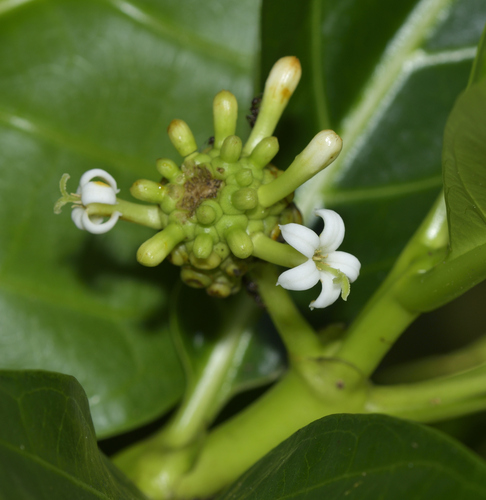
Indian mulberry (Morinda citrifolia), widely known as noni, is a tropical evergreen tree or large shrub of coastal lowlands and disturbed sites across the Pacific and Indian Ocean regions, bearing large glossy leaves, small white flowers, and pungent compound fruit that ripens to translucent yellow-white. Heights of 10–20 feet (3–6 m) are common in cultivation. It is a polarizing food-medicine plant: respected in many island traditions, abused by supplement hype elsewhere. ☀️💧 Sun and Water Requirements: Full sun for reliable fruiting; tolerates light shade with reduced yield. Well-drained soils; surprisingly tolerant of poor, salty, or rocky sites once established—noni is opportunistic, not delicate. Irrigation during establishment speeds growth; mature trees tolerate short dry spells in humid air. ✂️ Propagation: Sow seed fresh; older seed loses viability. Cuttings and air-layering clone productive individuals. Prune for harvest reach and airflow; dense twig mats invite scale parties. 🌾 Harvest / Best Use Timing: Harvest fruit when translucent and soft for traditional juices and ferments—odor is part of the package. Pick regularly to reduce fruit fly buildup in humid sites. Flowers appear repeatedly in warm climates; staggered fruit follows.
Permaculture Functions
- Edible: Fruit enters traditional ferments and beverages where acquired taste is cultural, not a defect.
- Medicinal: Long history across Pacific traditions—separate evidence from pyramid-scheme storytelling.
- Wildlife Attractor: Fruit feeds birds and insects where planted outside its native range with care.
- Dynamic Accumulator: Large leaves and fast growth cycle biomass back into soil when managed.
Practitioner Notes
- “Cheese fruit” is not marketing—it is a warning label for the uninitiated nose.
- Seedlings fruit sooner than many trees—plan harvest containers before embarrassment arrives.
- Ants farm scale on noni like it is a franchise—break the mutualism with targeted hygiene.
- If your climate cannot sustain papaya, noni is probably fantasy in the ground.
Companion Planting
- Banana — quick herbaceous biomass and partial shade for young noni in tropical polycultures
- Papaya — fast fruiting neighbor using vertical space differently along the row edge
- Lemongrass — perimeter grass that marks irrigation lines and tolerates heat cycles
- Strong odor of ripe fruit — site downwind of outdoor dining if guests are scent-sensitive
- Potential weediness in some oceanic climates — monitor volunteers near natural areas
Pest Pressure