About
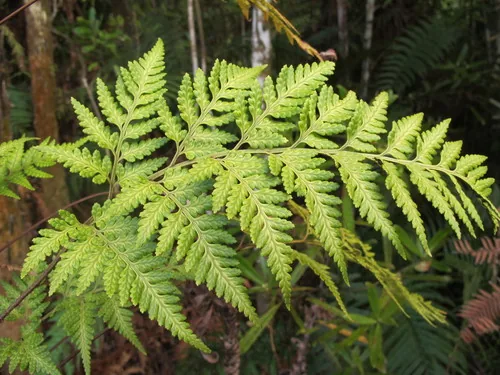
Leatherleaf fern (Rumohra adiantiformis) is a robust, glossy evergreen fern with leathery fronds widely used in the cut-greens trade and common in subtropical to tropical woodlands of the Americas, Africa, and islands—check regional provenance before planting because non-native stock can escape in mild climates. It forms clumps from scaly rhizomes, tolerates low light and coastal humidity, and provides year-round texture under trees where delicate ferns desiccate. For permaculture, it is primarily an ornamental ground layer and erosion mat on shady, well-drained slopes—not a calorie crop. Partial to full shade; tolerates bright shade on humid coasts. Prefers moist, well-drained, humus-rich soils; tolerates short dry spells once established but fronds brown at tips in drought. Salt spray tolerance is moderate on some coastal sites. Avoid freezing exposures without protection—hardy through warm-temperate frost pockets at best. Division of rhizome clumps in cool, moist weather resets crowded specimens. Spores are slow; use for nursery work, not instant landscapes. Cut fronds sparingly for arrangements from cultivated clumps; overcutting weakens plants. In gardens, remove winter-damaged fronds before spring fiddleheads emerge on other species nearby.
Permaculture Functions
- Ornamental: Rumohra adiantiformis holds glossy, dark fronds year-round under oak canopy -- reads upscale in courtyards where delicate maidenhair ferns desiccate.
- Ground Cover: Scaly rhizomes spread slowly into clumps without stoloniferous takeover -- ideal under palms and coontie where air stays humid.
- Fiber: Floral industry cuts fronds for long-lasting greenery -- home harvest means rotating stems so crowns stay vigorous, not stripped for one wedding bouquet.
- Erosion Control: Interlocking rhizomes knit leaf-litter slopes in coastal hammocks -- pair with mulch because exposed soil still washes in heavy subtropical rains.
Companion Planting
Also mentioned as companions:
- Oak
Not yet profiled in PermiePortal
- Invasive risk in mild, humid climates outside native range—verify regional invasive plant lists before landscape release
Threats & Pressure