About
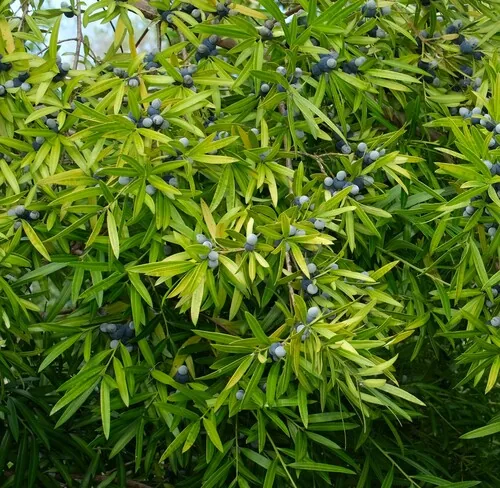
Illawarra plum is an Australian podocarp “conifer” that fruits like a shameless gymnosperm: dark, grape-sized, plum-flavored arils on female trees, with glossy evergreen needles and a dense crown that can reach 30–40 feet in favorable subtropical sites. In subtropical and tropical Americas it slots into food-forest mid-canopy or windbreak rows where drainage is good and salt spray is moderate—humid summers are fine if soil never stagnates; Puerto Rico’s steady warmth accelerates growth compared to marginal mainland frosts. Male and female plants are separate; you need a pollen partner for fruit. Full sun to light shade; young plants appreciate partial shade in hottest exposures. Deep, fertile, well-drained soil; tolerates sandy coastal soils with organic mulch and irrigation establishment. Regular water during fruit swell; reduce once deep-rooted, but avoid prolonged drought during heavy crop load. Seeds cleaned of pulp and sown fresh; germination can be slow—patience and bottom heat help. Hardwood cuttings with hormone on bottom heat for clonal lines when available. Air-layering low branches on known fruiting females to preserve genetics. Pick arils when fully colored, slightly soft, and aromatic—timing shifts with wet/dry season rainfall. Process quickly into jams, sauces, or fermentations; fruit is soft and perishable off the tree.
Permaculture Functions
- Edible: Podocarpus elatus females bear dark, grape-like arils with plum-resin sweetness -- eat fresh off the stem or cook quickly into jam because pulp softens and ferments within days of picking.
- Shade Provider: Glossy evergreen needles build a dense mid-canopy that cools poultry yards and acid-loving understory shrubs -- site with room because mature trees read wide in humid subtropical sites.
- Windbreaker: Flexible branches and tight foliage strip momentum from coastal sea breezes -- useful on exposed ridges if both sexes are present for fruit, not just a pollen-skyline male.
- Wildlife Attractor: Ripe arils feed fruit bats and frugivorous birds faster than humans can net -- sacrifice a lower branch outside netting if you want wildlife working pest patrols elsewhere.
Companion Planting
Threats & Pressure